ما هو DeFi وكيف يعمل؟ | What Is DeFi and How Does It Work?
تعلّم ببساطة، خطوة بخطوة
Learn simply, step by step
معلومة واضحة، ثم خطوة جديدة.
Clear knowledge, one step at a time.
ما هو DeFi وكيف يعمل؟ What Is DeFi and How Does It Work?
إذا كنت بدأت في تعلم Web3، فمن المهم أن تعرف ما هو DeFi، أو التمويل اللامركزي، لأنه من أبرز الاستخدامات المالية لتقنية البلوكتشين. يتيح هذا المجال تنفيذ خدمات مثل التداول والإقراض والاقتراض من خلال بروتوكولات وعقود ذكية بدل الاعتماد بالكامل على وسيط مالي تقليدي.
ما هو DeFi؟
DeFi هو اختصار لـ Decentralized Finance أو التمويل اللامركزي. ويشير إلى مجموعة من التطبيقات والبروتوكولات المالية المبنية على شبكات البلوكتشين، والتي تستخدم العقود الذكية لتنفيذ العمليات وفق قواعد برمجية محددة.
الفكرة الأساسية هي تمكين المستخدم من الوصول إلى خدمات مالية على البلوكتشين باستخدام محفظته الرقمية، مع تقليل الاعتماد على الوسطاء التقليديين في بعض العمليات.
كيف يعمل التمويل اللامركزي؟
يمكن تبسيط طريقة عمله في عدة خطوات:
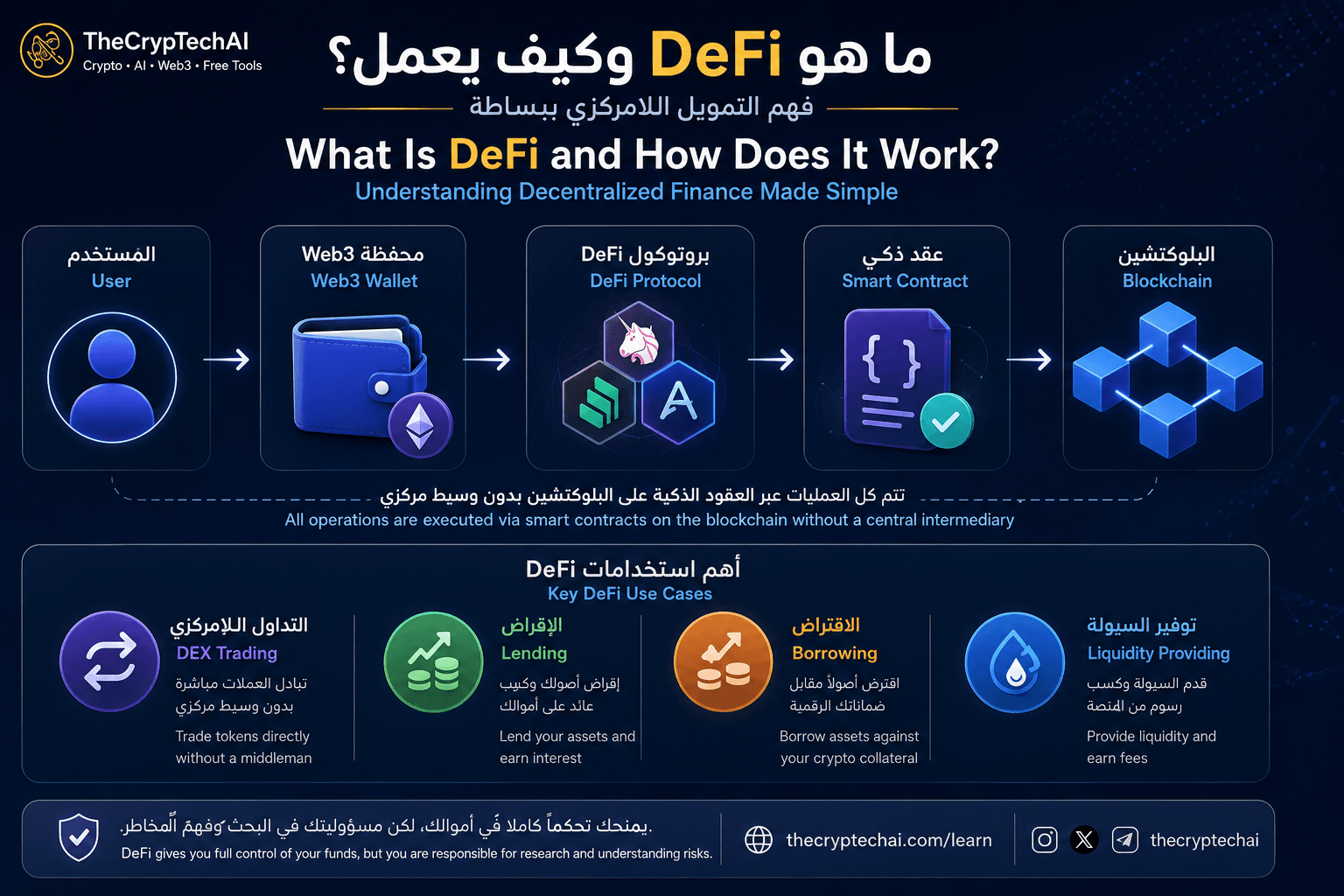
1. محفظة Web3: يستخدم الشخص محفظة متوافقة مع الشبكة التي يعمل عليها البروتوكول.
2. بروتوكول DeFi: يتفاعل المستخدم مع تطبيق يقدم خدمة معينة مثل التداول أو الإقراض أو توفير السيولة.
3. العقد الذكي: عند طلب عملية على البلوكتشين، تنفذ العقود الذكية القواعد البرمجية الخاصة بالبروتوكول.
4. البلوكتشين: تُعالج المعاملة وفق قواعد الشبكة، وتُسجل التغييرات الناتجة على السلسلة.
ولهذا فإن فهم العقود الذكية مهم جدًا قبل التعمق في هذا المجال، لأنها تشكل جزءًا أساسيًا من البنية التي تعتمد عليها العديد من بروتوكولات التمويل اللامركزي.
ماذا يمكنك أن تفعل باستخدام DeFi؟
هناك العديد من الاستخدامات، ومن أشهرها:
التداول اللامركزي: مبادلة بعض الأصول الرقمية عبر منصات DEX دون إيداعها في حساب تداول مركزي تقليدي.
الإقراض: توفير أصول لبعض بروتوكولات الإقراض مقابل عائد محتمل وفق آلية البروتوكول.
الاقتراض: تسمح بعض البروتوكولات باقتراض أصول مقابل تقديم ضمانات رقمية.
توفير السيولة: يمكن للمستخدمين توفير أصول لمجمعات السيولة التي تعتمد عليها بعض المنصات لتنفيذ عمليات المبادلة، وقد يحصل مزود السيولة على جزء من الرسوم أو الحوافز وفق قواعد البروتوكول.
ما الفرق بين DeFi والتمويل التقليدي؟
في كثير من الخدمات المالية التقليدية توجد مؤسسة مثل بنك أو شركة تدير الحسابات والعمليات.
أما في التمويل اللامركزي، فيمكن تنفيذ بعض هذه الوظائف بواسطة بروتوكولات وعقود ذكية تعمل على شبكة بلوكتشين.
لكن كلمة “لامركزي” لا تعني بالضرورة أن كل جزء من أي مشروع لامركزي بالكامل؛ فقد تختلف درجة اللامركزية من بروتوكول إلى آخر، وقد تعتمد بعض الخدمات على واجهات أو جهات أو مصادر بيانات خارجية.
هل تحتاج إلى محفظة Web3؟
للتفاعل المباشر مع العديد من بروتوكولات DeFi تحتاج عادةً إلى محفظة متوافقة مع الشبكة المستخدمة. ومن خلالها يمكن ربط عنوانك بالتطبيق وتوقيع المعاملات المطلوبة.
إذا كنت لا تعرف أي نوع من المحافظ يناسب استخدامك، يمكنك تجربة
Crypto Wallet Finder من TheCrypTechAI
للتعرف على الخيارات المناسبة قبل الانتقال إلى الاستخدام العملي.
هل DeFi خالٍ من المخاطر؟
لا. التحكم المباشر في الأصول يأتي أيضًا مع مسؤولية أكبر. من المخاطر المحتملة:
• ثغرات العقود الذكية.
• المشاريع أو الواجهات الاحتيالية.
• تقلب أسعار الأصول المستخدمة كضمان.
• التصفية في بعض عمليات الاقتراض.
• خسائر مرتبطة بتوفير السيولة.
• الموافقة على صلاحيات غير آمنة للمحفظة.
لذلك لا ينبغي اعتبار العوائد المعروضة داخل أي بروتوكول أرباحًا مضمونة، ويجب فهم طريقة عمل المنتج ومخاطره قبل إيداع الأصول.
مصدر إضافي لفهم DeFi
يمكنك قراءة
دليل Ethereum الرسمي عن التمويل اللامركزي
للتعرف بصورة أوسع على كيفية عمل هذه الخدمات واستخداماتها مثل التداول والإقراض والاقتراض.
الخلاصة
فهم ما هو DeFi يبدأ بمعرفة أن التمويل اللامركزي يستخدم البلوكتشين والعقود الذكية لتقديم مجموعة من الخدمات المالية بطريقة مختلفة عن الأنظمة التقليدية.
ولا يعني ذلك أن استخدامه خالٍ من المخاطر. قبل ربط محفظتك بأي بروتوكول، افهم الخدمة والعقد الذي ستتفاعل معه والصلاحيات التي ستوافق عليها.
في الدرس التالي سنتعرف بصورة أعمق على محافظ Web3 وكيف تتفاعل مع التطبيقات اللامركزية.
If you are starting to explore Web3, understanding What Is DeFi is an important step. Decentralized finance uses blockchain networks and smart contracts to provide services such as trading, lending, borrowing, and liquidity without relying entirely on traditional financial intermediaries.
What Is DeFi?
DeFi stands for Decentralized Finance. It is a broad term for financial applications and protocols built on blockchain networks that use smart contracts to execute operations according to programmed rules.
The basic idea is to let users access certain financial services directly through their digital wallets while reducing reliance on traditional intermediaries for some operations.
How Does Decentralized Finance Work?
The process can be simplified into four main stages:
1. Web3 Wallet: A user connects a wallet that is compatible with the blockchain network used by the protocol.
2. DeFi Protocol: The user interacts with an application that provides a service such as trading, lending, borrowing, or liquidity.
3. Smart Contract: When an on-chain action is requested, smart contracts execute the programmed rules of the protocol.
4. Blockchain: The transaction is processed according to the network's rules, and the resulting state changes are recorded on the blockchain.
This is why understanding smart contracts is important before exploring DeFi in greater depth. They form a key part of the infrastructure behind many decentralized financial protocols.
What Can You Do With DeFi?
Some common uses include:
Decentralized trading: Users can swap certain digital assets through decentralized exchanges (DEXs) without depositing them into a traditional centralized exchange account.
Lending: Some protocols allow users to supply digital assets and potentially receive yield according to the protocol's rules.
Borrowing: Certain protocols allow users to borrow assets by providing digital assets as collateral.
Liquidity providing: Users can supply assets to liquidity pools used by some decentralized exchanges. Liquidity providers may receive a share of fees or incentives according to the protocol.
DeFi vs Traditional Finance
Traditional financial services commonly depend on institutions such as banks or financial companies to manage accounts and transactions.
In decentralized finance, some of these functions can instead be performed by protocols and smart contracts operating on blockchain networks.
However, the word "decentralized" does not mean that every component of every project is completely decentralized. Different protocols have different levels of decentralization and may still rely on interfaces, organizations, or external data services.
Do You Need a Web3 Wallet?
To interact directly with many DeFi protocols, you generally need a wallet compatible with the blockchain being used. The wallet allows you to connect an address and approve or sign transactions.
If you are unsure which type of wallet fits your needs, you can explore the
TheCrypTechAI Crypto Wallet Finder
before moving into practical Web3 interactions.
Is DeFi Risk-Free?
No. Direct control of digital assets also comes with greater responsibility. Potential risks include:
• Smart contract vulnerabilities.
• Scam projects or fake interfaces.
• Volatility of assets used as collateral.
• Liquidation risk when borrowing.
• Risks associated with providing liquidity.
• Unsafe wallet permissions and approvals.
Returns displayed by a protocol should therefore never be treated as guaranteed profits. Users should understand how a product works and evaluate its risks before committing digital assets.
Learn More About DeFi
For additional information, read the
official Ethereum guide to decentralized finance
,
which explains how DeFi uses cryptocurrencies and smart contracts and covers services such as trading, lending, and borrowing.
Key Takeaway
Understanding What Is DeFi begins with recognizing how blockchain networks and smart contracts can provide financial services in a different way from traditional financial systems.
That does not make these services risk-free. Before connecting your wallet to any protocol, understand the service, the smart contracts involved, and the permissions you are approving.
In the next lesson, we will explore Web3 wallets and how they interact with decentralized applications.
اختبر فهمك
Check Your Understanding
سؤالان سريعان لتثبيت أهم ما تعلمته.
Two quick questions to reinforce the key ideas.