ما هي العقود الذكية وكيف تعمل؟ | What Are Smart Contracts and How Do They Work?
تعلّم ببساطة، خطوة بخطوة
Learn simply, step by step
معلومة واضحة، ثم خطوة جديدة.
Clear knowledge, one step at a time.
ما هي العقود الذكية وكيف تعمل؟ What Are Smart Contracts and How Do They Work?
تُعد هذه التقنية من أهم التقنيات المستخدمة في Web3، لأنها تسمح بتنفيذ قواعد وعمليات على شبكة البلوكتشين عندما تتحقق شروط محددة، دون الحاجة في بعض الحالات إلى وسيط مركزي لتنفيذ العملية.
ما هي العقود الذكية؟
العقود الذكية Smart Contracts هي برامج تعمل على شبكات البلوكتشين وتنفذ تعليمات محددة وفق القواعد المكتوبة داخلها.
ورغم اسمها، فهي ليست بالضرورة عقودًا قانونية. يمكن النظر إليها باعتبارها برامج تستقبل معاملات أو بيانات، ثم تنفذ وظائف محددة عندما تسمح القواعد البرمجية بذلك.
كيف تعمل هذه العقود؟
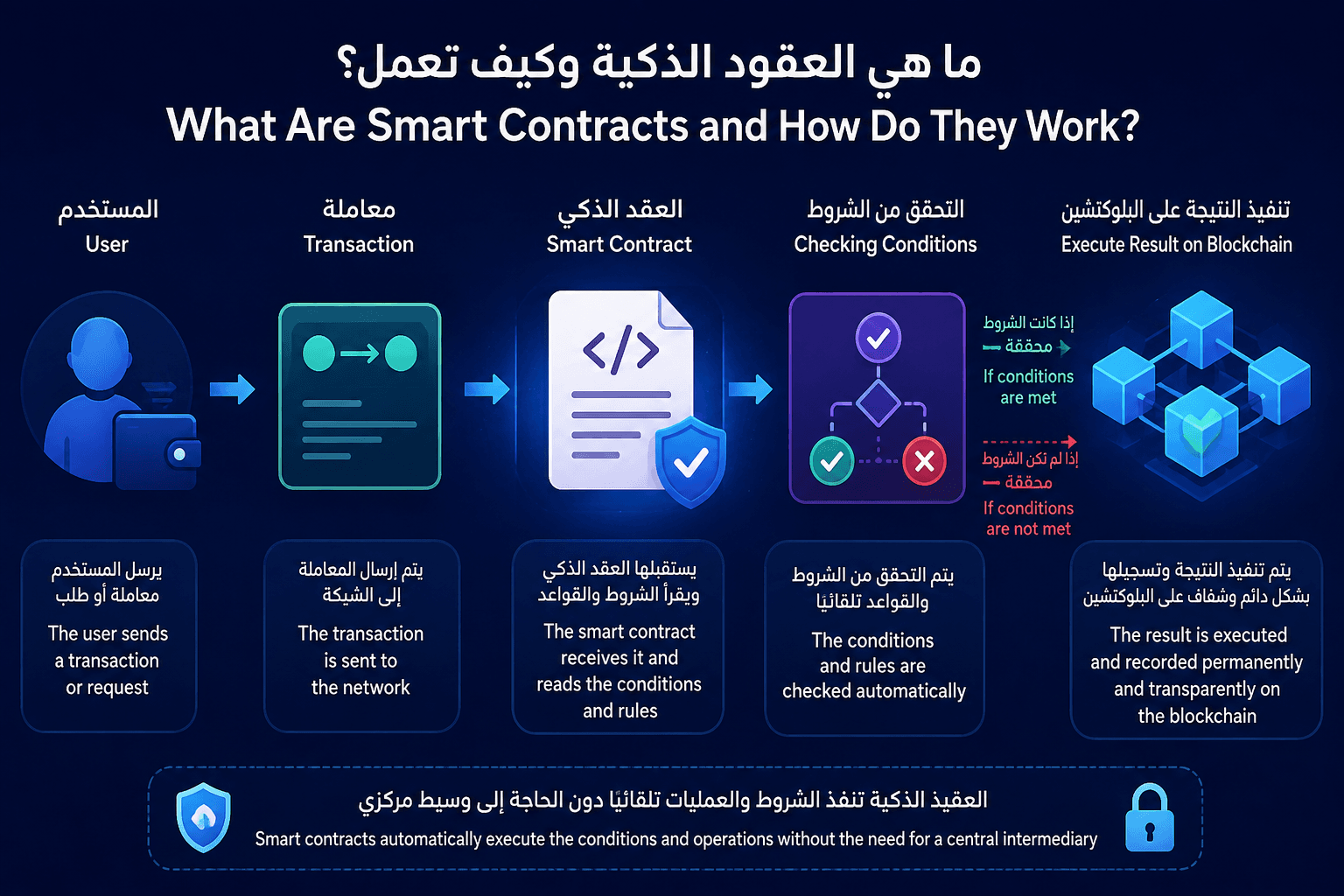
يمكن تبسيط طريقة عملها في عدة خطوات:
1. إرسال معاملة: يرسل المستخدم معاملة أو طلبًا للتفاعل مع البرنامج الموجود على البلوكتشين.
2. وصول المعاملة: تستقبل شبكة البلوكتشين المعاملة ويتم التعامل معها وفق قواعد الشبكة.
3. تشغيل الكود: يتم تنفيذ الوظيفة المطلوبة داخل البرنامج.
4. التحقق من الشروط: يطبق الكود القواعد المحددة مسبقًا ويحدد النتيجة المناسبة.
5. تسجيل النتيجة: إذا أدت العملية إلى تغيير حالة البلوكتشين، يتم تسجيل النتيجة وفق آلية الشبكة.
مثال مبسط
تخيل تطبيقًا يسمح للمستخدم بتبديل أصل رقمي بآخر. بدل أن يقوم موظف بمعالجة الطلب يدويًا، يمكن للمستخدم إرسال معاملة إلى برنامج يعمل مباشرة على البلوكتشين.
يفحص البرنامج القواعد والسيولة والشروط المطلوبة، وإذا كانت العملية صالحة ينفذ التبديل وفق التعليمات المكتوبة في الكود.
أين تُستخدم العقود الذكية؟
تُستخدم هذه البرامج في عدد كبير من تطبيقات Web3، ومنها:
• منصات التداول اللامركزية DEX.
• بروتوكولات التمويل اللامركزي DeFi.
• الإقراض والاقتراض اللامركزي.
• بعض أنظمة Staking.
• الألعاب والتطبيقات المبنية على البلوكتشين.
• إدارة ونقل بعض أنواع الأصول الرقمية.
هل هذه العقود آمنة دائمًا؟
لا. وجود برنامج على البلوكتشين لا يعني أنه آمن تلقائيًا. قد يحتوي الكود على أخطاء أو ثغرات، وقد تكون بعض البرامج مصممة بطريقة ضارة.
كما يجب الانتباه إلى الصلاحيات التي تمنحها عند استخدام محفظتك، لأن بعض التفاعلات قد تسمح للبرنامج بالتعامل مع أصول أو رموز معينة داخل المحفظة.
هل يمكن تعديلها بعد نشرها؟
يعتمد ذلك على تصميم التطبيق. بعض البرامج يتم نشرها بطريقة تجعل الكود الأساسي غير قابل للتغيير، بينما تستخدم مشاريع أخرى بنية قابلة للترقية تسمح بتغيير أجزاء من النظام وفق صلاحيات وقواعد محددة.
لذلك من المهم عدم افتراض أن جميع البرامج المنشورة على البلوكتشين تعمل بالطريقة نفسها أو تمتلك المستوى نفسه من قابلية التعديل.
دورها في Web3
توفر هذه البرامج طبقة تنفيذ مهمة للعديد من تطبيقات Web3. فبدل استخدام البلوكتشين فقط لتسجيل التحويلات، يمكن تنفيذ منطق برمجي أكثر تعقيدًا.
وهذا ما يسمح ببناء تطبيقات لامركزية تقدم خدمات مثل التداول والإقراض والألعاب وإدارة الأصول الرقمية.
تعلم المزيد وحافظ على أمانك
قبل التفاعل مع برامج أو تطبيقات Web3 غير معروفة، يمكنك استخدام
أداة فحص أمان التوكن من TheCrypTechAI
كجزء من عملية البحث، مع تذكر أن أي أداة فحص لا يمكنها ضمان أمان المشروع بنسبة 100%.
وللتعرف بشكل أعمق على طريقة عمل العقود الذكية، يمكنك مراجعة
وثائق Ethereum الرسمية
.
الخلاصة
العقود الذكية هي برامج تعمل على البلوكتشين وتنفذ قواعد محددة عند التفاعل معها، وهي من التقنيات الأساسية التي تتيح بناء الكثير من خدمات Web3.
لكن الأمان يعتمد أيضًا على جودة الكود والصلاحيات وتصميم النظام. وفي الدرس التالي سنتعرف على التطبيقات اللامركزية dApps وكيف تستخدم هذه التقنيات لتقديم خدمات للمستخدمين.
Smart Contracts are one of the key technologies used in Web3. They allow rules and operations to be executed on a blockchain when specific conditions are met, reducing the need for a central intermediary in some processes.
What Are Smart Contracts?
Smart Contracts are programs that run on blockchain networks and execute specific instructions according to rules written into their code.
Despite their name, they are not necessarily legal contracts. A smart contract can be understood as a program that receives transactions or data and performs specific functions when its programmed rules allow it.
How Do Smart Contracts Work?
The basic process can be simplified into several steps:
1. Submit a transaction: A user sends a transaction or request to interact with a smart contract.
2. Transaction reaches the network: The blockchain network receives and processes the transaction according to its rules.
3. Contract execution: The requested function inside the smart contract is executed.
4. Check the conditions: The contract applies the rules written in its code and determines the appropriate result.
5. Record the result: If the operation changes the blockchain state, the result is recorded according to the network's mechanism.
A Simple Smart Contract Example
Imagine an application that allows a user to exchange one digital asset for another. Instead of an employee manually processing the request, the user can submit a transaction to a smart contract.
The contract checks the relevant rules, liquidity, and conditions. If the transaction is valid, it executes the exchange according to its programmed instructions.
Where Are Smart Contracts Used?
Smart Contracts are used across many areas of Web3, including:
• Decentralized exchanges (DEXs).
• Decentralized finance (DeFi) protocols.
• Decentralized lending and borrowing.
• Some staking systems.
• Blockchain-based games and applications.
• Management and transfer of certain digital assets.
Are Smart Contracts Always Safe?
No. A program running on a blockchain is not automatically secure. Smart contract code can contain bugs or vulnerabilities, and some contracts may be intentionally malicious.
Users should also pay attention to the permissions they grant when interacting with contracts through a wallet, because certain approvals can allow a contract to interact with specific tokens or assets.
Can a Smart Contract Be Changed?
It depends on the application's design. Some contracts are deployed so that their core code cannot be changed, while other projects use upgradeable architectures that allow parts of the system to be modified according to specific permissions and rules.
Therefore, you should not assume that all Smart Contracts have the same level of immutability.
Smart Contracts and Web3
Smart contracts provide an important execution layer for many Web3 applications. Instead of using blockchain only to record transfers, contracts can execute more complex programmable logic.
This makes it possible to build decentralized applications that provide services such as trading, lending, gaming, and digital asset management.
Learn More and Stay Secure
Before interacting with unfamiliar Web3 contracts or tokens, you can use the
TheCrypTechAI Token Security Checker
as part of your research. Remember that no automated security checker can guarantee that a project or contract is completely safe.
For a deeper technical explanation, you can also read the
official Ethereum documentation about smart contracts
.
Key Takeaway
Smart Contracts are blockchain-based programs that execute predefined rules when users interact with them. They provide much of the programmable functionality behind modern Web3 applications.
However, their security depends on factors such as code quality, permissions, and system design. In the next lesson, we will explore decentralized applications (dApps) and how they use smart contracts to provide services to users.
اختبر فهمك
Check Your Understanding
سؤالان سريعان لتثبيت أهم ما تعلمته.
Two quick questions to reinforce the key ideas.