ما هي التطبيقات اللامركزية dApps وكيف تعمل؟ | What Are Decentralized Applications (dApps) and How Do They Work?
تعلّم ببساطة، خطوة بخطوة
Learn simply, step by step
معلومة واضحة، ثم خطوة جديدة.
Clear knowledge, one step at a time.
ما هي التطبيقات اللامركزية dApps وكيف تعمل؟ What Are Decentralized Applications (dApps) and How Do They Work?
تُعد التطبيقات اللامركزية أو dApps من أهم استخدامات تقنية Web3، حيث تجمع بين واجهة يستخدمها الزائر وتقنيات البلوكتشين لتنفيذ بعض وظائف التطبيق دون الاعتماد بالكامل على خادم مركزي واحد.
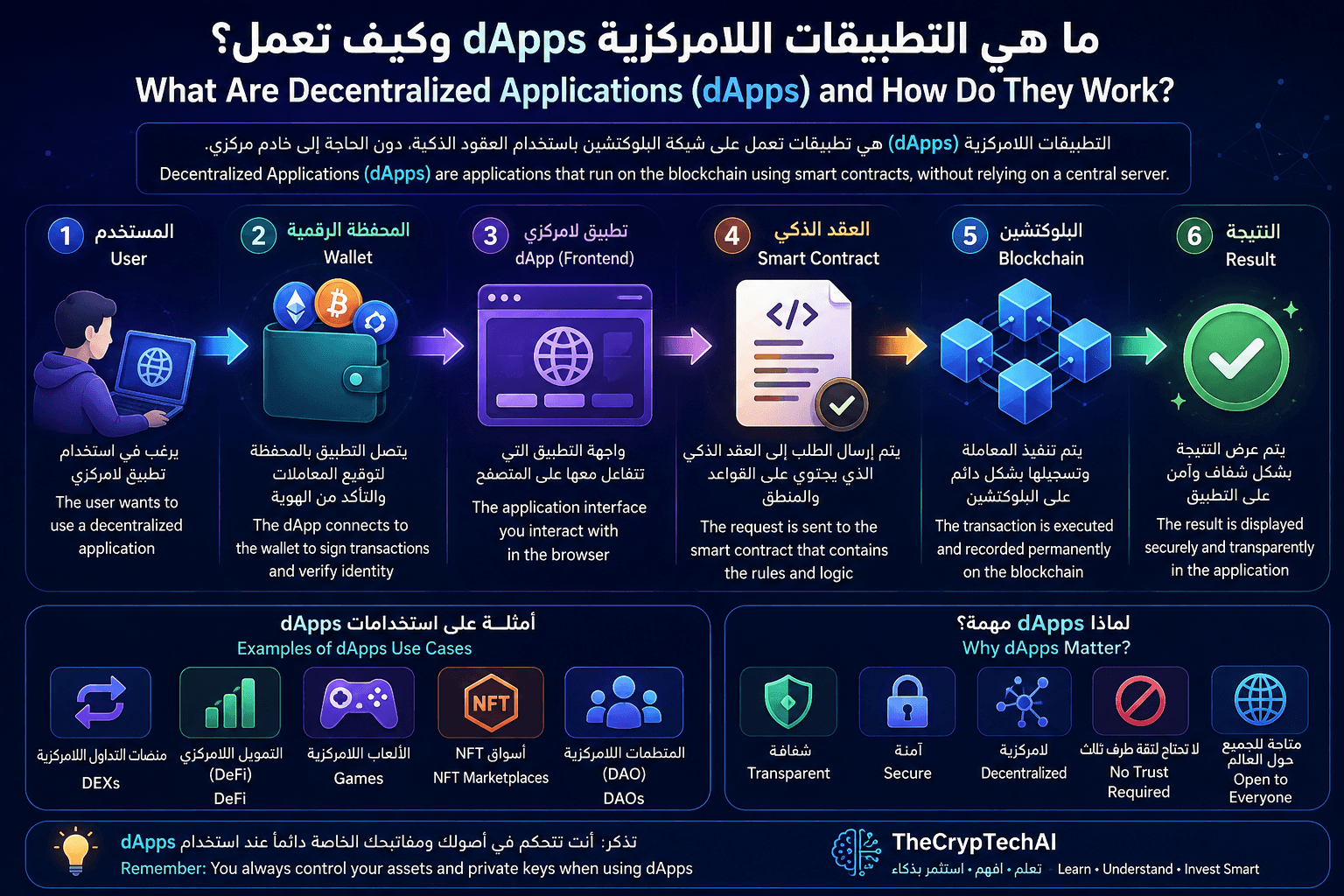
ما هي التطبيقات اللامركزية dApps؟
هي تطبيقات تستخدم شبكة بلوكتشين وعقودًا ذكية لتنفيذ جزء أساسي من منطقها وعملياتها. ويمكن أن تبدو واجهتها للمستخدم مثل أي موقع أو تطبيق تقليدي، لكن طريقة تنفيذ بعض العمليات في الخلفية تختلف عن تطبيقات Web2.
ويُستخدم الاختصار dApp للإشارة إلى Decentralized Application، بينما يشير dApps إلى مجموعة من هذه التطبيقات.
كيف تعمل dApps؟
يمكن تبسيط طريقة عمل تطبيق Web3 في المراحل التالية:
1. المستخدم: يفتح المستخدم التطبيق من المتصفح أو من واجهة مخصصة.
2. المحفظة: يمكن أن يربط المستخدم محفظته الرقمية بالتطبيق عندما يحتاج إلى تنفيذ عملية على البلوكتشين.
3. واجهة التطبيق: تعرض الواجهة المعلومات والأزرار والخيارات التي يتفاعل معها المستخدم.
4. العقد الذكي: عند تنفيذ عملية معينة، يمكن إرسال معاملة إلى عقد ذكي يحتوي على القواعد والمنطق البرمجي المطلوب.
5. شبكة البلوكتشين: تتم معالجة المعاملة وفق قواعد الشبكة، وإذا تم قبولها تُسجل التغييرات الناتجة على البلوكتشين.
6. النتيجة: تعرض واجهة التطبيق النتيجة الجديدة للمستخدم.
ما الفرق بين dApp والتطبيق التقليدي؟
في التطبيق التقليدي، يتم تشغيل معظم منطق التطبيق وتخزين بياناته عادةً على خوادم تديرها شركة أو جهة محددة.
أما في dApps فيمكن تنفيذ أجزاء مهمة من منطق التطبيق من خلال العقود الذكية على شبكة البلوكتشين.
لكن هذا لا يعني أن كل مكونات التطبيق لامركزية بالضرورة؛ فقد تعتمد بعض التطبيقات على خوادم أو واجهات أو خدمات مركزية في أجزاء أخرى من بنيتها.
أين تستخدم التطبيقات اللامركزية؟
توجد dApps في العديد من مجالات Web3، ومنها:
• منصات التداول اللامركزية DEX.
• بروتوكولات التمويل اللامركزي DeFi.
• الإقراض والاقتراض.
• بعض الألعاب المبنية على البلوكتشين.
• أسواق الأصول الرقمية وNFT.
• بعض المنظمات اللامركزية DAO.
ما دور المحفظة الرقمية؟
تعمل المحفظة كوسيلة للتفاعل مع كثير من تطبيقات Web3. يمكن استخدامها لتوقيع المعاملات وإثبات التحكم في عنوان معين والموافقة على بعض الصلاحيات.
لكن يجب قراءة طلبات التوقيع والموافقات بعناية، خصوصًا عند استخدام تطبيق غير معروف، لأن بعض الموافقات قد تمنح عقدًا ذكيًا صلاحية للتعامل مع رموز معينة.
هل dApps آمنة دائمًا؟
لا. استخدام البلوكتشين لا يجعل التطبيق آمنًا تلقائيًا. قد توجد ثغرات في العقد الذكي، أو واجهة مزيفة، أو رابط تصيد، أو صلاحيات خطرة يطلب التطبيق من المستخدم الموافقة عليها.
كما أن مستوى اللامركزية والأمان يختلف من مشروع إلى آخر، لذلك من المهم البحث عن التطبيق والعقود التي يستخدمها قبل ربط محفظة تحتوي على أصول مهمة.
استخدم أدوات الأمان قبل التفاعل
إذا كنت تبحث عن محفظة مناسبة لاستخدام Web3، يمكنك الاستفادة من
أداة Crypto Wallet Finder من TheCrypTechAI
لمقارنة الخيارات المناسبة لاحتياجاتك.
وعند التعامل مع توكن أو مشروع غير معروف، يمكنك أيضًا استخدام
أداة Token Security Checker
كخطوة إضافية في البحث، مع عدم الاعتماد على أي أداة وحدها للحكم على أمان المشروع.
تعلم المزيد عن dApps
لشرح تقني أعمق، يمكنك مراجعة
وثائق Ethereum الرسمية حول التطبيقات اللامركزية
والتي تشرح بنية dApps وعلاقتها بالعقود الذكية والواجهة الأمامية.
الخلاصة
التطبيقات اللامركزية تجمع بين واجهة يستخدمها الشخص وتقنيات Web3 مثل المحافظ والعقود الذكية والبلوكتشين لتنفيذ وظائف مختلفة.
وبهذا نكون قد ربطنا مفاهيم المسار معًا:
Blockchain → Nodes → Consensus → Web3 → Smart Contracts → dApps.
فهم هذه الأساسيات يجهزك للانتقال إلى المستوى التالي والتعرف بصورة عملية على المحافظ وDeFi والتداول اللامركزي والتفاعل مع تطبيقات Web3.
Decentralized Applications, commonly known as dApps, are an important part of Web3. They combine a user-facing interface with blockchain technology to perform certain functions without relying entirely on a single centralized server.
What Are Decentralized Applications?
A dApp is an application that uses a blockchain network and smart contracts to execute important parts of its logic and operations.
Its interface can look similar to a traditional website or application, but some of the processes behind that interface can be executed through smart contracts rather than only through centralized servers.
How Do dApps Work?
The basic process can be simplified into the following stages:
1. User: The user opens the application through a browser or another interface.
2. Wallet: The user may connect a digital wallet when an action requires interaction with the blockchain.
3. Application interface: The frontend displays the information, buttons, and options available to the user.
4. Smart contract: When an on-chain action is requested, a transaction can be sent to a smart contract containing the required rules and logic.
5. Blockchain network: The transaction is processed according to network rules. If accepted, the resulting state changes are recorded on the blockchain.
6. Result: The application interface displays the updated result to the user.
How Is a dApp Different from a Traditional App?
In a traditional application, most backend logic and data are typically handled by servers controlled by a company or organization.
With a dApp, important parts of the application's logic can instead be executed through smart contracts on a blockchain network.
However, this does not necessarily mean that every component is decentralized. Some applications may still depend on centralized interfaces, servers, or external services for parts of their infrastructure.
Where Are dApps Used?
These applications can be found across many areas of Web3, including:
• Decentralized exchanges (DEXs).
• Decentralized finance (DeFi).
• Lending and borrowing protocols.
• Blockchain-based games.
• NFT and digital asset marketplaces.
• Some decentralized autonomous organizations (DAOs).
What Is the Role of a Digital Wallet?
A wallet provides a way to interact with many Web3 applications. It can be used to sign transactions, demonstrate control of an address, and approve certain permissions.
Users should carefully review signing requests and approvals, especially when interacting with an unfamiliar application. Some approvals can give a smart contract permission to interact with specific tokens.
Are dApps Always Safe?
No. Using blockchain technology does not automatically make an application secure. Risks can include vulnerable smart contracts, fake interfaces, phishing links, or dangerous permissions.
Security and decentralization also vary between projects, so users should research an application and the contracts it uses before connecting a wallet containing valuable assets.
Use Security Tools Before Interacting
If you are looking for a wallet for Web3, you can use the
TheCrypTechAI Crypto Wallet Finder
to explore wallet options based on your needs.
When researching an unfamiliar token or project, you can also use the
Token Security Checker
as an additional research step. No automated checker should be used as the only basis for deciding whether a project is safe.
Learn More About dApps
For a deeper technical explanation, read the
official Ethereum documentation about dApps
,
which explains the relationship between smart contracts, decentralized networks, and application frontends.
Key Takeaway
Decentralized Applications combine user interfaces with Web3 technologies such as wallets, smart contracts, and blockchain networks to provide different types of services.
The concepts from this learning path can now be connected:
Blockchain → Nodes → Consensus → Web3 → Smart Contracts → dApps.
Understanding these foundations prepares you for the next level, where we can explore wallets, DeFi, decentralized exchanges, and practical interaction with Web3 applications.
اختبر فهمك
Check Your Understanding
سؤالان سريعان لتثبيت أهم ما تعلمته.
Two quick questions to reinforce the key ideas.