
أمن العقود الذكية وأهم الثغرات | Smart Contract Security & Common Vulnerabilities
تعلّم ببساطة، خطوة بخطوة
Learn simply, step by step
معلومة واضحة، ثم خطوة جديدة.
Clear knowledge, one step at a time.
أمن العقود الذكية وأهم الثغرات Smart Contract Security & Common Vulnerabilities
تمثل أمن العقود الذكية واحدة من أهم القضايا في Web3، لأن العقد بعد نشره قد يدير أموالًا أو توكنات أو صلاحيات مهمة، وأي خطأ في الكود أو تصميم الصلاحيات قد يؤدي إلى نتائج خطيرة.
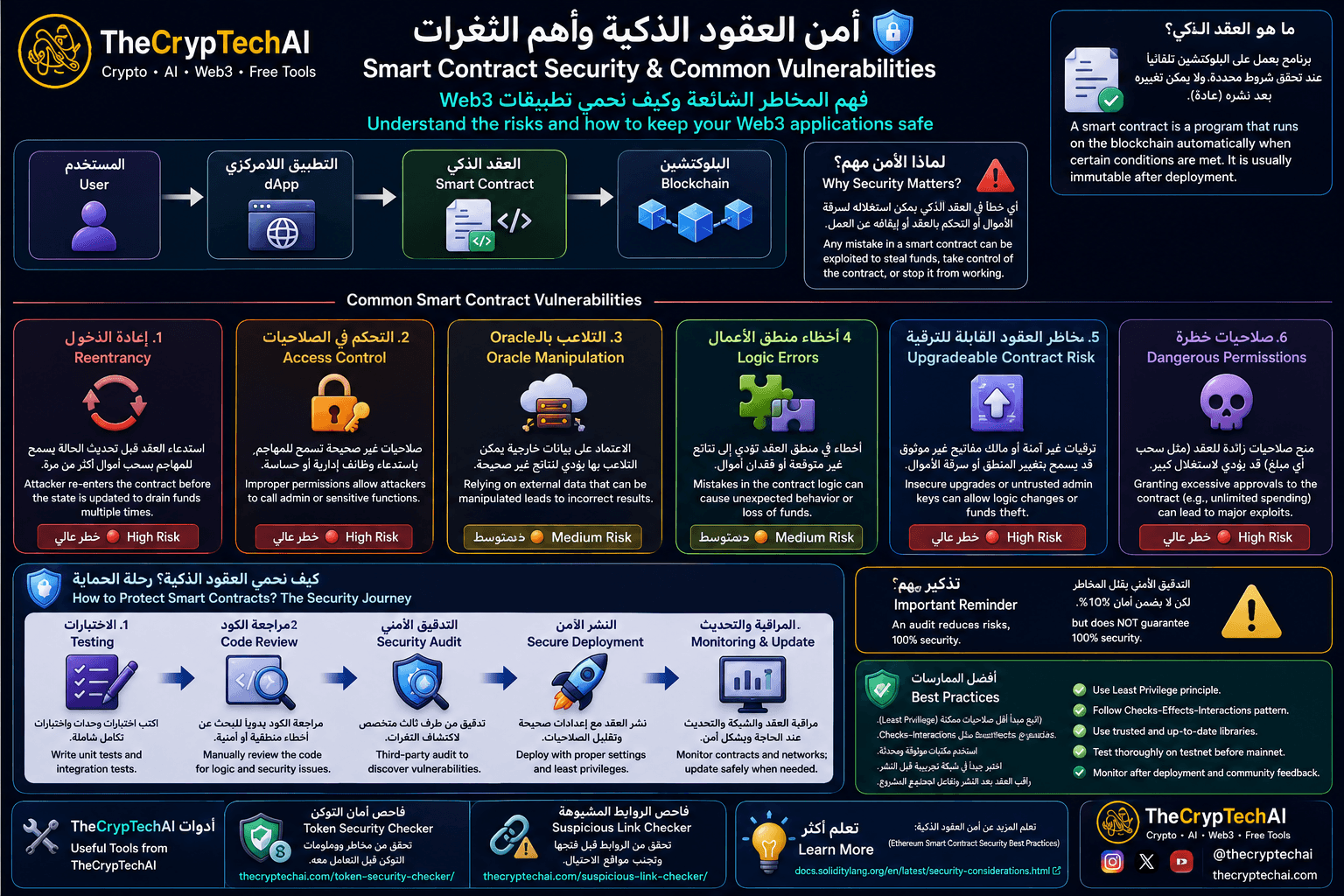
لماذا أمن العقود الذكية مهم؟
العقد الذكي ينفذ التعليمات المكتوبة في الكود. فإذا كان هناك خطأ في المنطق أو الصلاحيات، فقد يستطيع مهاجم استغلاله لتنفيذ عملية لم يقصدها المطور.
وتزداد أهمية الأمان عندما يتحكم العقد في أموال المستخدمين أو بروتوكولات DeFi أو عمليات نقل التوكنات.
1. ثغرة Reentrancy
تحدث Reentrancy عندما يستطيع عقد خارجي إعادة استدعاء وظيفة في العقد الأصلي قبل أن ينتهي العقد من تحديث حالته بالشكل المتوقع.
إذا لم تتم إدارة ترتيب العمليات بطريقة آمنة، فقد يسمح ذلك بتنفيذ نفس الإجراء عدة مرات أو التلاعب بمنطق العقد.
من الأساليب المستخدمة لتقليل هذا الخطر تطبيق نمط Checks-Effects-Interactions واستخدام وسائل حماية مناسبة ضد إعادة الدخول.
2. أخطاء التحكم في الصلاحيات Access Control
ليست كل وظائف العقد الذكي مفترضًا أن تكون متاحة لجميع المستخدمين.
قد توجد وظائف مخصصة للإدارة مثل تغيير إعدادات البروتوكول أو إيقاف بعض العمليات أو ترقية النظام.
إذا كانت قواعد Access Control غير صحيحة، فقد يتمكن عنوان غير مصرح له من تنفيذ وظيفة حساسة.
لهذا يُستخدم مبدأ Least Privilege بحيث يحصل كل حساب أو مكوّن على أقل قدر من الصلاحيات اللازمة لأداء مهمته.
3. التلاعب بالـ Oracle
تعتمد بعض العقود، خصوصًا في DeFi، على بيانات خارجية مثل أسعار العملات.
إذا كان مصدر السعر ضعيفًا أو قابلًا للتلاعب، فقد يحصل العقد على بيانات غير صحيحة ثم ينفذ قرارات مالية بناءً عليها.
وهذا يوضح أن أمن العقود الذكية لا يتعلق بالكود فقط، بل يشمل أيضًا البنية التحتية ومصادر البيانات التي يعتمد عليها العقد.
4. أخطاء منطق العقد Logic Errors
قد يكون الكود صالحًا من الناحية البرمجية لكنه ينفذ منطقًا غير صحيح.
على سبيل المثال، قد يكون هناك خطأ في حساب الرسوم أو شروط السحب أو ترتيب تنفيذ العمليات أو الحالات الاستثنائية.
هذه الأخطاء قد تكون صعبة الاكتشاف لأنها لا تعتمد دائمًا على ثغرة تقنية معروفة، بل على فهم جميع السيناريوهات التي يمكن أن يمر بها العقد.
5. مخاطر العقود القابلة للترقية
بعض مشاريع Web3 تستخدم Upgradeable Contracts للسماح بتحديث منطق النظام بعد الإطلاق.
هذه المرونة قد تكون مفيدة لإصلاح المشكلات وإضافة خصائص جديدة، لكنها تضيف أيضًا مخاطر مرتبطة بمن يمتلك صلاحية الترقية وكيف تتم إدارة هذه الصلاحية.
إذا كان مفتاح الإدارة أو آلية الترقية غير مؤمنة جيدًا، فقد تصبح نقطة حساسة داخل النظام.
6. الصلاحيات الخطرة للمستخدم
عند استخدام dApps قد تطلب بعض العقود من المستخدم منح صلاحية للتعامل مع توكناته.
الصلاحيات الواسعة أو غير الضرورية قد تزيد الضرر المحتمل إذا كان العقد خبيثًا أو تعرض للاختراق.
لذلك يجب قراءة تفاصيل الموافقة قبل توقيعها وتجنب منح صلاحيات غير ضرورية كلما كان ذلك ممكنًا.
كيف نحمي العقود الذكية؟
لا توجد خطوة واحدة تضمن أمان العقد، لذلك يعتمد التطوير الآمن على عدة طبقات.
1. Testing
يجب اختبار الوظائف الأساسية والحالات غير المعتادة ومحاولة اكتشاف السلوك غير المتوقع قبل النشر.
2. Code Review
مراجعة الكود تساعد على اكتشاف أخطاء المنطق والصلاحيات والممارسات البرمجية غير الآمنة التي قد لا تظهر أثناء الاختبارات العادية.
3. Security Audit
يمكن إجراء تدقيق أمني بواسطة متخصصين مستقلين لتحليل العقود ومحاولة اكتشاف الثغرات والمخاطر.
لكن وجود Security Audit لا يعني أن العقد آمن بنسبة 100%، بل هو طبقة إضافية لتقليل المخاطر.
4. Secure Deployment
يجب التأكد من إعداد الصلاحيات وعناوين العقود وإعدادات الشبكة وآليات الإدارة بصورة صحيحة عند النشر.
خطأ في إعدادات النشر يمكن أن يكون خطيرًا حتى لو كان الكود نفسه مكتوبًا بصورة جيدة.
5. Monitoring
الأمان لا ينتهي بمجرد نشر العقد.
مراقبة النشاط غير المعتاد والأحداث والمعاملات والتغييرات الإدارية تساعد فرق المشروع على اكتشاف المشكلات والاستجابة لها بصورة أسرع.
هل العقد الذي خضع للتدقيق آمن تمامًا؟
لا. التدقيق الأمني يقلل المخاطر لكنه لا يستطيع ضمان اكتشاف كل ثغرة محتملة.
كما يمكن أن تتغير المخاطر بعد التدقيق بسبب ترقية العقود أو تغيير الإعدادات أو ظهور أساليب هجوم جديدة أو وجود مشكلة في مكوّن خارجي يعتمد عليه البروتوكول.
لذلك يجب التعامل مع عبارة Audited كعامل إيجابي ضمن عملية تقييم أوسع، وليس كضمان مطلق للأمان.
كيف تحمي نفسك كمستخدم؟
حتى إذا لم تكن مطورًا، يمكنك تقليل بعض المخاطر عند استخدام تطبيقات Web3.
تأكد من عنوان الموقع والعقد، وراجع الصلاحيات قبل التوقيع، ولا تتفاعل مع عقود أو توكنات غير معروفة دون بحث.
إذا كنت تريد فحص توكن قبل التفاعل معه، يمكنك استخدام
Token Security Checker من TheCrypTechAI
كإحدى خطوات البحث الأولية.
وقبل ربط محفظتك بموقع غير معروف، يمكنك فحص الرابط باستخدام
Suspicious Link Checker
.
قاعدة مهمة في Web3
لا تعتمد على عامل واحد فقط عند تقييم الأمان.
وجود Audit أو شهرة المشروع أو عدد كبير من المستخدمين لا يلغي المخاطر. الأفضل الجمع بين التحقق من العقود والصلاحيات والموقع والمشروع والبنية التحتية المستخدمة.
مصدر إضافي
للتعمق أكثر في الممارسات الأمنية عند تطوير العقود الذكية، يمكنك قراءة
دليل Solidity الرسمي للاعتبارات الأمنية
.
الخلاصة
أمن العقود الذكية لا يعتمد فقط على كتابة كود يعمل، بل على التأكد من أن العقد يتصرف بأمان حتى في الحالات غير المتوقعة ومحاولات الاستغلال.
ومن المخاطر المهمة التي يجب فهمها:
Reentrancy • Access Control • Oracle Manipulation • Logic Errors • Upgrade Risks • Dangerous Permissions
أما رحلة الحماية فيمكن تلخيصها في:
Testing → Code Review → Security Audit → Secure Deployment → Monitoring
والأهم أن التدقيق الأمني يقلل المخاطر لكنه لا يضمن الأمان الكامل، لذلك يجب أن تكون الحماية عملية مستمرة طوال عمر المشروع.
بهذا نكون قد وصلنا إلى نهاية مسار العقود الذكية والبنية التحتية لـ Web3 بعد فهم تنفيذ العقود وOracles وLayer 2 والجسور والعُقد وRPC وأخيرًا أمن العقود الذكية.
Smart Contract Security is one of the most important areas in Web3 because deployed contracts may control funds, tokens, or critical permissions. A mistake in the code or permission design can create serious risks.
Why Is Smart Contract Security Important?
A smart contract executes the instructions defined in its code. If there is an error in its logic or permissions, an attacker may be able to trigger behavior that the developers never intended.
Security becomes especially important when a contract controls user funds, DeFi protocols, tokens, or other valuable assets.
1. Reentrancy
Reentrancy can occur when an external contract calls back into the original contract before its state has been updated as expected.
If operations are not ordered safely, an attacker may be able to repeat an action or manipulate the contract's intended logic.
Techniques such as the Checks-Effects-Interactions pattern and appropriate reentrancy protections can help reduce this risk.
2. Access Control Problems
Not every smart contract function should be available to every user.
Some functions may be intended only for administrators, such as changing protocol settings, pausing certain operations, or managing upgrades.
Incorrect Access Control can allow an unauthorized address to execute sensitive functions.
The Least Privilege principle helps reduce this risk by giving accounts and components only the permissions they actually require.
3. Oracle Manipulation
Some smart contracts, particularly DeFi protocols, depend on external information such as cryptocurrency prices.
If the price source is weak or can be manipulated, the contract may receive incorrect information and make financial decisions based on inaccurate data.
This demonstrates that Smart Contract Security involves more than contract code. It also includes the infrastructure and external data sources that the contract depends on.
4. Logic Errors
A contract can be technically valid while still implementing incorrect business logic.
For example, there may be mistakes in fee calculations, withdrawal conditions, operation ordering, or unusual edge cases.
These problems can be difficult to detect because they do not always match a known technical vulnerability. Developers must understand the different scenarios the contract may encounter.
5. Upgradeable Contract Risks
Some Web3 projects use Upgradeable Contracts to allow protocol logic to be changed after launch.
This flexibility can help fix problems or introduce new features, but it also creates additional risks related to who controls upgrades and how those permissions are managed.
If an administrator key or upgrade mechanism is poorly secured, it can become a critical point of failure.
6. Dangerous Permissions
When interacting with dApps, users may be asked to approve a smart contract to access or spend certain tokens.
Excessive or unnecessary permissions can increase potential losses if the contract is malicious or later compromised.
Users should review approvals carefully before signing and avoid granting unnecessary permissions whenever possible.
How Can Smart Contracts Be Protected?
No single security measure can guarantee that a contract is completely safe. Secure development therefore requires multiple layers of protection.
1. Testing
Developers should test normal functions, unusual scenarios, edge cases, and unexpected behavior before deployment.
2. Code Review
Reviewing the code can help identify logic errors, permission problems, and unsafe programming practices that ordinary tests may miss.
3. Security Audit
Independent security specialists can review contracts and attempt to identify vulnerabilities and design risks.
However, a Security Audit does not guarantee 100% security. It should be considered an additional layer for reducing risk.
4. Secure Deployment
Permissions, contract addresses, network settings, and administrative mechanisms should be carefully verified during deployment.
A configuration mistake can create serious problems even when the underlying contract code is well written.
5. Monitoring
Security does not end when the contract is deployed.
Monitoring unusual activity, events, transactions, and administrative changes can help project teams identify and respond to potential problems more quickly.
Does an Audit Mean a Contract Is Completely Safe?
No. Security audits can reduce risk, but they cannot guarantee that every possible vulnerability has been discovered.
Risks can also change after an audit because of contract upgrades, configuration changes, new attack techniques, or vulnerabilities in external components used by the protocol.
The word Audited should therefore be treated as one positive factor in a broader security assessment rather than an absolute guarantee.
How Can Users Protect Themselves?
Even if you are not a developer, you can reduce some risks when using Web3 applications.
Verify the website and contract address, review permissions before signing, and research unfamiliar contracts or tokens before interacting with them.
You can use the
TheCrypTechAI Token Security Checker
as one initial research step when evaluating an unfamiliar token.
Before connecting your wallet to an unfamiliar website, you can also check the URL using the
Suspicious Link Checker
.
An Important Web3 Security Rule
Do not rely on a single factor when evaluating security.
An audit, project popularity, or a large user base does not eliminate risk. A better approach is to evaluate contracts, permissions, websites, project design, and the infrastructure on which the application depends.
Learn More
For more information about secure smart contract development, read the
official Solidity Security Considerations guide
.
Key Takeaway
Smart Contract Security is not simply about writing code that works. Contracts should also behave safely during unexpected situations and attempted attacks.
Important risks include:
Reentrancy • Access Control • Oracle Manipulation • Logic Errors • Upgrade Risks • Dangerous Permissions
The security process can be summarized as:
Testing → Code Review → Security Audit → Secure Deployment → Monitoring
Most importantly, an audit can reduce risk but cannot guarantee complete security. Security should remain an ongoing process throughout the life of a Web3 project.
This completes the Smart Contracts & Web3 Infrastructure learning path, covering smart contract execution, blockchain oracles, Layer 2 networks, blockchain bridges, Nodes and RPC, and finally smart contract security.
اختبر فهمك
Check Your Understanding
سؤالان سريعان لتثبيت أهم ما تعلمته.
Two quick questions to reinforce the key ideas.