العُقد وRPC والبنية التحتية لـ Web3 | Nodes, RPC & Web3 Infrastructure
تعلّم ببساطة، خطوة بخطوة
Learn simply, step by step
معلومة واضحة، ثم خطوة جديدة.
Clear knowledge, one step at a time.
العُقد وRPC والبنية التحتية لـ Web3 Nodes, RPC & Web3 Infrastructure
عندما تفتح محفظة كريبتو أو تستخدم تطبيقًا لامركزيًا، لا يتصل التطبيق بالبلوكتشين بطريقة سحرية. خلف الواجهة توجد البنية التحتية لـ Web3 التي تشمل العُقد Blockchain Nodes وواجهات RPC التي تسمح للتطبيقات بقراءة بيانات الشبكة وإرسال المعاملات إليها.
ما هي Blockchain Node؟
العُقدة Node هي جهاز أو برنامج يشغّل برنامج الشبكة ويتصل بعُقد أخرى داخل البلوكتشين.
حسب نوع العقدة والشبكة، يمكنها الاحتفاظ ببيانات البلوكتشين والتحقق من المعلومات واستقبال المعاملات ونشرها والمشاركة في تشغيل الشبكة.
وجود عدد كبير من العُقد المستقلة يساعد على جعل بيانات الشبكة متاحة دون الاعتماد على خادم مركزي واحد.
ما هو RPC؟
RPC اختصار لـ Remote Procedure Call، وهي طريقة تسمح للتطبيق بإرسال طلب إلى نظام آخر لتنفيذ عملية أو إعادة بيانات.
في Web3 تستخدم المحافظ وdApps واجهات RPC للتواصل مع عُقد البلوكتشين.
بدلًا من أن يحتاج كل تطبيق إلى تشغيل عقدة كاملة خاصة به، يمكنه إرسال طلبات RPC إلى عقدة أو إلى مزود بنية تحتية يوفر الوصول إلى الشبكة.
ما الفرق بين Node وRPC؟
يمكن تبسيط الفرق كالتالي:
Node: البرنامج المتصل فعليًا بشبكة البلوكتشين ويحتفظ بالبيانات ويتعامل مع الشبكة حسب نوع العقدة.
RPC: الواجهة أو طريقة الاتصال التي تسمح للمحفظة أو التطبيق بطلب معلومات أو إرسال معاملات إلى العقدة.
إذًا RPC ليست بلوكتشين جديدة، بل وسيلة اتصال مع البنية التحتية للشبكة.
كيف تتصل المحفظة بالبلوكتشين؟
عندما تعرض المحفظة رصيدك، فهي تحتاج إلى الحصول على هذه المعلومة من الشبكة.
يمكن تبسيط المسار إلى:
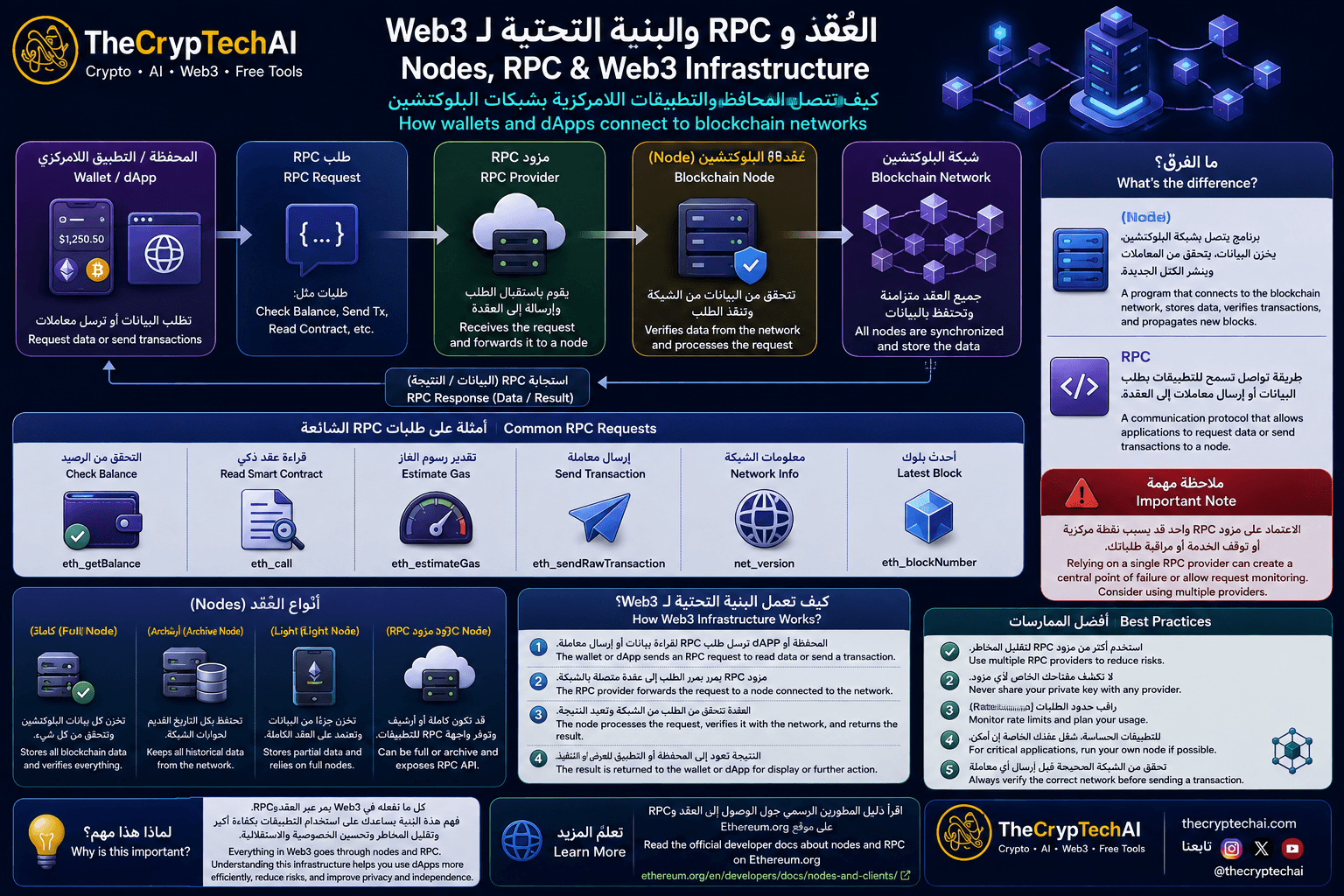
Wallet / dApp → RPC Request → RPC Provider → Blockchain Node → Blockchain Network
ثم تعود النتيجة في الاتجاه العكسي:
Blockchain Data → Node → RPC Response → Wallet / dApp
مثال: التحقق من الرصيد
عندما تفتح محفظتك، يمكن أن ترسل طلب RPC للحصول على رصيد عنوان معين.
تقرأ العقدة البيانات المطلوبة من حالة الشبكة ثم تعيد النتيجة إلى التطبيق، وبعدها تعرض المحفظة الرصيد للمستخدم.
في شبكات Ethereum يمكن استخدام طلبات مثل eth_getBalance للحصول على رصيد ETH لعنوان معين.
مثال: قراءة عقد ذكي
يمكن للتطبيق استخدام RPC لقراءة بيانات من عقد ذكي دون تغيير حالة البلوكتشين.
على سبيل المثال، قد يحتاج dApp إلى قراءة قيمة مخزنة داخل عقد أو الاستعلام عن نتيجة وظيفة للقراءة فقط.
في Ethereum تُستخدم طرق مثل eth_call لتنفيذ بعض عمليات القراءة دون إنشاء معاملة تغير حالة الشبكة.
ماذا يحدث عند إرسال معاملة؟
عندما توقع معاملة باستخدام محفظتك، يتم إنشاء المعاملة وتوقيعها باستخدام المفتاح الخاص داخل المحفظة.
بعد ذلك يمكن إرسال المعاملة الموقعة عبر RPC إلى عقدة متصلة بالشبكة، والتي تقوم بنشرها إلى شبكة البلوكتشين لمعالجتها.
إحدى طرق RPC المستخدمة لهذا الغرض على Ethereum هي eth_sendRawTransaction.
هل مزود RPC يمتلك مفتاحك الخاص؟
في الاستخدام الطبيعي للمحافظ غير الاحتجازية، لا يحتاج مزود RPC إلى معرفة المفتاح الخاص لتقديم بيانات الشبكة أو استقبال معاملة موقعة.
يجب أن تتم عملية التوقيع داخل المحفظة، ثم يتم إرسال المعاملة الموقعة إلى الشبكة.
ولهذا يجب عدم إدخال Private Key أو Seed Phrase في أي موقع أو خدمة RPC تطلبهما منك.
ما هي أشهر طلبات RPC؟
تستخدم تطبيقات Web3 العديد من طلبات RPC، مثل:
eth_getBalance: قراءة رصيد عنوان.
eth_call: قراءة أو محاكاة استدعاء عقد ذكي دون إنشاء معاملة على الشبكة.
eth_estimateGas: تقدير كمية Gas اللازمة لتنفيذ معاملة.
eth_sendRawTransaction: إرسال معاملة موقعة إلى الشبكة.
eth_blockNumber: معرفة رقم أحدث Block تعرفه العقدة.
ما أنواع Blockchain Nodes؟
تختلف أنواع العُقد حسب الشبكة والبرنامج المستخدم، لكن يمكن أن تقابل مصطلحات مثل:
Full Node: تحتفظ بالبيانات اللازمة للتحقق من حالة الشبكة وفق قواعد البروتوكول.
Archive Node: تحتفظ بالإضافة إلى ذلك ببيانات تاريخية موسعة لحالات سابقة، ولذلك تحتاج عادةً إلى مساحة تخزين أكبر.
Light Client: يعتمد على كمية أقل من البيانات ويستخدم آليات تسمح له بالحصول على المعلومات والتحقق منها دون تخزين كل بيانات العقدة الكاملة.
ما هو RPC Provider؟
تشغيل وصيانة عقد Blockchain خاصة بكل تطبيق قد يتطلب موارد تقنية وبنية تحتية مستمرة.
لذلك توجد خدمات RPC Providers تشغّل البنية التحتية وتوفر للمطورين والمحافظ نقاط اتصال RPC جاهزة.
بهذا يستطيع التطبيق إرسال الطلبات إلى مزود RPC بدل تشغيل وإدارة جميع العُقد بنفسه.
ما مخاطر الاعتماد على مزود RPC واحد؟
رغم أن البلوكتشين نفسه قد يكون لامركزيًا، يمكن أن يعتمد تطبيق معين على مزود RPC واحد.
إذا توقف هذا المزود أو واجه مشكلة، فقد يفشل التطبيق مؤقتًا في عرض البيانات أو إرسال الطلبات رغم أن شبكة البلوكتشين نفسها لا تزال تعمل.
كما أن استخدام مزود خارجي يمكن أن يضيف اعتبارات مرتبطة بالخصوصية والاعتماد على طرف ثالث.
لذلك قد تستخدم بعض التطبيقات أكثر من مزود أو توفر آليات احتياطية لتقليل الاعتماد على نقطة واحدة.
إضافة RPC يدويًا إلى المحفظة
بعض المحافظ تسمح بإضافة شبكة أو RPC Endpoint يدويًا.
عند القيام بذلك يجب الحصول على بيانات الشبكة من مصدر رسمي والتأكد من RPC URL وChain ID وبقية إعدادات الشبكة.
إضافة بيانات شبكة خاطئة أو استخدام رابط مجهول قد يؤدي إلى تجربة مضللة أو يعرض معلومات الاتصال لمزود غير موثوق.
كيف تستخدم بنية Web3 بأمان أكبر؟
استخدم بيانات RPC المنشورة في المصادر الرسمية للشبكة أو مزودي البنية التحتية المعروفين، ولا تشارك Seed Phrase أو Private Key مع أي خدمة.
قبل ربط محفظتك بموقع Web3 غير معروف، يمكنك استخدام
Suspicious Link Checker من TheCrypTechAI
كإحدى خطوات التحقق الأولية من الرابط.
وإذا كنت تبحث عن أنواع المحافظ المختلفة واستخداماتها، يمكنك الاطلاع على
Crypto Wallet Finder
.
مصدر إضافي
للتعمق أكثر في العُقد وبرامج تشغيل Ethereum، يمكنك قراءة
دليل Ethereum الرسمي حول Nodes and Clients
.
الخلاصة
البنية التحتية لـ Web3 هي الطبقة التقنية التي تجعل المحافظ والتطبيقات قادرة على التواصل مع شبكات البلوكتشين.
تذكر الفرق الأساسي:
Node = برنامج متصل بشبكة البلوكتشين ويتعامل مع بياناتها.
RPC = واجهة اتصال تسمح للتطبيقات بطلب البيانات وإرسال المعاملات إلى العُقد.
والتدفق المبسط هو:
Wallet / dApp → RPC → Node → Blockchain
ثم تعود بيانات الشبكة إلى التطبيق عبر المسار نفسه.
في الدرس السادس والأخير سنتعرف على أمن العقود الذكية وأهم الثغرات وكيف يمكن أن تؤدي أخطاء صغيرة في الكود أو الصلاحيات إلى مخاطر كبيرة داخل تطبيقات Web3.
When you open a crypto wallet or use a decentralized application, the application does not connect to the blockchain magically. Behind the interface is Web3 Infrastructure, including blockchain nodes and RPC interfaces that allow applications to read network data and submit transactions.
What Is a Blockchain Node?
A Node is a computer or program running blockchain network software and communicating with other nodes.
Depending on the network and node type, it may store blockchain data, verify information, receive and propagate transactions, and participate in operating the network.
Having many independent nodes helps make blockchain data available without relying on a single central server.
What Is RPC?
RPC stands for Remote Procedure Call. It is a method that allows an application to send requests to another system and receive data or request an operation.
In Web3, wallets and dApps use RPC interfaces to communicate with blockchain nodes.
Instead of every application operating its own full node, it can send RPC requests to a node or an infrastructure provider that provides access to the blockchain network.
What Is the Difference Between a Node and RPC?
The difference can be simplified as follows:
Node: Software that connects directly to the blockchain network and handles network data according to its node type.
RPC: The communication interface that allows a wallet or application to request information or submit transactions to a node.
RPC is therefore not another blockchain. It is a way for applications to communicate with blockchain infrastructure.
How Does a Wallet Connect to a Blockchain?
When your wallet displays a balance, it needs to retrieve that information from the network.
The process can be simplified as:
Wallet / dApp → RPC Request → RPC Provider → Blockchain Node → Blockchain Network
The response then travels back:
Blockchain Data → Node → RPC Response → Wallet / dApp
Example: Checking a Balance
When you open your wallet, it can send an RPC request asking for the balance associated with a particular address.
The node retrieves the required information from the network state and returns the result to the application, which then displays the balance.
On Ethereum networks, methods such as eth_getBalance can be used to retrieve an address's ETH balance.
Example: Reading a Smart Contract
Applications can use RPC to read smart contract data without changing blockchain state.
For example, a dApp may need to retrieve a stored value or query the result of a read-only contract function.
On Ethereum, methods such as eth_call can be used for certain contract calls without creating an on-chain state-changing transaction.
What Happens When You Send a Transaction?
When you approve a transaction with your wallet, the transaction is created and signed using your private key inside the wallet.
The signed transaction can then be submitted through RPC to a node connected to the blockchain, which propagates it across the network for processing.
One Ethereum RPC method used for this purpose is eth_sendRawTransaction.
Does an RPC Provider Have Your Private Key?
During normal use of a non-custodial wallet, an RPC provider does not need your private key to provide blockchain data or receive a signed transaction.
Signing should happen inside your wallet, after which the signed transaction is submitted to the network.
Never enter your Private Key or Seed Phrase into an RPC website or service that asks for it.
Common RPC Requests
Web3 applications use many RPC methods, including:
eth_getBalance: Retrieves the balance of an address.
eth_call: Reads or simulates certain smart contract calls without creating a state-changing transaction.
eth_estimateGas: Estimates the amount of gas required for a transaction.
eth_sendRawTransaction: Submits a signed transaction to the network.
eth_blockNumber: Returns the latest block number known to the node.
What Types of Blockchain Nodes Exist?
Node terminology varies between networks and software implementations, but you may encounter concepts such as:
Full Node: Maintains the data required to verify the current blockchain state according to the protocol rules.
Archive Node: Stores additional historical state information and therefore generally requires significantly more storage.
Light Client: Uses less data and relies on mechanisms that allow it to obtain and verify information without storing everything maintained by a full node.
What Is an RPC Provider?
Operating and maintaining blockchain nodes for every application can require significant technical resources and ongoing infrastructure management.
RPC Providers operate this infrastructure and provide ready-to-use RPC endpoints for developers, wallets, and applications.
Applications can therefore send requests through these providers instead of maintaining every required node themselves.
What Are the Risks of Relying on One RPC Provider?
Although the underlying blockchain may be decentralized, an individual application can still depend heavily on a single RPC provider.
If that provider experiences an outage, the application may temporarily fail to display blockchain data or submit requests even while the blockchain itself continues operating.
Third-party RPC services can also introduce privacy and dependency considerations.
Some applications therefore use multiple providers or fallback mechanisms to reduce dependence on a single endpoint.
Adding an RPC Network Manually
Some wallets allow users to manually add a blockchain network or RPC endpoint.
When doing so, obtain the network information from an official source and verify the RPC URL, Chain ID, and other network settings.
Incorrect network details or an untrusted RPC endpoint can create a misleading experience or expose connection information to an unknown provider.
Using Web3 Infrastructure More Safely
Use RPC information published by official network sources or reputable infrastructure providers, and never share your Seed Phrase or Private Key with any service.
Before connecting your wallet to an unfamiliar Web3 website, you can use the
TheCrypTechAI Suspicious Link Checker
as one initial step when checking the URL.
If you want to explore different types of crypto wallets and their uses, you can also visit the
Crypto Wallet Finder
.
Learn More
For a deeper explanation of Ethereum nodes and client software, read the
official Ethereum Nodes and Clients guide
.
Key Takeaway
Web3 Infrastructure is the technical layer that allows wallets and decentralized applications to communicate with blockchain networks.
Remember the basic difference:
Node = Software connected to the blockchain network that handles its data.
RPC = A communication interface that allows applications to request data and submit transactions to nodes.
The simplified flow is:
Wallet / dApp → RPC → Node → Blockchain
Blockchain data then returns to the application through the same infrastructure.
In the sixth and final lesson, we will explore Smart Contract Security and Common Vulnerabilities and learn how coding errors or dangerous permissions can create major risks in Web3 applications.
اختبر فهمك
Check Your Understanding
سؤالان سريعان لتثبيت أهم ما تعلمته.
Two quick questions to reinforce the key ideas.