الجسور بين شبكات البلوكتشين | Blockchain Bridges & Cross-Chain Transfers
تعلّم ببساطة، خطوة بخطوة
Learn simply, step by step
معلومة واضحة، ثم خطوة جديدة.
Clear knowledge, one step at a time.
الجسور بين شبكات البلوكتشين Blockchain Bridges & Cross-Chain Transfers
تعمل شبكات البلوكتشين عادةً كأنظمة مستقلة، لذلك لا يمكن نقل الأصول مباشرة من شبكة إلى أخرى بالطريقة نفسها التي ترسل بها العملات داخل الشبكة الواحدة. هنا يأتي دور جسور البلوكتشين Blockchain Bridges التي تساعد على نقل الأصول أو البيانات بين شبكات مختلفة.
ما هي جسور البلوكتشين؟
Blockchain Bridge هو نظام يتيح نقل قيمة أو معلومات بين شبكتين مختلفتين من البلوكتشين.
فعلى سبيل المثال، قد يرغب المستخدم في استخدام أصل موجود على Ethereum داخل شبكة أخرى. الجسر يوفر آلية تجعل تمثيل هذا الأصل أو سيولته متاحة على الشبكة الأخرى وفق تصميم الجسر.
لكن من المهم فهم أن العملية لا تعني دائمًا انتقال نفس التوكن حرفيًا من بلوكتشين إلى آخر؛ فالطريقة تختلف حسب تصميم الجسر.
لماذا نحتاج إلى Blockchain Bridges؟
كل شبكة بلوكتشين لها حالتها وقواعدها الخاصة، ولا تستطيع شبكة عادةً معرفة ما يحدث على شبكة أخرى بصورة أصلية.
الجسور تساعد على تحسين Interoperability أو التشغيل البيني بين الشبكات، مما يسمح للمستخدمين والتطبيقات باستخدام الأصول والبيانات عبر أكثر من نظام بلوكتشين.
كيف تعمل الجسور؟
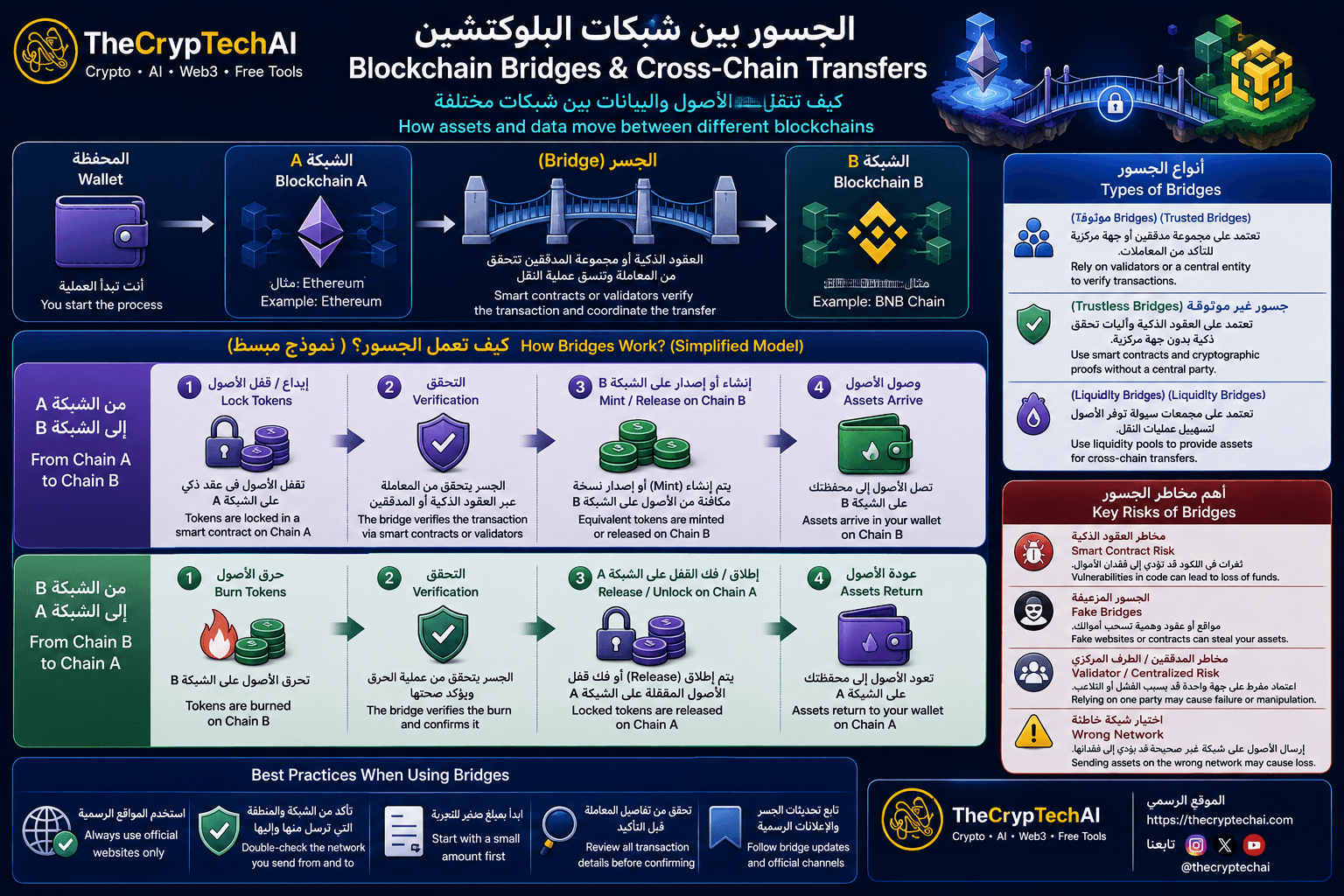
توجد تصميمات مختلفة للجسور، لكن أحد النماذج المبسطة هو Lock & Mint.
يمكن تصور العملية من الشبكة A إلى الشبكة B كالتالي:
Wallet → Blockchain A → Bridge → Blockchain B → Wallet
1. قفل الأصول على الشبكة A
يرسل المستخدم الأصل إلى عقد أو آلية خاصة بالجسر على الشبكة الأولى.
بدلًا من استمرار الأصل في الحركة على الشبكة A، يتم قفله وفق قواعد الجسر.
2. التحقق من العملية
يحتاج نظام الجسر إلى طريقة للتأكد من أن عملية القفل حدثت بالفعل.
قد يعتمد ذلك على مدققين Validators أو عقود ذكية أو رسائل بين الشبكات أو آليات تشفيرية، حسب بنية الجسر.
3. Mint أو Release على الشبكة B
بعد التحقق، يمكن إصدار تمثيل للأصل على الشبكة B أو تحرير أصول موجودة مسبقًا من مجمع سيولة.
لهذا السبب قد تجد أحيانًا نسخة Wrapped أو Bridged من أصل موجود أصلًا على شبكة أخرى.
4. وصول الأصل إلى المستخدم
بعد اكتمال العملية تظهر الأصول في عنوان المستخدم على الشبكة الجديدة، ويمكن استخدامها داخل التطبيقات المتوافقة معها.
ماذا يحدث عند العودة إلى الشبكة الأصلية؟
في نموذج Burn & Release يمكن تنفيذ العملية بصورة عكسية.
يتم حرق أو إزالة التمثيل الموجود على الشبكة B، ثم يتحقق الجسر من العملية، وبعد ذلك يتم تحرير الأصل المقفول على الشبكة A.
بصورة مبسطة:
Burn on Chain B → Verification → Release on Chain A
هل كل الجسور تستخدم Lock & Mint؟
لا. Lock & Mint مجرد نموذج شائع يساعد على فهم الفكرة.
بعض الجسور تستخدم مجمعات سيولة، وبعضها ينقل رسائل بين الشبكات، بينما تستخدم أنظمة أخرى آليات تحقق مختلفة.
لذلك يجب فهم تصميم الجسر نفسه قبل افتراض طريقة عمله.
ما هي Cross-Chain Transfers؟
مصطلح Cross-Chain يشير إلى التفاعل بين شبكات بلوكتشين مختلفة.
وقد يكون هذا التفاعل نقل أصل، أو إرسال رسالة، أو تنفيذ تعليمات مرتبطة بتطبيق يعمل عبر أكثر من شبكة.
ولهذا أصبحت تقنيات Cross-Chain جزءًا مهمًا من البنية التحتية لـ Web3.
ما أهم مخاطر جسور البلوكتشين؟
الجسور من الأجزاء الحساسة في منظومة Web3 لأنها قد تتعامل مع أصول كبيرة وتحتاج إلى تنسيق المعلومات بين بيئات مختلفة.
ومن أهم المخاطر:
مخاطر العقود الذكية: وجود ثغرة في العقود التي تدير الأصول أو عملية النقل قد يؤدي إلى خسائر.
مخاطر المدققين: بعض الجسور تعتمد على مجموعة من الجهات أو المدققين للتحقق من العمليات، وبالتالي يجب فهم مستوى اللامركزية والثقة المطلوبة.
الجسور المزيفة: قد ينشئ المحتالون مواقع تشبه مواقع الجسور الحقيقية بهدف سرقة الأموال أو الحصول على صلاحيات خطرة من المحفظة.
اختيار الشبكة الخاطئة: استخدام شبكة أو عنوان غير صحيح قد يؤدي إلى عدم وصول الأصل بالشكل المتوقع أو صعوبة استعادته.
كيف تستخدم الجسور بأمان أكبر؟
قبل استخدام أي Bridge، ادخل إليه من الموقع الرسمي للمشروع بدل الضغط على روابط عشوائية من الرسائل أو مواقع التواصل.
تأكد من الشبكة التي ترسل منها والشبكة التي تريد الاستقبال عليها، وراجع اسم التوكن وعنوان العقد عند الحاجة.
عند استخدام جسر جديد لأول مرة، يمكن أن يكون من الأفضل تجربة مبلغ صغير قبل تحويل مبلغ أكبر.
راجع أيضًا المعاملة والصلاحيات التي تطلبها المحفظة قبل التوقيع.
افحص الرابط قبل ربط محفظتك
مواقع الجسور المزيفة يمكن أن تكون شبيهة جدًا بالموقع الأصلي، لذلك يجب التأكد من النطاق قبل ربط المحفظة.
إذا وصلك رابط غير معروف، يمكنك استخدام
Suspicious Link Checker من TheCrypTechAI
كإحدى خطوات فحص الرابط قبل فتحه أو ربط محفظتك به.
تحقق من التوكن على الشبكة الجديدة
بعد استخدام Bridge قد يظهر أمامك توكن يحمل اسمًا مشابهًا للأصل الأصلي، لكن وجود الاسم نفسه لا يعني بالضرورة أنه العقد الصحيح.
يمكنك استخدام
Token Security Checker
كإحدى خطوات البحث الأولية عند التعامل مع عقد توكن غير معروف.
مصدر إضافي
للتعرف بصورة أعمق على الجسور وطريقة نقل الأصول بين الشبكات، يمكنك قراءة
دليل Ethereum الرسمي حول Blockchain Bridges
.
الخلاصة
جسور البلوكتشين توفر آليات تسمح للأصول أو البيانات بالتفاعل عبر شبكات مختلفة، وهي عنصر مهم لتحقيق التشغيل البيني داخل Web3.
أحد النماذج المبسطة للعمل هو:
Chain A → Lock → Verification → Mint / Release → Chain B
وعند العودة يمكن استخدام نموذج:
Chain B → Burn → Verification → Release → Chain A
لكن الجسور تختلف في بنيتها وآليات الأمان الخاصة بها، ولذلك يجب دائمًا التحقق من الجسر والشبكات والعقود والصلاحيات قبل تنفيذ أي عملية Cross-Chain.
في الدرس التالي سنتعرف على العُقد وRPC والبنية التحتية لـ Web3، وكيف تتصل المحافظ والتطبيقات فعليًا بشبكات البلوكتشين.
Blockchain networks generally operate as separate systems, so assets cannot simply move from one blockchain to another in the same way they move between addresses on a single network. Blockchain Bridges provide mechanisms that allow assets or data to move between different blockchain networks.
What Are Blockchain Bridges?
A Blockchain Bridge is a system that enables value or information to move between different blockchain networks.
For example, a user may want to use an asset that exists on Ethereum within another blockchain ecosystem. A bridge can provide a mechanism that makes a representation of that asset, or corresponding liquidity, available on the destination network.
Importantly, this does not always mean that the exact same token physically moves from one blockchain to another. The mechanism depends on the bridge architecture.
Why Do We Need Blockchain Bridges?
Each blockchain maintains its own state and follows its own rules. One network normally cannot directly know what has happened on another network.
Bridges help improve interoperability between blockchains, allowing users and applications to use assets and information across multiple blockchain ecosystems.
How Do Blockchain Bridges Work?
There are many bridge architectures, but one simplified model is known as Lock & Mint.
A transfer from Chain A to Chain B can be represented as:
Wallet → Blockchain A → Bridge → Blockchain B → Wallet
1. Locking Assets on Chain A
The user sends the asset to a smart contract or another mechanism controlled by the bridge on the source blockchain.
The original asset is then locked according to the bridge's rules instead of continuing to circulate on Chain A.
2. Verifying the Transfer
The bridge needs a mechanism to verify that the locking transaction actually occurred.
Depending on the bridge architecture, this verification may involve validators, smart contracts, cross-chain messaging systems, or cryptographic mechanisms.
3. Mint or Release on Chain B
After verification, the system may mint a representation of the asset on Chain B or release existing assets from a liquidity pool.
This is one reason users may encounter wrapped or bridged versions of assets that originally exist on another blockchain.
4. Assets Arrive on the Destination Network
After the process is completed, the assets become available at the user's address on the destination network and can be used with compatible applications.
What Happens When Assets Return?
In a Burn & Release model, the process can operate in the opposite direction.
The bridged representation on Chain B is burned or removed from circulation. After the bridge verifies this action, the original locked asset can be released on Chain A.
The simplified process is:
Burn on Chain B → Verification → Release on Chain A
Do All Bridges Use Lock & Mint?
No. Lock & Mint is simply a useful model for understanding the basic concept.
Some bridges use liquidity pools, some focus on cross-chain messaging, and others use different verification mechanisms.
It is therefore important to understand the architecture of a specific bridge rather than assuming that every bridge works in exactly the same way.
What Are Cross-Chain Transfers?
Cross-Chain refers to interactions that take place between different blockchain networks.
This interaction may involve transferring an asset, sending a message, or triggering instructions across applications operating on different networks.
Cross-chain technology has therefore become an important part of Web3 infrastructure.
What Are the Main Risks of Blockchain Bridges?
Bridges are sensitive components of Web3 infrastructure because they may secure large amounts of assets while coordinating information between different blockchain environments.
Important risks include:
Smart Contract Risk: Vulnerabilities in contracts responsible for managing assets or transfers can potentially result in losses.
Validator Risk: Some bridges depend on a group of validators or other entities to verify transfers, making the level of decentralization and required trust important factors.
Fake Bridges: Attackers may create websites that imitate legitimate bridge interfaces to steal funds or request dangerous wallet permissions.
Wrong Network: Selecting an incorrect network or address can result in assets not arriving as expected or becoming difficult to recover.
How Can You Use Bridges More Safely?
Access a bridge through the project's official website rather than through random links received in messages or social media posts.
Double-check the source and destination networks, and verify the token and contract address when necessary.
When using an unfamiliar bridge for the first time, consider testing the process with a small amount before transferring a larger amount.
Always review transaction details and wallet permissions before signing.
Check the Link Before Connecting Your Wallet
Fake bridge websites can closely resemble legitimate interfaces, so verifying the domain is important before connecting a wallet.
If you receive an unfamiliar URL, you can use the
TheCrypTechAI Suspicious Link Checker
as one initial step before opening the site or connecting your wallet.
Verify Tokens on the Destination Network
After using a bridge, you may encounter a token with the same or a similar name as the original asset. A matching name alone does not guarantee that it is the correct contract.
You can use the
Token Security Checker
as one initial research step when evaluating an unfamiliar token contract.
Learn More
For a deeper explanation of bridges and cross-chain asset transfers, read the
official Ethereum guide to Blockchain Bridges
.
Key Takeaway
Blockchain Bridges provide mechanisms that allow assets or information to interact across different blockchain networks, making them an important part of Web3 interoperability.
One simplified bridge model is:
Chain A → Lock → Verification → Mint / Release → Chain B
For the return process:
Chain B → Burn → Verification → Release → Chain A
However, bridge architectures and security models vary. Always verify the bridge, networks, contracts, and wallet permissions before performing a cross-chain transfer.
In the next lesson, we will explore Nodes, RPC, and Web3 Infrastructure and learn how wallets and decentralized applications actually communicate with blockchain networks.
اختبر فهمك
Check Your Understanding
سؤالان سريعان لتثبيت أهم ما تعلمته.
Two quick questions to reinforce the key ideas.