منصات التداول اللامركزية DEX وكيف تعمل | Decentralized Exchanges (DEXs) and How They Work
تعلّم ببساطة، خطوة بخطوة
Learn simply, step by step
معلومة واضحة، ثم خطوة جديدة.
Clear knowledge, one step at a time.
منصات التداول اللامركزية DEX وكيف تعمل Decentralized Exchanges (DEXs) and How They Work
تسمح منصات التداول اللامركزية أو DEX للمستخدمين بمبادلة الأصول الرقمية مباشرة من محافظهم عبر بروتوكولات تعمل على البلوكتشين، دون الحاجة إلى إيداع العملات أولًا في حساب تداول مركزي تقليدي.
ما هي منصات التداول اللامركزية DEX؟
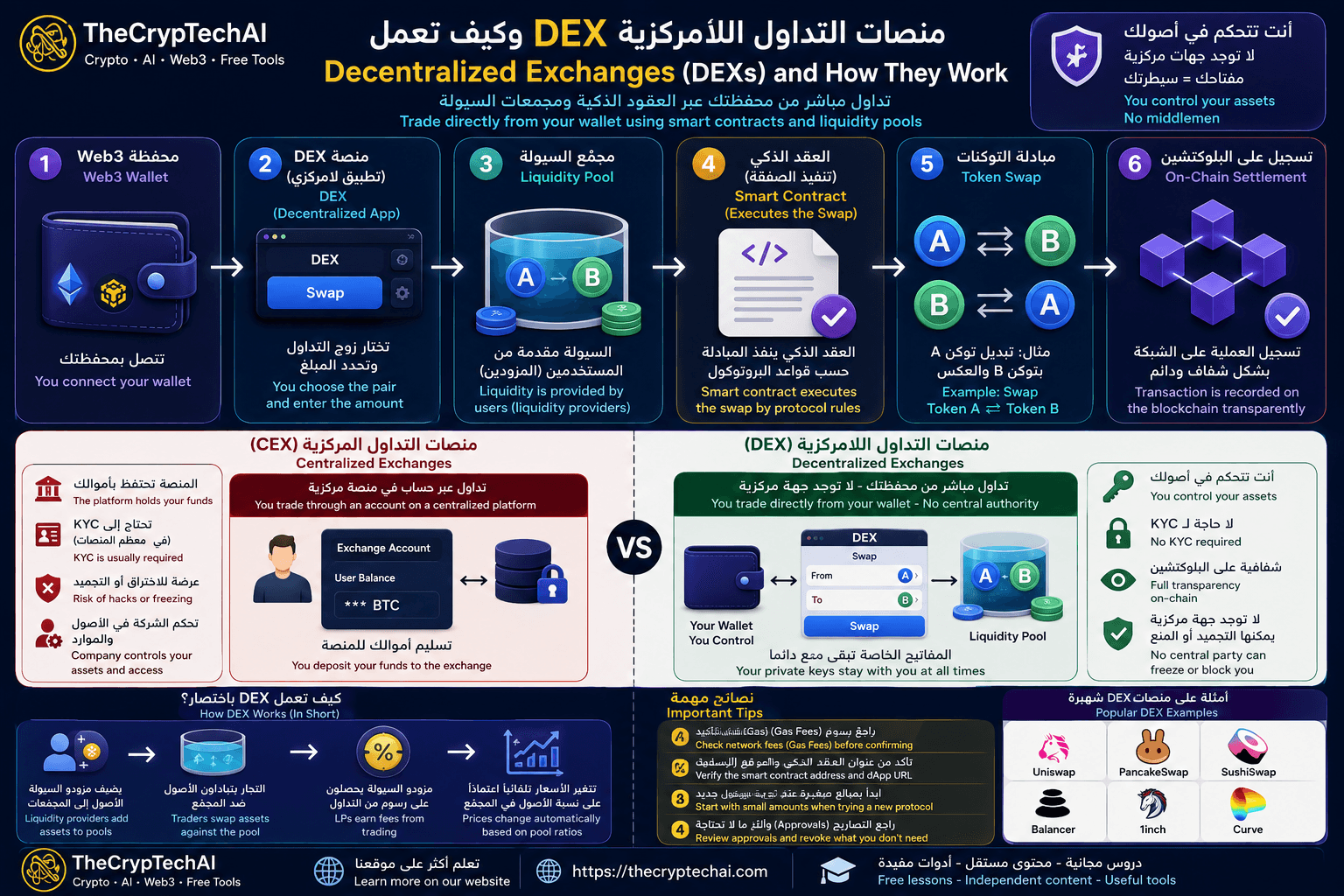
DEX هو اختصار لـ Decentralized Exchange. وهي بروتوكولات تتيح مبادلة بعض الأصول الرقمية من خلال العقود الذكية، مع بقاء المستخدم مسؤولًا عن محفظته ومفاتيحه.
ومن أشهر الأمثلة على هذا النوع من البروتوكولات Uniswap وPancakeSwap وCurve وغيرها، لكن طريقة العمل والتكاليف والشبكات المدعومة تختلف من بروتوكول إلى آخر.
كيف تعمل منصة DEX؟
يمكن تبسيط عملية المبادلة في عدد من الخطوات:
1. ربط المحفظة: يتصل المستخدم بالتطبيق باستخدام محفظة Web3 متوافقة.
2. اختيار الأصول: يحدد التوكن الذي يريد مبادلته والتوكن الذي يريد الحصول عليه.
3. تحديد الكمية: يعرض التطبيق السعر المتوقع والرسوم وبعض معلومات تنفيذ المبادلة.
4. مراجعة الطلب: يراجع المستخدم التفاصيل والصلاحيات المطلوبة قبل التوقيع.
5. تنفيذ المبادلة: يتعامل البروتوكول مع العقود الذكية والسيولة المتاحة لتنفيذ العملية.
6. التسجيل على الشبكة: بعد نجاح المعاملة تظهر النتيجة في المحفظة ويتم تسجيل التغييرات على البلوكتشين.
ما هي مجمعات السيولة؟
تعتمد العديد من بروتوكولات DEX على Liquidity Pools بدل مطابقة كل مشترٍ مباشرة مع بائع آخر.
مجمع السيولة يحتوي على أصول متاحة للمبادلة داخل عقود ذكية، ويقوم مزودو السيولة بإضافة الأصول وفق آلية البروتوكول.
وعندما يجري مستخدم عملية Swap، يمكن تنفيذ المبادلة مقابل السيولة الموجودة في المجمع.
سنتناول مجمعات السيولة ومزودي السيولة بصورة أعمق في الدرس التالي.
ما هو AMM؟
يشير Automated Market Maker إلى آلية تستخدمها العديد من بروتوكولات التداول اللامركزي لتحديد وتنفيذ عمليات المبادلة باستخدام السيولة وقواعد رياضية داخل البروتوكول بدل الاعتماد فقط على دفتر أوامر مركزي.
وتوجد نماذج مختلفة من AMM، لذلك لا تعمل جميع بروتوكولات DEX بالطريقة نفسها.
DEX أم CEX: ما الفرق؟
في منصة مركزية CEX مثل منصات التداول التقليدية للكريبتو، ينشئ المستخدم حسابًا لدى الشركة وعادةً يودع أصوله داخل المنصة لتنفيذ التداول.
أما عند استخدام DEX ذاتي الحفظ، فيتفاعل المستخدم من خلال محفظته ويوافق بنفسه على المعاملات المطلوبة.
هذا يمنح المستخدم تحكمًا أكبر، لكنه يعني أيضًا مسؤولية أكبر؛ فالمعاملة الخاطئة أو التفاعل مع عقد ضار قد يكون من الصعب أو المستحيل التراجع عنه.
ما هو Price Impact؟
Price Impact هو تأثير حجم صفقتك على السعر داخل مصدر السيولة المستخدم. كلما كانت الصفقة كبيرة مقارنة بالسيولة المتاحة، قد يصبح تأثيرها على السعر أكبر.
لذلك لا تنظر فقط إلى السعر الظاهر، بل راجع أيضًا قيمة Price Impact قبل تأكيد عملية كبيرة.
ما هو Slippage؟
Slippage يشير إلى الفرق الذي قد يحدث بين السعر المتوقع والسعر الفعلي أثناء انتظار تنفيذ المعاملة بسبب تغير ظروف السوق والسيولة.
تسمح كثير من الواجهات للمستخدم بتحديد حد مقبول للانزلاق السعري، وإذا تجاوز التنفيذ هذا الحد فقد تفشل المعاملة بدل تنفيذها بسعر أسوأ من الحد المحدد.
ما مخاطر استخدام DEX؟
التداول اللامركزي لا يعني أن كل عملية آمنة. من المخاطر التي يجب الانتباه إليها:
• التوكنات المزيفة أو الاحتيالية.
• العقود الذكية الضارة أو التي تحتوي على ثغرات.
• انخفاض السيولة لبعض الأزواج.
• ارتفاع Price Impact في الصفقات الكبيرة.
• Slippage أثناء تقلب السوق.
• منح صلاحيات غير ضرورية للعقود.
• الدخول إلى واجهة مزيفة تشبه الموقع الأصلي.
افحص قبل أن تتفاعل
إذا كنت تتعامل مع توكن غير معروف، يمكنك استخدام
Token Security Checker من TheCrypTechAI
كإحدى خطوات البحث قبل التفاعل، مع عدم الاعتماد على أي أداة وحدها للحكم النهائي على أمان التوكن.
ومن المهم أيضًا استخدام محفظة مناسبة لطريقة استخدامك. يمكنك استكشاف الخيارات عبر
Crypto Wallet Finder
.
مصدر إضافي لفهم DEX
لرؤية مثال عملي على كيفية عمل AMM وعمليات المبادلة ومجمعات السيولة، يمكنك قراءة
وثائق Uniswap الرسمية حول كيفية عمل البروتوكول
.
الخلاصة
تتيح منصات التداول اللامركزية للمستخدم مبادلة الأصول من خلال محفظته والتفاعل مع العقود الذكية والسيولة الموجودة على الشبكة، بدل الاعتماد بالكامل على حساب لدى وسيط مركزي.
لكن التحكم المباشر لا يلغي المخاطر. راجع عنوان الموقع والتوكن والعقد والصلاحيات والسيولة وPrice Impact وSlippage قبل تأكيد المبادلة.
في الدرس التالي سنتعرف على مجمعات السيولة ومزودي السيولة | Liquidity Pools & Liquidity Providers وكيف توفر السيولة اللازمة لعمليات المبادلة.
Decentralized Exchanges, or DEXs, allow users to swap digital assets directly from their wallets through blockchain-based protocols without first depositing their assets into a traditional centralized exchange account.
What Are Decentralized Exchanges?
DEX stands for Decentralized Exchange. These protocols allow users to swap certain digital assets through smart contracts while remaining responsible for their own wallets and keys.
Popular examples include Uniswap, PancakeSwap, and Curve. However, supported networks, fees, liquidity models, and other features can vary significantly between protocols.
How Does a DEX Work?
A typical token swap can be simplified into several steps:
1. Connect your wallet: The user connects a compatible Web3 wallet to the application.
2. Select the assets: The user chooses the token they want to swap and the token they want to receive.
3. Enter the amount: The interface displays an estimated price, fees, and other information related to the swap.
4. Review the request: The user checks the transaction details and any required permissions before signing.
5. Execute the swap: The protocol uses smart contracts and available liquidity to process the operation.
6. On-chain settlement: If successful, the resulting changes are recorded on the blockchain and reflected in the user's wallet.
What Are Liquidity Pools?
Many DEX protocols use liquidity pools instead of directly matching every buyer with another seller.
A liquidity pool contains assets available for swaps inside smart contracts. Liquidity providers supply assets according to the rules of the protocol.
When a user performs a swap, the transaction can be executed against the liquidity available in the pool.
We will explore liquidity pools and liquidity providers in greater detail in the next lesson.
What Is an AMM?
An Automated Market Maker (AMM) is a mechanism used by many decentralized trading protocols to facilitate swaps using liquidity and mathematical rules rather than relying only on a centralized order book.
Different AMM designs exist, so not every decentralized exchange operates in exactly the same way.
DEX vs CEX: What Is the Difference?
On a centralized exchange, or CEX, users create an account with a company and typically deposit assets into the platform before trading.
With a self-custodial DEX experience, users interact through their own wallets and personally approve the required transactions.
This provides greater direct control, but it also creates additional responsibility. A mistaken transaction or interaction with a malicious smart contract may be difficult or impossible to reverse.
What Is Price Impact?
Price Impact describes how the size of your trade can affect the execution price based on the available liquidity.
A large trade relative to the available liquidity may have a greater price impact, so users should review this value before confirming a significant swap.
What Is Slippage?
Slippage refers to a difference that can occur between the expected price and the actual execution price as market and liquidity conditions change while a transaction is being processed.
Many interfaces allow users to set a slippage tolerance. If execution moves beyond that limit, the transaction may fail rather than execute outside the specified tolerance.
What Are the Risks of Using a DEX?
Decentralized trading does not make every transaction safe. Potential risks include:
• Fake or malicious tokens.
• Vulnerable or malicious smart contracts.
• Low liquidity for certain trading pairs.
• High price impact on large swaps.
• Slippage during volatile market conditions.
• Unnecessary token approvals.
• Fake interfaces designed to imitate legitimate protocols.
Research Before You Interact
When dealing with an unfamiliar token, you can use the
TheCrypTechAI Token Security Checker
as one step in your research process. No automated checker should be treated as a complete guarantee that a token is safe.
Choosing an appropriate wallet is also important. You can explore different options with the
Crypto Wallet Finder
.
Learn More About DEXs
For a practical example of AMMs, swaps, and liquidity pools, you can read the
official Uniswap documentation explaining how the protocol works
.
Key Takeaway
Decentralized Exchanges allow users to swap digital assets through their wallets while interacting with smart contracts and on-chain liquidity rather than relying entirely on a centralized exchange account.
Direct control does not remove risk. Always review the website, token, contract, permissions, available liquidity, price impact, and slippage before confirming a swap.
In the next lesson, we will explore Liquidity Pools & Liquidity Providers and learn how they provide liquidity for decentralized trading.
اختبر فهمك
Check Your Understanding
سؤالان سريعان لتثبيت أهم ما تعلمته.
Two quick questions to reinforce the key ideas.