ما هو البلوكتشين وكيف يعمل؟ | What Is Blockchain and How Does It Work?
تعلّم ببساطة، خطوة بخطوة
Learn simply, step by step
معلومة واضحة، ثم خطوة جديدة.
Clear knowledge, one step at a time.
ما هو البلوكتشين وكيف يعمل؟ What Is Blockchain and How Does It Work?
إذا كنت تبدأ في عالم العملات الرقمية وWeb3، فمن أهم المفاهيم التي تحتاج إلى فهمها أولًا ما هو البلوكتشين وكيف يستطيع تسجيل المعاملات ومشاركتها بين مجموعة من الأجهزة دون الاعتماد على قاعدة بيانات مركزية واحدة.
ما هو البلوكتشين؟
البلوكتشين أو Blockchain هو نوع من السجلات الرقمية الموزعة. يتم تسجيل البيانات والمعاملات في مجموعات تسمى كتل Blocks، ثم ترتبط هذه الكتل ببعضها لتكوين سلسلة متتابعة.
بدلًا من وجود نسخة واحدة فقط من السجل لدى جهة مركزية، يمكن أن تحتفظ أجهزة متعددة داخل الشبكة بنسخ من البيانات وتشارك في التحقق منها وفق قواعد الشبكة.
كيف يعمل البلوكتشين خطوة بخطوة؟
لفهم ما هو البلوكتشين بصورة أبسط، يمكن تصور عملية تسجيل معاملة على الشبكة من خلال المراحل التالية:
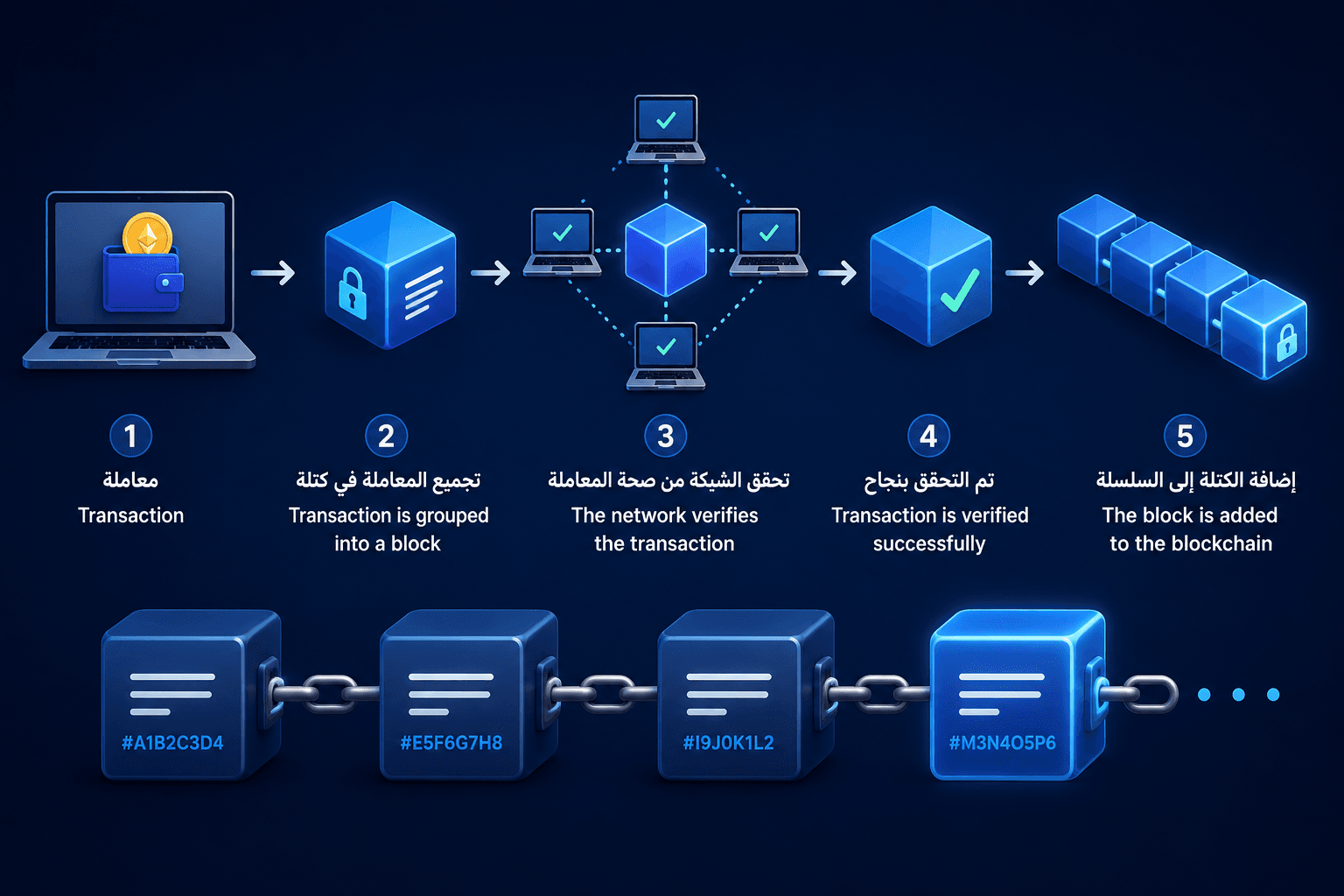
1. إنشاء المعاملة: يرسل المستخدم معاملة إلى شبكة البلوكتشين، مثل إرسال أصل رقمي من محفظة إلى أخرى.
2. إرسالها إلى الشبكة: تنتقل معلومات المعاملة إلى الشبكة حتى تتمكن الجهات المشاركة في التحقق من صحتها وفق قواعد البروتوكول.
3. التحقق من المعاملة: تتحقق الشبكة من أن المعاملة تستوفي الشروط المطلوبة، وتختلف طريقة الوصول إلى الاتفاق حسب آلية الإجماع المستخدمة.
4. تسجيل المعاملة: بعد قبول المعاملة، يمكن تضمينها داخل كتلة مع معاملات أخرى.
5. إضافة الكتلة: ترتبط الكتلة بالسلسلة وفق قواعد الشبكة، ويصبح سجل المعاملة جزءًا من تاريخ البلوكتشين.
لماذا ترتبط الكتل ببعضها؟
تستخدم شبكات البلوكتشين تقنيات تشفيرية تربط بيانات الكتل ببعضها. تحتوي الكتلة عادةً على قيمة تشفيرية مرتبطة ببياناتها، كما تشير إلى بيانات الكتلة السابقة، مما يساعد على اكتشاف محاولات تعديل السجل.
وهذه الفكرة هي سبب اسم Blockchain: سلسلة من الكتل المترابطة.
هل كل شبكات البلوكتشين متشابهة؟
لا. تختلف الشبكات في طريقة التحقق من المعاملات، وآلية الإجماع، والسرعة، والرسوم، ومستوى اللامركزية، والوظائف التي تدعمها.
فبعض الشبكات تركز على نقل القيمة، بينما تسمح شبكات أخرى بتشغيل العقود الذكية والتطبيقات اللامركزية التي سنشرحها في الدروس القادمة.
ما علاقة البلوكتشين بـ Web3؟
يُعد البلوكتشين من التقنيات الأساسية المستخدمة في كثير من تطبيقات Web3، حيث يمكن استخدامه لتسجيل ملكية الأصول الرقمية وتنفيذ العقود الذكية وتشغيل التطبيقات اللامركزية.
لكن Web3 مفهوم أوسع من البلوكتشين نفسه، وسنتعرف على الفرق بين Web2 وWeb3 بالتفصيل خلال هذا المسار.
تعلم المزيد عن البلوكتشين والأمان
عند استخدام شبكات البلوكتشين والعملات الرقمية، من المهم أيضًا فهم كيفية حماية المحافظ والحسابات. يمكنك زيارة
مركز الأمان في TheCrypTechAI
للوصول إلى إرشادات وأدوات الحماية.
وللمزيد من المعلومات التعليمية عن تقنية البلوكتشين، يمكنك مراجعة
وثائق Ethereum التعليمية
.
الخلاصة
لفهم ما هو البلوكتشين تذكر الفكرة الأساسية:
معاملة ← تحقق الشبكة ← تسجيل البيانات داخل كتلة ← ربط الكتلة بالسلسلة.
هذه البنية تتيح للشبكات الاحتفاظ بسجل مشترك للبيانات والمعاملات، وهي الأساس الذي سنبني عليه الدروس التالية لفهم الكتل والعُقد وآليات الإجماع وWeb3.
If you are starting to explore cryptocurrencies and Web3, one of the first concepts you should understand is What Is Blockchain and how it can record and share transactions across a network without relying on a single centralized database.
What Is Blockchain?
A blockchain is a type of distributed digital ledger. Data and transactions are recorded in groups called blocks, and these blocks are connected to form a chronological chain.
Instead of keeping only one copy of the ledger with a central authority, multiple computers on the network can maintain copies of the data and participate in verifying it according to the network's rules.
How Does Blockchain Work Step by Step?
To understand What Is Blockchain more clearly, imagine a transaction moving through the following stages:
1. Create a transaction: A user sends a transaction to the blockchain network, such as transferring a digital asset from one wallet to another.
2. Broadcast it to the network: Information about the transaction is shared with the network so participants can process it according to the protocol's rules.
3. Verify the transaction: The network checks whether the transaction meets the required conditions. The exact verification process depends on the blockchain and its consensus mechanism.
4. Record the transaction: Once accepted, the transaction can be included in a block together with other transactions.
5. Add the block: The block is connected to the existing chain according to the network's rules, making the transaction part of the blockchain's history.
Why Are Blocks Connected?
Blockchain networks use cryptographic techniques to link blocks together. A block typically contains a cryptographic value related to its own data and information that connects it to the previous block.
This structure helps make changes to previously recorded information detectable and explains the name Blockchain: a chain of connected blocks.
Are All Blockchains the Same?
No. Blockchain networks can differ in their transaction verification methods, consensus mechanisms, speed, fees, degree of decentralization, and supported features.
Some networks mainly focus on transferring value, while others support smart contracts and decentralized applications, which we will explore later in this learning path.
What Is the Relationship Between Blockchain and Web3?
Blockchain is one of the core technologies used by many Web3 applications. It can support digital asset ownership, smart contracts, and decentralized applications.
However, Web3 is a broader concept than blockchain itself. Later in this path, we will explore how Web3 differs from Web2.
Learn More About Blockchain and Security
When using blockchain networks and cryptocurrencies, protecting your wallets and accounts is also important. Visit the
TheCrypTechAI Security Center
for additional security guidance and protection tools.
For additional educational information about blockchain technology, you can also explore
Ethereum's educational documentation
.
Key Takeaway
To remember What Is Blockchain, think of the basic process:
Transaction → Network Verification → Record in a Block → Add the Block to the Chain.
This structure allows a network to maintain a shared record of data and transactions and provides the foundation for the next lessons about blocks, nodes, consensus mechanisms, and Web3.
اختبر فهمك
Check Your Understanding
سؤالان سريعان لتثبيت أهم ما تعلمته.
Two quick questions to reinforce the key ideas.