
إدارة مخاطر التداول | Trading Risk Management
تعلّم ببساطة، خطوة بخطوة
Learn simply, step by step
معلومة واضحة، ثم خطوة جديدة.
Clear knowledge, one step at a time.
إدارة مخاطر التداول Trading Risk Management
🎯 ماذا ستتعلم؟
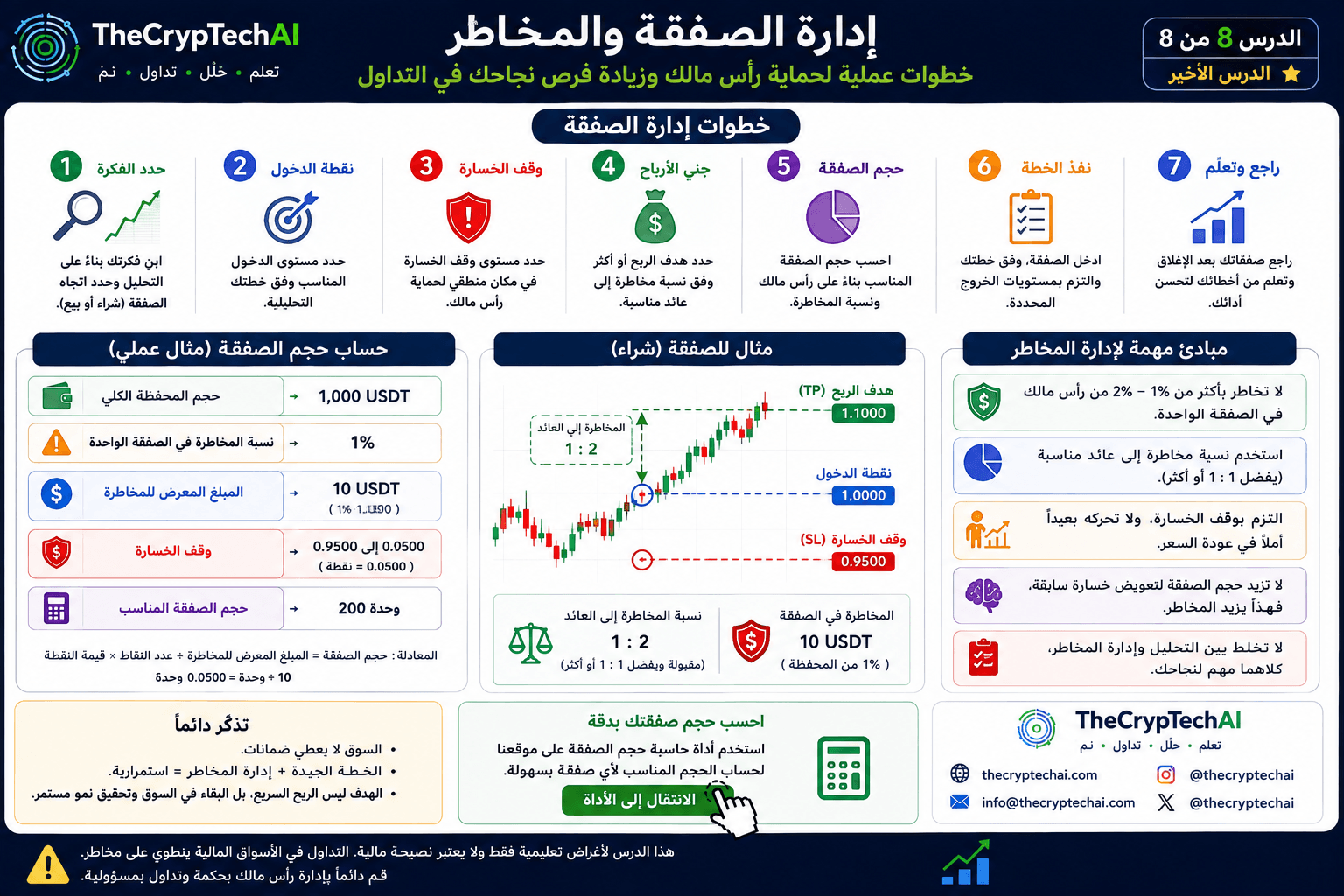
في هذا الدرس الأخير ستتعرف على أساسيات إدارة مخاطر التداول، وكيف تجمع بين حجم الصفقة ووقف الخسارة وجني الأرباح ونسبة المخاطرة إلى العائد لبناء خطة تداول أكثر وضوحًا.
🛡️ لماذا إدارة المخاطر مهمة؟
تساعد إدارة مخاطر التداول على الاستعداد لاحتمال تحرك السوق عكس التوقعات. فلا يمكن معرفة نتيجة أي صفقة مسبقًا، لذلك من المهم تحديد مقدار الخسارة التي يمكنك تحملها قبل الدخول.
الهدف الأساسي هو حماية رأس المال وتجنب أن تؤثر صفقة واحدة بشكل كبير على حساب التداول.
💰 ما هي المخاطرة لكل صفقة؟
المخاطرة لكل صفقة هي الجزء من رأس المال الذي تقرر تعريضه للخسارة إذا تحرك السعر عكس خطتك.
على سبيل المثال، إذا كان رأس المال 1,000 USDT وحددت مخاطرة قدرها 1%، فإن المبلغ المعرض للمخاطرة يكون 10 USDT.
🧮 ما هو حجم الصفقة؟
حجم الصفقة Position Size هو مقدار الأصل الذي يتم شراؤه أو بيعه في الصفقة. ويتأثر بحجم رأس المال ونسبة المخاطرة والمسافة بين نقطة الدخول ووقف الخسارة.
لذلك لا يجب اختيار حجم الصفقة عشوائيًا أو الاعتماد فقط على مقدار المال المتاح في الحساب.
⚖️ اربط المخاطرة بالعائد
نسبة Risk/Reward تساعدك على مقارنة مقدار الخسارة المحتملة بالربح المستهدف.
فإذا كنت تخاطر بـ10 USDT مقابل هدف محتمل قدره 20 USDT، تكون نسبة المخاطرة إلى العائد 1:2.
📋 ضع خطة قبل تنفيذ الصفقة
تبدأ إدارة مخاطر التداول الجيدة قبل تنفيذ الصفقة. حدد نقطة الدخول ووقف الخسارة وهدف جني الأرباح وحجم الصفقة، حتى تعرف خطتك والمخاطرة المحتملة مسبقًا.
ومن المهم أيضًا عدم زيادة حجم الصفقة لمحاولة تعويض خسارة سابقة، لأن ذلك قد يزيد مستوى المخاطرة بدل تقليله.
🧮 احسب حجم الصفقة قبل التداول
يمكنك استخدام حاسبة حجم الصفقة المجانية من TheCrypTechAI لحساب الحجم المناسب بناءً على رأس المال ونسبة المخاطرة وبيانات الصفقة.
🔍 راجع الصفقة بعد انتهائها
بعد إغلاق الصفقة، راجع ما حدث: هل التزمت بالخطة؟ هل كان حجم الصفقة مناسبًا؟ وهل غيرت قرارك بسبب الخوف أو الطمع؟
مراجعة الصفقات تساعد على اكتشاف الأخطاء وتحسين طريقة التعامل مع المخاطر بمرور الوقت.
🧠 تذكّر
- لا توجد صفقة مضمونة.
- حدد مقدار المخاطرة قبل الدخول.
- احسب حجم الصفقة بناءً على خطتك وليس على المشاعر.
- استخدم Stop Loss وTake Profit وفق خطة واضحة.
- قارن المخاطرة بالعائد المحتمل.
- لا تحاول تعويض الخسارة بزيادة المخاطرة عشوائيًا.
- راجع صفقاتك وتعلم من نتائجها.
🏁 أكملت مسار التداول والتحليل
أحسنت! بعد إكمال هذا الدرس تكون قد تعرفت على أساسيات قراءة الشارت والشموع والاتجاهات والدعم والمقاومة وحجم التداول والمؤشرات الفنية والتخطيط للصفقات وإدارة مخاطر التداول.
هذه المفاهيم لا تضمن الأرباح، لكنها تمنحك أساسًا أفضل لفهم السوق والتعامل مع التداول بصورة أكثر تنظيمًا ومسؤولية.
📚 للمزيد، يمكنك قراءة
دليل Investopedia لإدارة مخاطر التداول
.
📘 راجع الدرس السابق:
وقف الخسارة وجني الأرباح
🎯 What Will You Learn?
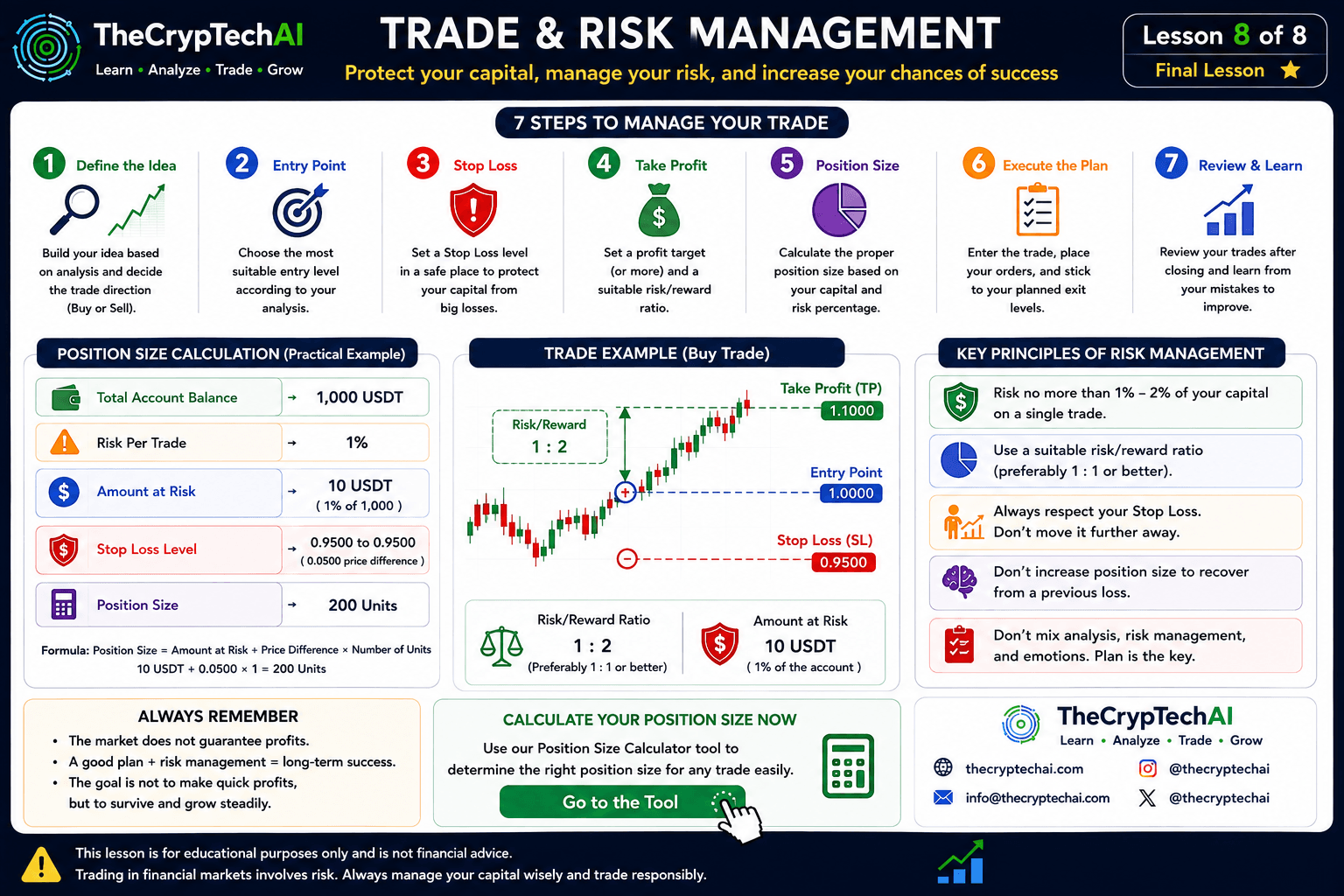
In this final lesson, you will learn the basics of Trading Risk Management and how position size, Stop Loss, Take Profit, and Risk-to-Reward can work together to create a clearer trading plan.
🛡️ Why Is Risk Management Important?
The outcome of any trade cannot be known in advance. Good trade management therefore focuses not only on predicting price direction, but also on deciding how much you are prepared to risk before entering.
The main goal is to protect your capital and avoid allowing a single trade to have a major impact on your trading account.
💰 What Is Risk Per Trade?
Risk per trade is the portion of your capital that you are prepared to lose if the market moves against your trading plan.
For example, if your account balance is 1,000 USDT and you choose to risk 1%, the amount at risk would be 10 USDT.
🧮 What Is Position Size?
Position Size is the amount of an asset you buy or sell in a trade. It can depend on your account balance, risk percentage, and the distance between your Entry Point and Stop Loss.
For this reason, position size should not be chosen randomly or based only on how much money is available in your account.
⚖️ Connect Risk With Reward
The Risk-to-Reward ratio helps compare the potential loss of a trade with its target profit.
For example, if you risk 10 USDT for a potential target of 20 USDT, the Risk-to-Reward ratio is 1:2.
📋 Make a Plan Before Entering a Trade
Before entering, define your Entry Point, Stop Loss, Take Profit target, and Position Size. This gives you a clearer understanding of your plan and potential risk before market movements begin to influence your decisions.
It is also important not to increase your position size simply to recover a previous loss, as this can increase risk instead of reducing it.
🧮 Calculate Your Position Size
You can use TheCrypTechAI's free Position Size Calculator to estimate an appropriate position size based on your capital, risk percentage, and trade details.
👉
Use the Position Size Calculator
🔍 Review Your Trade
After closing a trade, review what happened. Did you follow your plan? Was your Position Size appropriate? Did fear or greed affect your decisions?
Reviewing completed trades can help you identify mistakes and improve how you manage risk over time.
🧠 Remember
- No trade is guaranteed.
- Define your risk before entering a trade.
- Calculate Position Size according to your plan, not your emotions.
- Use Stop Loss and Take Profit as part of a clear plan.
- Compare potential risk with potential reward.
- Do not randomly increase risk to recover previous losses.
- Review your trades and learn from the results.
🏁 You Completed the Trading & Analysis Path
Congratulations! By completing this lesson, you have learned the basics of chart reading, candlesticks, trends, Support and Resistance, Trading Volume, Technical Indicators, trade planning, and Trading Risk Management.
These concepts cannot guarantee profits, but they can provide a stronger foundation for understanding the market and approaching trading in a more organized and responsible way.
📚 For more information, see
Investopedia's guide to trading risk management
.
📘 Review the previous lesson:
Entry, Exit, Stop Loss & Take Profit
اختبر فهمك
Check Your Understanding
سؤالان سريعان لتثبيت أهم ما تعلمته.
Two quick questions to reinforce the key ideas.