
الاستخدام الآمن للذكاء الاصطناعي | Safe AI Use
تعلّم ببساطة، خطوة بخطوة
Learn simply, step by step
معلومة واضحة، ثم خطوة جديدة.
Clear knowledge, one step at a time.
الاستخدام الآمن للذكاء الاصطناعي Safe AI Use
🎯 ماذا ستتعلم؟
في هذا الدرس ستتعرف على الاستخدام الآمن للذكاء الاصطناعي، وكيف تحمي خصوصيتك وتتحقق من المعلومات وتتعامل مع المحتوى المولد بالذكاء الاصطناعي بطريقة واعية ومسؤولة.
🛡️ ما هو الاستخدام الآمن للذكاء الاصطناعي؟
أدوات الذكاء الاصطناعي يمكن أن تساعدنا في التعلم والكتابة والبحث وتوليد الأفكار وتنفيذ العديد من المهام، لكنها تحتاج إلى استخدام واعٍ.
الاستخدام الآمن لا يعني تجنب AI، بل معرفة إمكاناته وحدوده وحماية بياناتك ومراجعة النتائج قبل الاعتماد عليها.
🔍 1. تحقق من المعلومات
قد تقدم أنظمة الذكاء الاصطناعي إجابات تبدو مقنعة لكنها تحتوي على معلومات غير دقيقة أو قديمة أو غير مكتملة.
لذلك تحقق من الحقائق المهمة باستخدام مصادر موثوقة، خاصةً قبل استخدام المعلومات في الدراسة أو العمل أو اتخاذ قرار مهم.
🔐 2. احمِ خصوصيتك
فكر جيدًا قبل مشاركة معلومات شخصية داخل أدوات AI. لا ترفع بيانات خاصة أو معلومات عن أشخاص آخرين إذا لم تكن هناك حاجة حقيقية لذلك.
من الأفضل دائمًا تقليل كمية البيانات الشخصية التي تشاركها ومعرفة كيفية تعامل الخدمة التي تستخدمها مع البيانات.
🔑 3. لا تشارك بيانات حساسة
لا تضع كلمات المرور أو المفاتيح السرية أو بيانات الحسابات البنكية أو رموز الدخول أو المعلومات السرية داخل الـ Prompt.
تعامل مع المعلومات الحساسة باعتبارها بيانات يجب حمايتها حتى لو كنت تستخدم أداة AI للمساعدة في مهمة بسيطة.
✅ 4. راجع المحتوى قبل استخدامه
لا تنسخ المحتوى المولد وتنشره مباشرة دون مراجعة. اقرأ النص وتحقق من الأرقام والأسماء والمصادر وعدّل المحتوى عند الحاجة.
المراجعة البشرية مهمة خصوصًا إذا كان المحتوى سيستخدم في الدراسة أو العمل أو سينشر للآخرين.
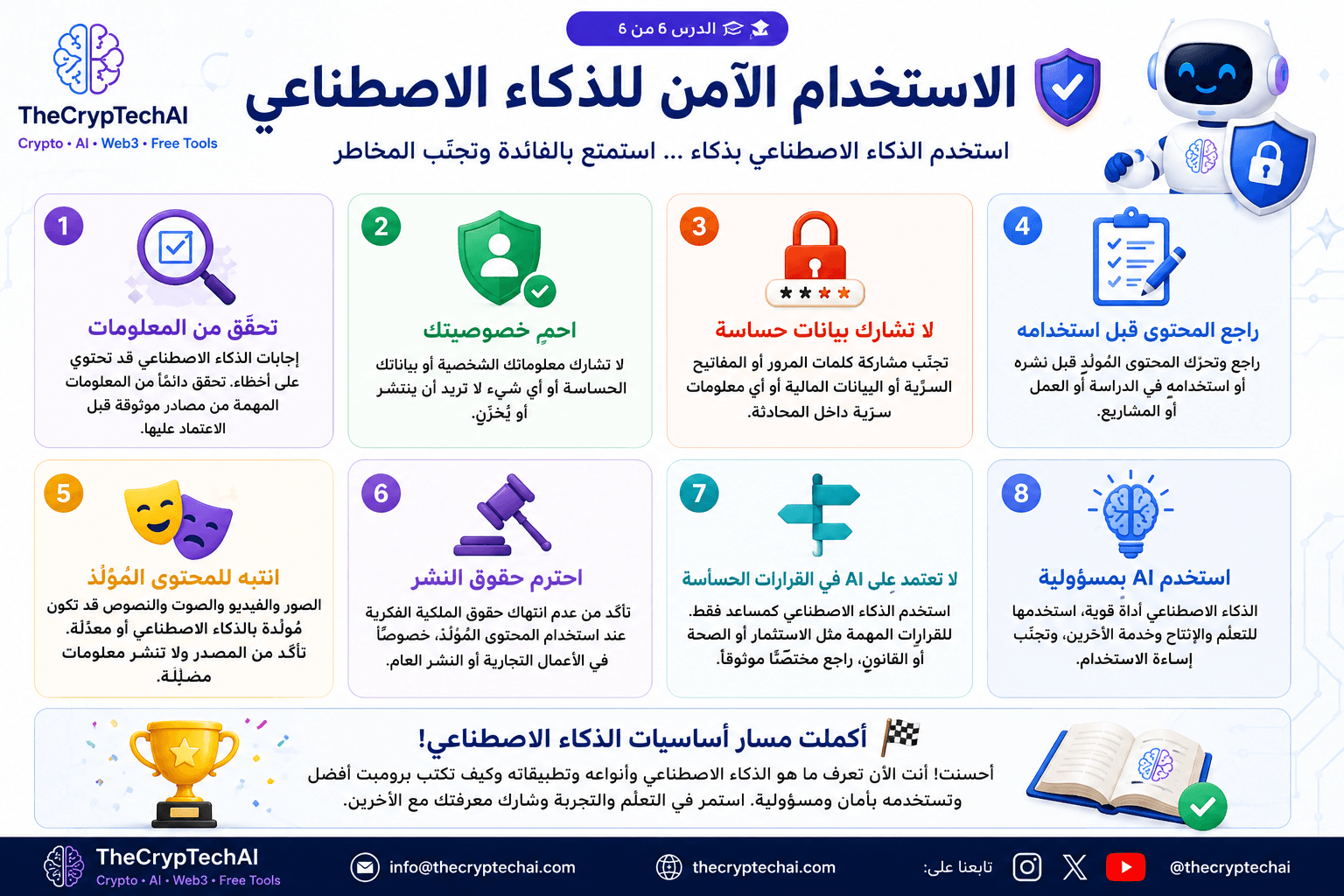
🎭 5. انتبه للمحتوى المولد بالذكاء الاصطناعي
يمكن استخدام AI لإنشاء أو تعديل الصور والنصوص والصوت والفيديو، ولذلك لا يجب افتراض أن كل محتوى تراه أو تسمعه حقيقي.
عندما تكون المعلومة مهمة، تحقق من المصدر وابحث عن أدلة إضافية قبل مشاركتها أو الاعتماد عليها.
©️ 6. احترم حقوق النشر
استخدام الذكاء الاصطناعي لإنشاء المحتوى لا يعني أن جميع المخرجات يمكن استخدامها بأي طريقة دون مراجعة.
عند استخدام محتوى مولد في مشروع تجاري أو تعليمي أو منشور عام، تأكد من حقوق الاستخدام وشروط الخدمة والمصادر ذات الصلة عند الحاجة.
🧠 7. لا تعتمد على AI في القرارات الحساسة
يمكن للذكاء الاصطناعي مساعدتك في جمع الأفكار وفهم المعلومات، لكنه لا يجب أن يكون المصدر الوحيد لاتخاذ القرارات المهمة.
في الأمور الحساسة أو عالية التأثير، استخدم مصادر موثوقة واطلب مساعدة المختص المناسب عند الحاجة.
🤝 8. استخدم AI بمسؤولية
استخدم أدوات الذكاء الاصطناعي للتعلم والإبداع وزيادة الإنتاجية وحل المشكلات، وتجنب استخدامها للإضرار بالآخرين أو التضليل أو انتحال هوياتهم.
جزء أساسي من الاستخدام الآمن للذكاء الاصطناعي هو التفكير في تأثير ما تقوم بإنشائه أو مشاركته، وليس فقط في قدرة الأداة على تنفيذه.
🧠 تذكّر
- تحقق من المعلومات المهمة ولا تفترض أن إجابات AI صحيحة دائمًا.
- احمِ خصوصيتك ولا تشارك كلمات المرور أو البيانات الحساسة.
- راجع المحتوى المولد قبل استخدامه أو نشره.
- انتبه إلى أن الصور والصوت والفيديو قد تكون مولدة أو معدلة.
- احترم حقوق النشر وشروط استخدام المحتوى.
- لا تجعل AI بديلًا عن الحكم البشري في القرارات المهمة.
- استخدم الذكاء الاصطناعي بطريقة مفيدة ومسؤولة.
🏁 أكملت مسار أساسيات الذكاء الاصطناعي!
أحسنت! بعد إكمال الدروس الستة أصبحت تعرف أساسيات AI، وكيف يتعلم، وما هي نماذج الذكاء الاصطناعي، وكيف يعمل الذكاء الاصطناعي التوليدي، وكيف تكتب Prompt أفضل، وأهم قواعد الاستخدام الآمن.
هذه هي البداية فقط. استمر في التعلم والتجربة، واستخدم أدوات الذكاء الاصطناعي كمساعد يساعدك على تطوير مهاراتك مع الحفاظ على التفكير والمراجعة البشرية.
📚 للمزيد، يمكنك الاطلاع على
توصية اليونسكو بشأن أخلاقيات الذكاء الاصطناعي
.
📘 راجع الدرس السابق:
كتابة برومبت للذكاء الاصطناعي
🎓 استكشف المزيد من المسارات عبر
مركز التعلم في TheCrypTechAI
.
🎯 What Will You Learn?
In this lesson, you will learn the principles of Safe AI Use, including how to protect your privacy, verify information, review AI-generated content, and use artificial intelligence responsibly.
🛡️ What Is Safe AI Use?
Artificial intelligence tools can help us learn, write, research, generate ideas, and complete many different tasks, but they should be used thoughtfully.
Safe AI Use does not mean avoiding AI. It means understanding its capabilities and limitations, protecting your information, and reviewing its outputs before relying on them.
🔍 1. Verify Information
AI systems can sometimes produce answers that sound convincing but contain inaccurate, outdated, or incomplete information.
Always verify important facts using reliable sources, especially before using AI-generated information for study, work, or important decisions.
🔐 2. Protect Your Privacy
Think carefully before sharing personal information with AI tools. Avoid uploading private information about yourself or other people unless it is truly necessary.
It is also useful to understand how the service you are using handles and stores data.
🔑 3. Do Not Share Sensitive Data
Never include passwords, private keys, banking details, access codes, confidential documents, or other sensitive information in an AI Prompt.
Sensitive information should remain protected even when you are using AI to help with a simple task.
✅ 4. Review Content Before Using It
Do not automatically copy and publish AI-generated content. Review the text, check important names, numbers, facts, and sources, and make corrections when necessary.
Human review is especially important when the content will be used for education, professional work, or public publishing.
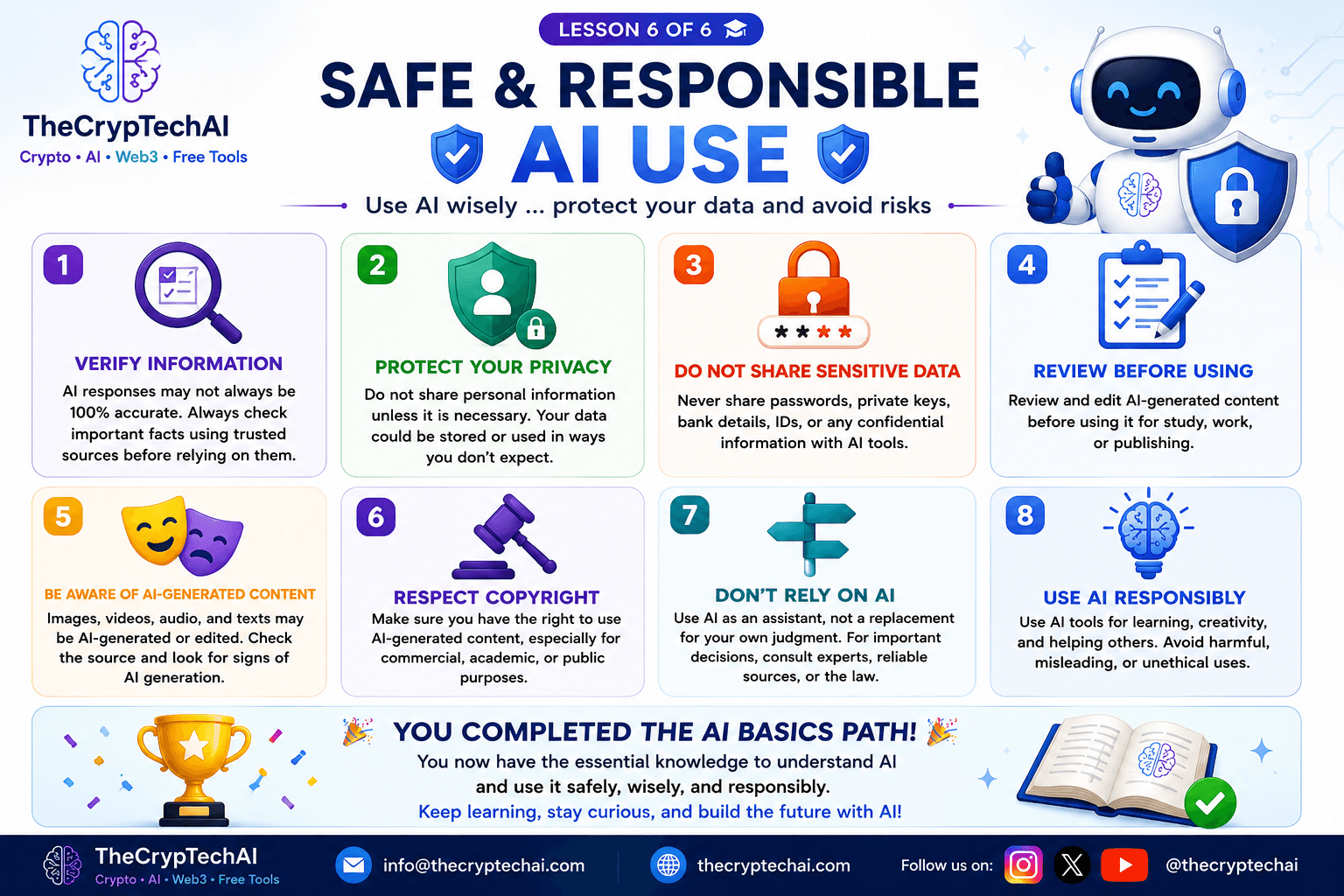
🎭 5. Be Aware of AI-Generated Content
AI can be used to create or modify images, text, audio, and video. This means you should not automatically assume that everything you see or hear online is authentic.
When information matters, check the original source and look for additional evidence before sharing or relying on it.
©️ 6. Respect Copyright
Using artificial intelligence to generate content does not automatically mean that every output can be used in any way without further consideration.
Before using generated content for commercial, educational, or public purposes, check the relevant usage rights, service terms, and sources when necessary.
🧠 7. Do Not Rely on AI for Sensitive Decisions
Artificial intelligence can help you explore ideas and understand information, but it should not be your only source when making important decisions.
For sensitive or high-impact situations, use reliable sources and seek appropriate professional guidance when needed.
🤝 8. Use AI Responsibly
Use artificial intelligence for learning, creativity, productivity, and solving problems. Avoid using it to harm, deceive, impersonate, or mislead other people.
An important part of Safe AI Use is considering the impact of the content you create or share, not simply whether an AI tool is capable of producing it.
🧠 Remember
- Verify important information instead of assuming AI is always correct.
- Protect your privacy and never share passwords or sensitive information.
- Review AI-generated content before using or publishing it.
- Remember that images, audio, and video can be AI-generated or edited.
- Respect copyright and content usage rules.
- Do not replace human judgment with AI in important decisions.
- Use artificial intelligence in a useful and responsible way.
🏁 You Completed the AI Basics Path!
Congratulations! After completing all six lessons, you now understand the foundations of AI, how AI learns, what AI models are, how Generative AI works, how to write better Prompts, and the essential principles of Safe AI Use.
This is only the beginning. Keep learning and experimenting, and use artificial intelligence as an assistant that helps you develop your skills while keeping human thinking and review at the center.
📚 For more information, see
UNESCO Recommendation on the Ethics of Artificial Intelligence
.
📘 Review the previous lesson:
How to Write an AI Prompt
🎓 Explore more learning paths in the
TheCrypTechAI Learning Center
.
اختبر فهمك
Check Your Understanding
سؤالان سريعان لتثبيت أهم ما تعلمته.
Two quick questions to reinforce the key ideas.