
ما هي آليات الإجماع؟ | What Are Consensus Mechanisms?
تعلّم ببساطة، خطوة بخطوة
Learn simply, step by step
معلومة واضحة، ثم خطوة جديدة.
Clear knowledge, one step at a time.
ما هي آليات الإجماع؟ What Are Consensus Mechanisms?
حتى تعمل شبكة البلوكتشين بدون جهة مركزية واحدة، تحتاج الأجهزة المشاركة إلى طريقة تساعدها على الاتفاق على حالة الشبكة والبيانات الصحيحة. هنا يأتي دور آليات الإجماع التي تُعد جزءًا أساسيًا من طريقة عمل شبكات البلوكتشين.
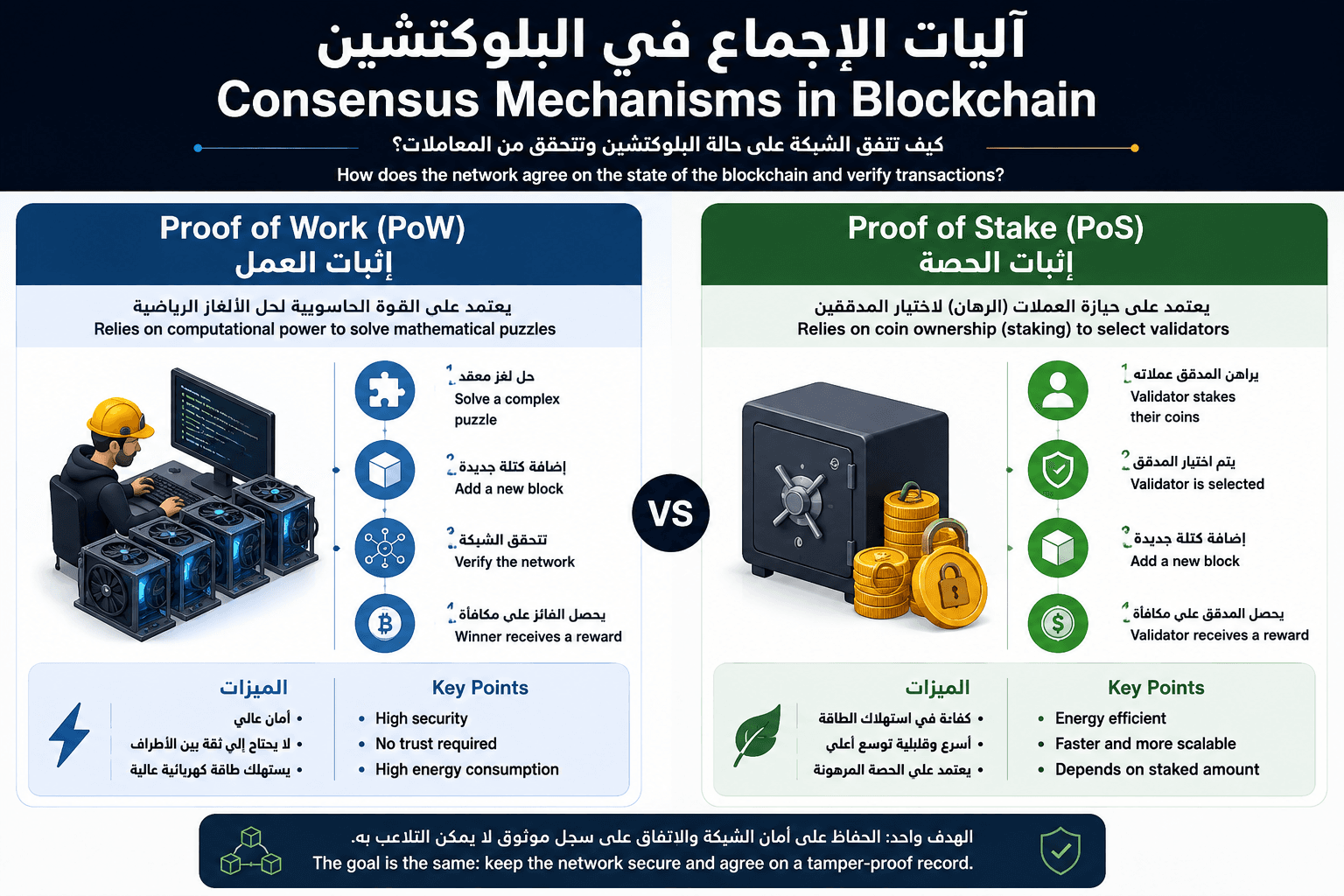
ما هي آليات الإجماع؟
آليات الإجماع هي مجموعة من القواعد والبروتوكولات والحوافز التي تساعد شبكة موزعة من العقد على الاتفاق على الحالة الصحيحة للبلوكتشين.
وبشكل مبسط، تساعد هذه الآليات الشبكة على تحديد المعاملات والكتل المقبولة ومنع المشاركين من تسجيل بيانات متعارضة بسهولة.
ما هو إثبات العمل Proof of Work؟
Proof of Work (PoW) أو إثبات العمل يعتمد على القوة الحاسوبية. يتنافس المعدنون باستخدام أجهزة الحوسبة لتنفيذ عمليات حسابية، والفائز يحصل على فرصة اقتراح أو إنتاج كتلة جديدة وفق قواعد الشبكة.
يُعد Bitcoin أشهر مثال على الشبكات التي تستخدم Proof of Work. وتحتاج هذه الآلية إلى موارد حاسوبية وطاقة كبيرة للمشاركة في التعدين وتأمين الشبكة.
ما هو إثبات الحصة Proof of Stake؟
Proof of Stake (PoS) أو إثبات الحصة يستخدم المدققين بدلًا من الاعتماد على سباق التعدين. يقوم المشاركون المؤهلون برهن أصول رقمية وفق قواعد الشبكة، ثم يتم اختيار مدققين للمشاركة في اقتراح الكتل والتحقق منها.
ويمكن أن تفرض الشبكة عقوبات على بعض أنواع السلوك المخالف، مما يوفر حافزًا اقتصاديًا للمدققين للالتزام بقواعد البروتوكول.
ما الفرق بين PoW وPoS؟
الفرق الأساسي هو المورد المستخدم للمساعدة في تأمين الشبكة والمشاركة في إنتاج الكتل:
Proof of Work: يعتمد على العمل الحسابي وأجهزة التعدين والطاقة.
Proof of Stake: يعتمد على المدققين والأصول المرهونة والحوافز والعقوبات الاقتصادية.
لكل نموذج خصائصه ومزاياه وتحدياته، لذلك لا يمكن الحكم على جودة شبكة بلوكتشين اعتمادًا على نوع آلية الإجماع وحده.
لماذا تحتاج البلوكتشين إلى الإجماع؟
بدون وسيلة للوصول إلى اتفاق، قد تمتلك العقد نسخًا مختلفة من سجل المعاملات ولا تستطيع الشبكة تحديد الحالة التي يجب اعتمادها.
لذلك تساعد آليات الإجماع في الحفاظ على سجل مشترك، وتحديد الكتل المقبولة، وزيادة صعوبة التلاعب بالشبكة.
هل PoW وPoS هما آليات الإجماع بالكامل؟
يُستخدم مصطلح آلية الإجماع غالبًا عند الحديث عن Proof of Work وProof of Stake للتبسيط، لكن من الناحية التقنية فإن نظام الإجماع الكامل قد يشمل أيضًا قواعد اختيار السلسلة والبروتوكولات والحوافز وآليات أخرى تساعد العقد على الاتفاق.
تعلم المزيد عن آليات الإجماع
يمكنك قراءة الشرح التقني في
وثائق Ethereum الرسمية حول آليات الإجماع
للتعرف بصورة أعمق على Proof of Work وProof of Stake وكيف تصل شبكات البلوكتشين إلى الاتفاق.
ويمكنك متابعة باقي المسارات والدروس من
مركز التعلم في TheCrypTechAI
لتعلم البلوكتشين وWeb3 خطوة بخطوة.
الخلاصة
تساعد آليات الإجماع شبكات البلوكتشين الموزعة على الاتفاق على حالة الشبكة والكتل المقبولة.
وتذكر الفرق الأساسي:
PoW يعتمد على العمل الحسابي والتعدين، بينما PoS يعتمد على المدققين والأصول المرهونة.
بعد فهم كيفية اتفاق شبكة البلوكتشين، ننتقل في الدرس القادم إلى مفهوم أوسع: ما هو Web3 وما الفرق بينه وبين Web2؟
For a blockchain network to operate without a single central authority, participating computers need a way to agree on the correct state of the network. This is where Consensus Mechanisms play an important role in blockchain systems.
What Are Consensus Mechanisms?
Consensus Mechanisms are sets of rules, protocols, and incentives that help a distributed network of nodes agree on the valid state of a blockchain.
In simple terms, they help the network determine which transactions and blocks should be accepted while making it difficult for participants to introduce conflicting records.
What Is Proof of Work?
Proof of Work (PoW) relies on computational work. Miners use computing hardware to perform calculations, competing for the opportunity to propose or produce a new block according to the network's rules.
Bitcoin is the best-known example of a blockchain that uses Proof of Work. Mining requires significant computing resources and energy to participate in securing the network.
What Is Proof of Stake?
Proof of Stake (PoS) uses validators rather than relying on a mining competition. Eligible participants stake digital assets according to the network's rules, and validators are selected to participate in proposing and validating blocks.
Networks can also impose penalties for certain types of improper behavior, creating economic incentives for validators to follow the protocol.
What Is the Difference Between PoW and PoS?
The main difference is the resource used to help secure the network and participate in block production:
Proof of Work: relies on computational work, mining hardware, and energy.
Proof of Stake: relies on validators, staked assets, and economic incentives and penalties.
Each model has its own characteristics, advantages, and trade-offs. A blockchain should therefore not be judged solely by the type of consensus mechanism it uses.
Why Does Blockchain Need Consensus?
Without a way to reach agreement, nodes could maintain different versions of the transaction history, making it difficult for the network to determine which state should be accepted.
Consensus Mechanisms help maintain a shared record, determine which blocks are accepted, and make manipulation of the network more difficult.
Are PoW and PoS the Entire Consensus System?
The term consensus mechanism is commonly used when discussing Proof of Work and Proof of Stake. Technically, however, a complete consensus system may also involve chain-selection rules, protocols, incentives, and other mechanisms that help nodes agree on the state of the blockchain.
Learn More About Consensus Mechanisms
For a deeper technical explanation, read the
official Ethereum documentation on consensus mechanisms
.
You can also continue learning about blockchain, Web3, and digital security through the
TheCrypTechAI Learning Center
.
Key Takeaway
Consensus Mechanisms help distributed blockchain networks agree on the state of the network and determine which blocks should be accepted.
Remember the basic difference:
PoW relies on computational work and mining, while PoS relies on validators and staked assets.
In the next lesson, we will move to a broader concept: What is Web3, and how is it different from Web2?
اختبر فهمك
Check Your Understanding
سؤالان سريعان لتثبيت أهم ما تعلمته.
Two quick questions to reinforce the key ideas.