
ما هي شبكات Layer 2 وكيف تعمل؟ | What Are Layer 2 Networks and How Do They Work?
تعلّم ببساطة، خطوة بخطوة
Learn simply, step by step
معلومة واضحة، ثم خطوة جديدة.
Clear knowledge, one step at a time.
ما هي شبكات Layer 2 وكيف تعمل؟ What Are Layer 2 Networks and How Do They Work?
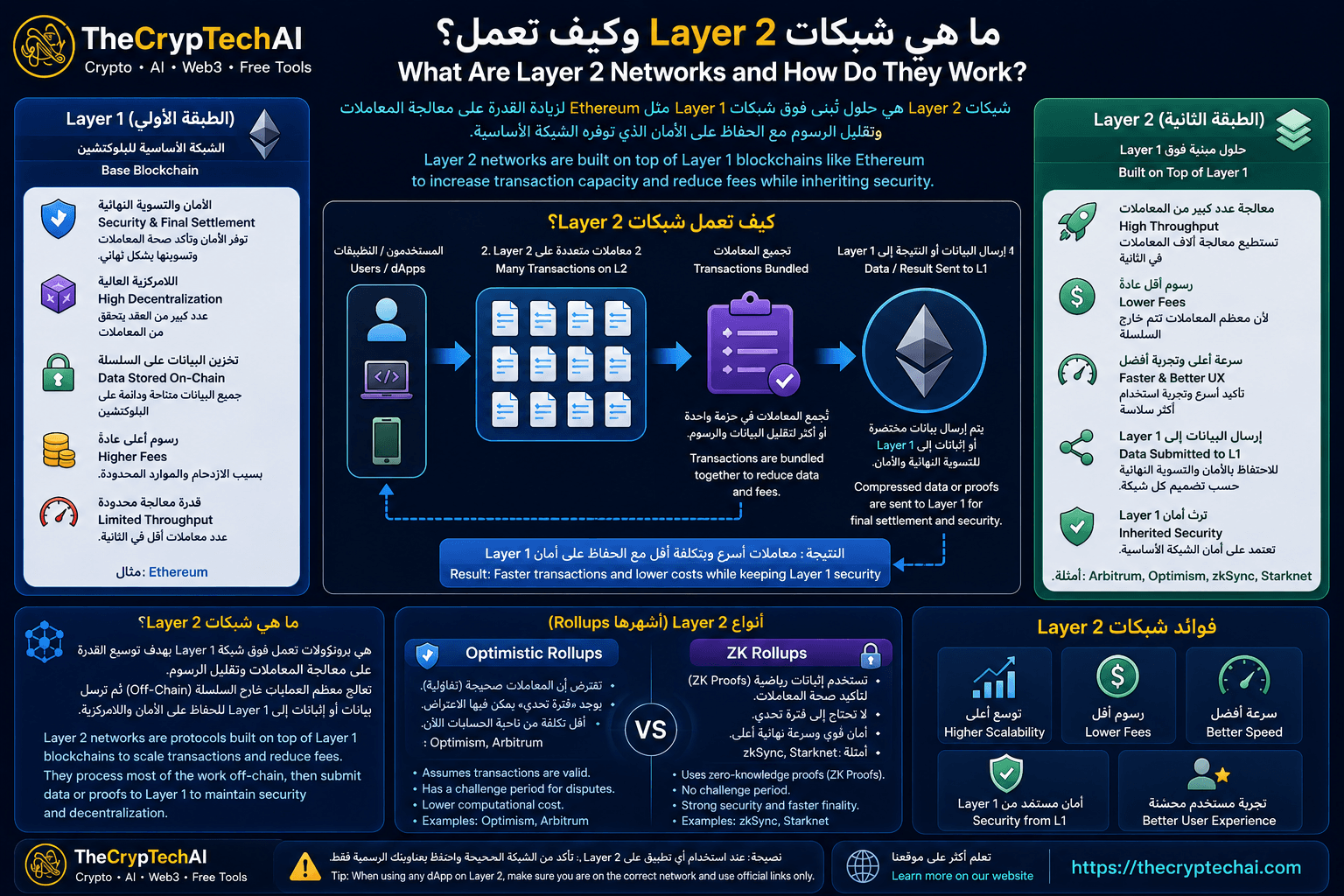
تساعد شبكات Layer 2 شبكات البلوكتشين مثل Ethereum على معالجة عدد أكبر من المعاملات بتكلفة أقل، مع الاعتماد بدرجات مختلفة على الشبكة الأساسية للأمان وتسوية المعاملات.
ما هي Layer 1؟
Layer 1 هي شبكة البلوكتشين الأساسية نفسها، مثل Ethereum.
تقوم الشبكة الأساسية بتنفيذ قواعد الإجماع والحفاظ على حالة الشبكة وتسوية المعاملات. ولكن عندما يرتفع استخدام الشبكة، يمكن أن تصبح المساحة المتاحة للمعاملات أكثر طلبًا وترتفع الرسوم.
ما هي شبكات Layer 2؟
Layer 2 هي حلول مبنية فوق شبكة أساسية بهدف زيادة قابلية التوسع.
بدلًا من تنفيذ كل نشاط المستخدمين مباشرة على Layer 1، يمكن معالجة عدد كبير من العمليات على Layer 2 ثم إرسال البيانات أو النتائج أو الإثباتات المطلوبة إلى الشبكة الأساسية وفق تصميم الحل المستخدم.
الهدف هو تنفيذ معاملات أكثر مع تقليل التكلفة على المستخدمين دون الحاجة إلى زيادة العبء على Layer 1 بنفس النسبة.
كيف تعمل Layer 2 بشكل مبسط؟
يمكن تبسيط العملية إلى أربع مراحل:
1. المستخدمون والتطبيقات: يرسلون معاملاتهم إلى شبكة Layer 2.
2. تنفيذ المعاملات: تقوم Layer 2 بمعالجة عدد كبير من المعاملات بعيدًا عن التنفيذ المباشر لكل معاملة على Layer 1.
3. تجميع المعاملات: يمكن تجميع عدد كبير من العمليات معًا لتقليل كمية البيانات والتكلفة المطلوبة لكل مستخدم.
4. إرسال البيانات إلى Layer 1: يتم نشر البيانات أو النتائج أو الإثباتات المطلوبة على الشبكة الأساسية حسب نوع Layer 2.
ويمكن تصور المسار بصورة مبسطة:
Users / dApps → Layer 2 → Transactions Bundled → Layer 1
ما هي Rollups؟
تُعد Rollups من أهم تقنيات Layer 2 المستخدمة لتوسيع Ethereum.
الفكرة الأساسية هي تنفيذ عدد كبير من المعاملات خارج التنفيذ المباشر على Layer 1، ثم تجميع المعلومات المطلوبة ونشرها على الشبكة الأساسية.
بهذه الطريقة يتم توزيع تكلفة استخدام Layer 1 على عدد أكبر من المعاملات.
Optimistic Rollups
تعتمد Optimistic Rollups على افتراض أن المعاملات أو النتائج المقدمة صحيحة ما لم يتم الاعتراض عليها وفق آلية البروتوكول.
توجد آليات للتحقق من النتائج المتنازع عليها، ولذلك قد توجد فترة انتظار في بعض العمليات مثل السحب المباشر من Layer 2 إلى Layer 1.
من الأمثلة المعروفة على هذا النوع شبكات مثل Optimism وArbitrum.
ZK Rollups
تستخدم ZK Rollups إثباتات تشفيرية تسمح بإثبات صحة تنفيذ مجموعة من المعاملات دون الحاجة إلى إعادة تنفيذ كل معاملة بالطريقة نفسها على Layer 1.
يتم إرسال إثبات إلى الشبكة الأساسية يمكن استخدامه للتحقق من صحة التغييرات وفق تصميم البروتوكول.
تستخدم تقنيات Zero-Knowledge في عدد من حلول التوسع الحديثة، ومن أمثلتها شبكات مثل zkSync وStarknet.
ما الفرق بين Layer 1 وLayer 2؟
Layer 1: هي الشبكة الأساسية المسؤولة عن قواعد البلوكتشين والأمان والتسوية النهائية.
Layer 2: تضيف طبقة تنفيذ أو معالجة تساعد على زيادة عدد المعاملات وتقليل التكلفة، ثم تعتمد على Layer 1 بدرجات مختلفة لتوفير البيانات أو التحقق أو التسوية.
لماذا نحتاج Layer 2؟
هناك عدة فوائد رئيسية:
قابلية توسع أعلى: القدرة على معالجة عدد أكبر من المعاملات.
رسوم أقل عادةً: توزيع بعض تكاليف الشبكة الأساسية على عدد كبير من العمليات.
تجربة أسرع: يستطيع المستخدم في كثير من الحالات الحصول على تأكيدات وتجربة استخدام أسرع.
الاستفادة من Layer 1: يمكن لحلول Rollup الاعتماد على خصائص الشبكة الأساسية في جوانب مثل توفر البيانات والتحقق والتسوية حسب تصميمها.
هل Layer 2 شبكة مستقلة تمامًا؟
ليس بالمعنى نفسه لشبكة Layer 1 مستقلة.
حلول Layer 2 مصممة للعمل فوق شبكة أساسية والاعتماد عليها في أجزاء مهمة من نظامها. ويختلف مستوى هذا الاعتماد من حل إلى آخر.
لذلك من المهم التفريق بين Layer 2 وبين شبكات أخرى مستقلة قد تكون متوافقة مع Ethereum لكنها لا تعتمد عليه للتسوية أو الأمان بالطريقة نفسها.
هل استخدام Layer 2 خالٍ من المخاطر؟
لا. رغم أن Layer 2 يمكن أن توفر رسومًا أقل وقابلية توسع أكبر، فإنها تضيف مكونات تقنية جديدة قد تحمل مخاطر خاصة بها.
قد تشمل المخاطر العقود الذكية، الجسور، آليات الترقية، Sequencers أو مكونات أخرى تختلف حسب تصميم الشبكة.
لذلك يجب استخدام المواقع الرسمية والتأكد من اختيار الشبكة الصحيحة قبل إرسال الأموال أو ربط المحفظة.
التعامل مع التوكنات على Layer 2
قد توجد توكنات تحمل الاسم نفسه على شبكات مختلفة، ولذلك يجب التأكد من الشبكة وعنوان العقد قبل تنفيذ أي عملية.
عند التعامل مع توكن غير معروف يمكنك استخدام
Token Security Checker من TheCrypTechAI
كإحدى خطوات التحقق الأولية من التوكن.
وإذا كنت ستربط محفظتك بموقع أو dApp غير معروف، يمكنك فحص الرابط أولًا باستخدام
Suspicious Link Checker
.
مصدر إضافي
للتعمق أكثر في تقنيات Layer 2 وRollups، يمكنك قراءة
دليل Ethereum الرسمي حول Layer 2
.
الخلاصة
شبكات Layer 2 تساعد على توسيع شبكات مثل Ethereum عن طريق معالجة عدد كبير من المعاملات خارج التنفيذ المباشر على Layer 1 ثم استخدام الشبكة الأساسية للبيانات أو الإثباتات والتسوية حسب تصميم النظام.
وأحد أهم نماذج Layer 2 هو Rollups، والتي تنقسم إلى تقنيات مثل Optimistic Rollups وZK Rollups.
الفكرة الأساسية التي يجب تذكرها:
Layer 1 = الشبكة الأساسية والأمان والتسوية
Layer 2 = قابلية توسع أكبر ومعاملات أكثر ورسوم أقل عادةً.
في الدرس التالي سنتعرف على الجسور بين شبكات البلوكتشين وكيف يمكن نقل الأصول أو الرسائل بين شبكات مختلفة، وما المخاطر المرتبطة بهذه العملية.
Layer 2 Networks help blockchains such as Ethereum process more transactions at lower costs while relying, to varying degrees, on the underlying blockchain for security and settlement.
What Is Layer 1?
Layer 1 is the underlying blockchain itself, such as Ethereum.
The base network maintains blockchain consensus, state, and final transaction settlement. However, when network demand increases, block space becomes more valuable and transaction fees can rise.
What Are Layer 2 Networks?
Layer 2 refers to scaling solutions built on top of a base blockchain.
Instead of executing every user action directly on Layer 1, many operations can be processed on Layer 2. The required data, results, or cryptographic proofs are then submitted to the base blockchain depending on the design of the Layer 2 system.
The goal is to process more transactions and reduce user costs without increasing the workload on Layer 1 at the same rate.
How Does Layer 2 Work?
The process can be simplified into four stages:
1. Users and dApps: Users submit transactions to the Layer 2 network.
2. Transaction Execution: Layer 2 processes many transactions without requiring each one to be executed directly on Layer 1.
3. Transaction Bundling: Multiple transactions can be grouped together, reducing the amount of Layer 1 resources required per user.
4. Submission to Layer 1: Required data, results, or proofs are submitted to the underlying blockchain according to the Layer 2 design.
The basic flow can be represented as:
Users / dApps → Layer 2 → Transactions Bundled → Layer 1
What Are Rollups?
Rollups are among the most important technologies used to scale Ethereum.
They execute many transactions away from direct Layer 1 execution and then publish the required information back to the base blockchain.
This allows the cost of using Layer 1 resources to be shared across many transactions.
Optimistic Rollups
Optimistic Rollups generally assume that submitted transaction results are valid unless they are challenged according to the protocol's verification mechanism.
Because disputed results must be challengeable, some operations—such as certain withdrawals from Layer 2 back to Layer 1—may involve a waiting period.
Well-known examples include Optimism and Arbitrum.
ZK Rollups
ZK Rollups use cryptographic proofs to demonstrate that a batch of transactions was processed correctly.
A proof can be submitted to Layer 1, allowing the base blockchain to verify the validity of the resulting state according to the protocol's design.
Zero-knowledge technologies are used by several modern scaling systems, including networks such as zkSync and Starknet.
Layer 1 vs Layer 2
Layer 1: The base blockchain responsible for core blockchain rules, security, and final settlement.
Layer 2: Adds an execution or processing layer designed to increase transaction capacity and reduce costs while relying on Layer 1 for important functions such as data availability, verification, or settlement depending on its architecture.
Why Do We Need Layer 2?
Layer 2 networks can provide several important benefits:
Higher Scalability: More transactions can be processed without placing the same amount of load directly on Layer 1.
Lower Fees: Layer 1 costs can often be distributed across a larger number of transactions.
Faster User Experience: Many Layer 2 networks can provide faster confirmations and smoother application interactions.
Using Layer 1 as a Foundation: Rollup-based systems can rely on the base blockchain for important security, data, verification, and settlement properties depending on their architecture.
Is Layer 2 a Completely Independent Blockchain?
Not in the same sense as an independent Layer 1 blockchain.
Layer 2 solutions are designed to operate on top of an underlying blockchain and depend on it for important parts of their system. The exact level of dependence varies between different Layer 2 designs.
This is why it is important to distinguish true Layer 2 solutions from independent networks that may be compatible with Ethereum but do not rely on Ethereum for settlement or security in the same way.
Are Layer 2 Networks Risk-Free?
No. Although Layer 2 networks can improve scalability and reduce fees, they introduce additional technical components that may have their own risks.
These can include smart contracts, bridges, upgrade mechanisms, sequencers, and other infrastructure components depending on the network.
Users should therefore use official websites and verify that they are using the correct network before transferring funds or connecting a wallet.
Tokens on Layer 2 Networks
Tokens with similar names can exist on multiple networks. Always verify both the network and contract address before interacting with an unfamiliar token.
You can use the
TheCrypTechAI Token Security Checker
as one initial research step when evaluating an unfamiliar token.
Before connecting your wallet to an unfamiliar dApp, you can also check the URL using the
Suspicious Link Checker
.
Learn More
For a deeper explanation of Layer 2 technologies and rollups, read the
official Ethereum Layer 2 guide
.
Key Takeaway
Layer 2 Networks help scale blockchains such as Ethereum by processing many transactions outside direct Layer 1 execution and then using the base blockchain for data, proofs, verification, or settlement depending on the system.
Rollups are one of the most important Layer 2 approaches, with major categories including Optimistic Rollups and ZK Rollups.
Remember the basic idea:
Layer 1 = Base blockchain, security and settlement
Layer 2 = Greater scalability, more transactions and generally lower fees.
In the next lesson, we will explore Blockchain Bridges, how assets and messages can move between different networks, and the risks associated with cross-chain transfers.
اختبر فهمك
Check Your Understanding
سؤالان سريعان لتثبيت أهم ما تعلمته.
Two quick questions to reinforce the key ideas.