مخاطر DeFi وكيف تحمي أموالك | DeFi Risks & How to Protect Your Funds
تعلّم ببساطة، خطوة بخطوة
Learn simply, step by step
معلومة واضحة، ثم خطوة جديدة.
Clear knowledge, one step at a time.
مخاطر DeFi وكيف تحمي أموالك DeFi Risks & How to Protect Your Funds
يمنح التمويل اللامركزي المستخدم قدرة أكبر على التحكم في أصوله والتفاعل مباشرة مع التطبيقات والعقود الذكية، لكن هذه الحرية تأتي مع مسؤولية أكبر. فهم مخاطر DeFi قبل ربط محفظتك أو توقيع أي معاملة خطوة أساسية لحماية أموالك.
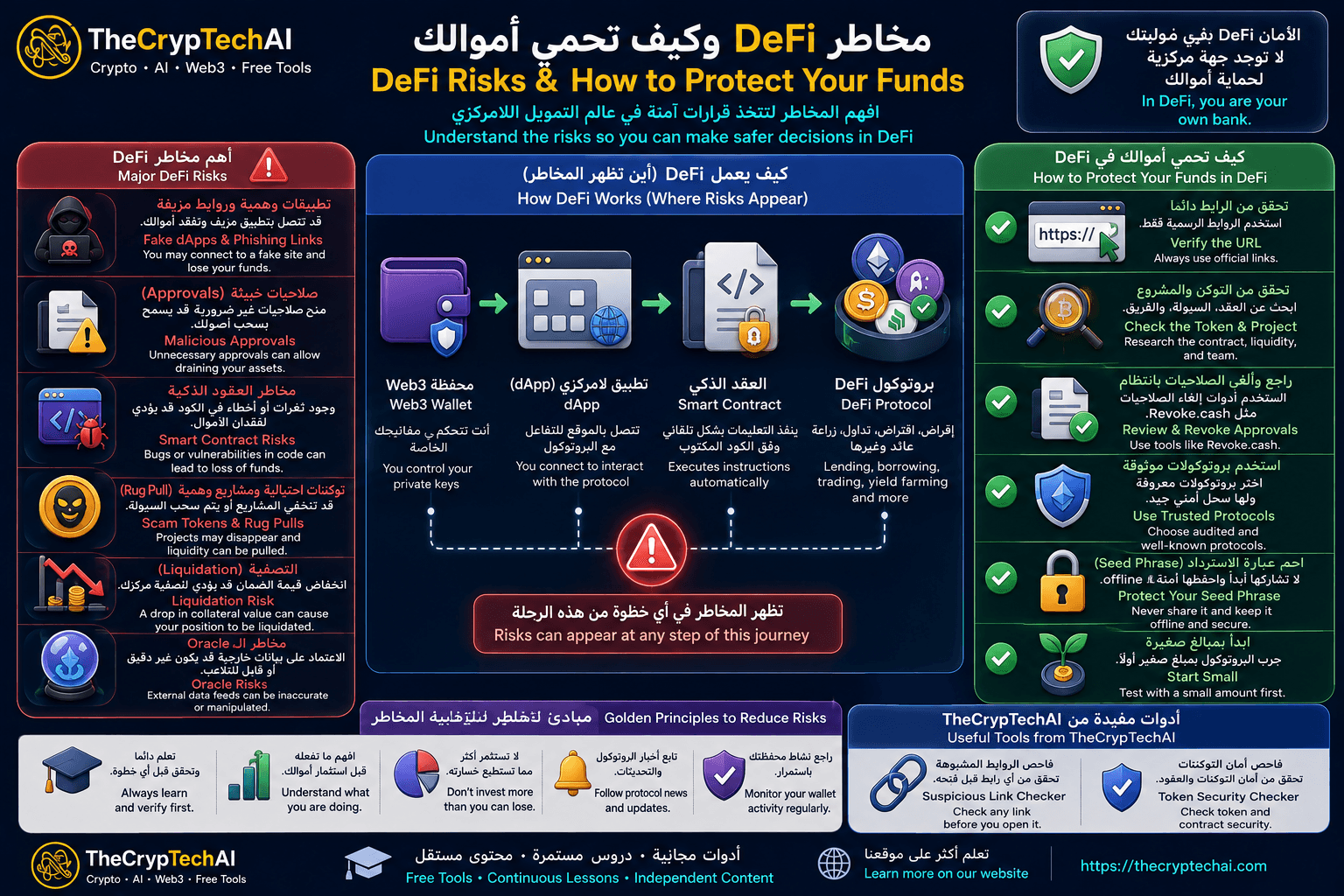
أين تظهر مخاطر DeFi؟
عند استخدام بروتوكول DeFi تمر عادةً بعدة مراحل:
محفظة Web3 ← تطبيق dApp ← عقد ذكي ← بروتوكول DeFi
يمكن أن تظهر المخاطر في أي مرحلة من هذه الرحلة، لذلك لا يكفي التأكد من أمان المحفظة وحدها.
1. التطبيقات والروابط المزيفة
من أخطر مخاطر DeFi مواقع التصيد والتطبيقات المزيفة التي تحاول تقليد واجهات بروتوكولات معروفة.
قد يؤدي ربط المحفظة بموقع خبيث ثم توقيع طلب ضار إلى تعريض أصولك للخطر.
تحقق دائمًا من عنوان الموقع، ويفضل الوصول إلى البروتوكولات من مصادرها الرسمية بدل الروابط العشوائية في الرسائل أو مواقع التواصل.
2. الصلاحيات الخطرة Approvals
قد يطلب العقد الذكي إذنًا للتعامل مع توكن معين في محفظتك. هذه العملية تُعرف عادةً باسم Token Approval.
بعض الصلاحيات قد تسمح للعقد بالتعامل مع كمية كبيرة أو غير محدودة من التوكن، لذلك يجب قراءة ما توافق عليه وعدم اعتبار كل طلب توقيع إجراءً عاديًا وآمنًا.
راجع الصلاحيات القديمة دوريًا وألغِ ما لم تعد بحاجة إليه.
3. مخاطر العقود الذكية
العقود الذكية عبارة عن برمجيات، ويمكن أن تحتوي على أخطاء أو ثغرات أمنية.
حتى البروتوكول المعروف لا يمكن اعتباره خاليًا تمامًا من المخاطر، كما أن وجود تدقيق أمني للعقد يقلل بعض المخاطر لكنه لا يمثل ضمانًا مطلقًا بعدم وجود ثغرات.
4. التوكنات والمشاريع الاحتيالية
يمكن لأي شخص تقريبًا إنشاء توكن، ولذلك قد تجد عملات تحمل أسماء أو رموزًا مشابهة لمشاريع معروفة.
قبل شراء توكن أو إضافته إلى مجمع سيولة، تحقق من عنوان العقد والمشروع والسيولة والمصادر الرسمية.
يمكنك استخدام
Token Security Checker من TheCrypTechAI
كخطوة أولية لفحص معلومات التوكن، مع عدم اعتبار نتيجة أي أداة ضمانًا نهائيًا للأمان.
5. مخاطر التصفية Liquidation
إذا استخدمت بروتوكول إقراض واقترضت مقابل ضمان، فقد يؤدي انخفاض قيمة الضمان إلى اقتراب مركزك من حد التصفية.
إذا تجاوز المركز الحدود التي يحددها البروتوكول، قد تتم تصفية جزء من الضمان أو المركز لتغطية الدين.
لذلك من الأفضل فهم آلية التصفية وترك هامش أمان بدل الاقتراض عند أقصى الحدود المتاحة.
6. مخاطر Oracle
تعتمد بعض بروتوكولات DeFi على أنظمة Oracle للحصول على بيانات خارج البلوكتشين، مثل أسعار الأصول.
إذا كانت بيانات الأسعار غير دقيقة أو تعرض النظام لمشكلة أو تلاعب، فقد يؤثر ذلك على عمليات مثل الإقراض والتصفية والتداول.
7. مخاطر السيولة وتقلب السوق
انخفاض السيولة قد يؤدي إلى Price Impact أكبر وصعوبة تنفيذ بعض الصفقات بالسعر المتوقع.
كما أن التحركات السريعة في أسعار العملات الرقمية قد تزيد مخاطر التصفية والانزلاق السعري والخسائر داخل بعض استراتيجيات DeFi.
كيف تحمي أموالك عند استخدام DeFi؟
يمكن تقليل الكثير من المخاطر باتباع مجموعة من القواعد البسيطة:
1. تحقق من رابط البروتوكول قبل ربط المحفظة.
2. راجع تفاصيل كل توقيع أو معاملة قبل الموافقة.
3. لا تمنح صلاحيات غير ضرورية للعقود الذكية.
4. تحقق من عنوان عقد التوكن من المصادر الرسمية.
5. ابحث عن البروتوكول وفريقه والسيولة وسجل الأمان.
6. ابدأ بمبلغ صغير عند تجربة بروتوكول جديد.
7. راقب مراكز الإقراض والضمانات باستمرار.
8. لا تستثمر أموالًا لا تستطيع تحمل خسارتها.
لا تشارك عبارة الاسترداد أبدًا
Seed Phrase أو Recovery Phrase تمنح من يمتلكها القدرة على الوصول إلى محفظتك.
لا يحتاج أي بروتوكول DeFi شرعي إلى معرفة عبارة الاسترداد الخاصة بك. لا تدخلها في موقع أو dApp ولا ترسلها عبر البريد أو الرسائل أو وسائل التواصل.
افحص الرابط قبل فتحه
إذا وصلك رابط غير معروف يدعي أنه تابع لمحفظة أو بروتوكول أو منصة كريبتو، يمكنك استخدام
Suspicious Link Checker من TheCrypTechAI
كإحدى خطوات الفحص قبل فتح الرابط أو التفاعل معه.
اختر المحفظة المناسبة
اختيار المحفظة المناسبة وطريقة استخدامها جزء مهم من حماية أصولك. يمكنك مقارنة الخيارات باستخدام
Crypto Wallet Finder من TheCrypTechAI
.
وللمبالغ المهمة، يمكن التفكير في فصل محفظة الاستخدام اليومي والتفاعل مع dApps عن المحفظة المستخدمة للاحتفاظ طويل الأجل، حسب احتياجاتك ومستوى المخاطر الذي تقبله.
قاعدة مهمة: لا تثق في العائد وحده
العائد المرتفع لا يعني بالضرورة فرصة أفضل. قد يكون ارتفاع APY مرتبطًا بمخاطر أعلى أو توكن شديد التقلب أو سيولة منخفضة أو حوافز مؤقتة.
اسأل دائمًا: من أين يأتي العائد؟ وما المخاطر التي أتحملها للحصول عليه؟
مصدر إضافي للأمان
للتوسع في أفضل ممارسات الأمان عند استخدام Web3 وEthereum، يمكنك الاطلاع على
دليل الأمان الرسمي من Ethereum.org
.
الخلاصة
لا يمكن إزالة جميع مخاطر DeFi، لكن فهم طريقة عمل البروتوكول والتحقق من الروابط والعقود والتوكنات ومراجعة الصلاحيات وحماية عبارة الاسترداد يمكن أن يقلل كثيرًا من الأخطاء والمخاطر التي يمكن تجنبها.
لا تتعامل مع أي توقيع داخل محفظتك كأنه مجرد زر “التالي”. اقرأ ما تطلبه المعاملة، وتأكد من البروتوكول والعقد قبل الموافقة.
وبهذا نكون قد أكملنا مسار DeFi والمحافظ والتطبيقات اللامركزية | DeFi, Wallets & dApps، بداية من فهم DeFi والمحافظ وDEX، وصولًا إلى مجمعات السيولة والإقراض والاقتراض وأهم قواعد الحماية.
Decentralized finance gives users greater control over their assets and allows them to interact directly with applications and smart contracts. However, this freedom also comes with greater responsibility. Understanding DeFi Risks before connecting your wallet or signing a transaction is an important step toward protecting your funds.
Where Can DeFi Risks Appear?
When using a DeFi protocol, the interaction often follows a path such as:
Web3 Wallet → dApp → Smart Contract → DeFi Protocol
Risks can appear at different stages of this journey, so securing your wallet alone is not enough.
1. Fake Applications and Phishing Links
One of the most common DeFi Risks involves phishing websites and fake applications designed to imitate legitimate protocols.
Connecting a wallet to a malicious website and then signing a harmful request may put your assets at risk.
Always verify the website address and preferably access protocols through their official sources instead of random links received through messages or social media.
2. Dangerous Token Approvals
A smart contract may request permission to interact with a particular token in your wallet. This is commonly known as a Token Approval.
Some approvals can authorize a contract to interact with a large or unlimited amount of a token. Review what you are approving rather than treating every wallet request as a routine action.
It is also useful to periodically review old permissions and revoke approvals you no longer need.
3. Smart Contract Risks
Smart contracts are software, which means they can contain bugs or security vulnerabilities.
Even a well-known protocol cannot be considered completely risk-free. A security audit may reduce certain risks, but it does not guarantee that a contract contains no vulnerabilities.
4. Scam Tokens and Projects
Almost anyone can create a token, and fraudulent assets may use names or symbols that resemble legitimate projects.
Before buying a token or adding it to a liquidity pool, verify its contract address, project information, liquidity, and official sources.
You can use the
TheCrypTechAI Token Security Checker
as one step in your research, but no automated result should be treated as a complete guarantee of safety.
5. Liquidation Risk
If you borrow assets against collateral through a lending protocol, a significant decline in collateral value may move your position toward its liquidation threshold.
If the position crosses the limits defined by the protocol, part of the collateral or position may be liquidated to help repay the debt.
Understanding the liquidation mechanism and maintaining a safety margin can reduce the risk of unexpectedly reaching this threshold.
6. Oracle Risks
Some DeFi protocols rely on Oracles to obtain information such as asset prices.
If price information becomes inaccurate, delayed, or manipulated, it may affect activities such as lending, liquidation, and trading.
7. Liquidity and Market Volatility
Low liquidity can increase price impact and make it harder to execute transactions near the expected price.
Rapid market movements may also increase liquidation risk, slippage, and potential losses in certain DeFi strategies.
How Can You Protect Your Funds in DeFi?
You can reduce many avoidable risks by following several basic practices:
1. Verify the protocol URL before connecting your wallet.
2. Review every signature and transaction before approving it.
3. Avoid granting unnecessary smart contract permissions.
4. Verify token contract addresses through official sources.
5. Research the protocol, team, liquidity, and security history.
6. Start with a small amount when testing a new protocol.
7. Regularly monitor lending positions and collateral.
8. Never put more money at risk than you can afford to lose.
Never Share Your Recovery Phrase
Your Seed Phrase or Recovery Phrase can provide access to your wallet and its assets.
A legitimate DeFi protocol does not need your recovery phrase. Never enter it into a dApp or website, and never send it through email, messaging apps, or social media.
Check Suspicious Links Before Opening Them
If you receive an unfamiliar link claiming to belong to a wallet, crypto platform, or DeFi protocol, you can use the
TheCrypTechAI Suspicious Link Checker
as one step in your verification process.
Choose the Right Wallet
Choosing an appropriate wallet and using it correctly is another important part of protecting your assets. You can compare different options using the
TheCrypTechAI Crypto Wallet Finder
.
For significant holdings, some users may also choose to separate a wallet used for everyday dApp interactions from one used primarily for longer-term storage, depending on their needs and risk tolerance.
Do Not Judge a Protocol by Yield Alone
A high advertised yield does not automatically mean a better opportunity. A high APY may be associated with greater risk, volatile tokens, low liquidity, or temporary incentives.
Always ask: Where does the yield come from, and what risks am I taking to earn it?
Learn More About Web3 Security
For additional security guidance when using Ethereum and Web3, visit the
official Ethereum.org security guide
.
Key Takeaway
It is impossible to eliminate all DeFi Risks, but understanding how a protocol works, verifying URLs and contracts, checking tokens, reviewing approvals, and protecting your recovery phrase can reduce many avoidable risks.
Never treat a wallet signature as simply another "Next" button. Read what the transaction is requesting and verify the protocol and contract before approving it.
With this lesson, we have completed the DeFi, Wallets & dApps learning path, covering DeFi fundamentals, Web3 wallets, decentralized exchanges, liquidity pools, lending and borrowing, and essential security practices.
اختبر فهمك
Check Your Understanding
سؤالان سريعان لتثبيت أهم ما تعلمته.
Two quick questions to reinforce the key ideas.