
الإقراض والاقتراض في DeFi | DeFi Lending & Borrowing
تعلّم ببساطة، خطوة بخطوة
Learn simply, step by step
معلومة واضحة، ثم خطوة جديدة.
Clear knowledge, one step at a time.
الإقراض والاقتراض في DeFi DeFi Lending & Borrowing
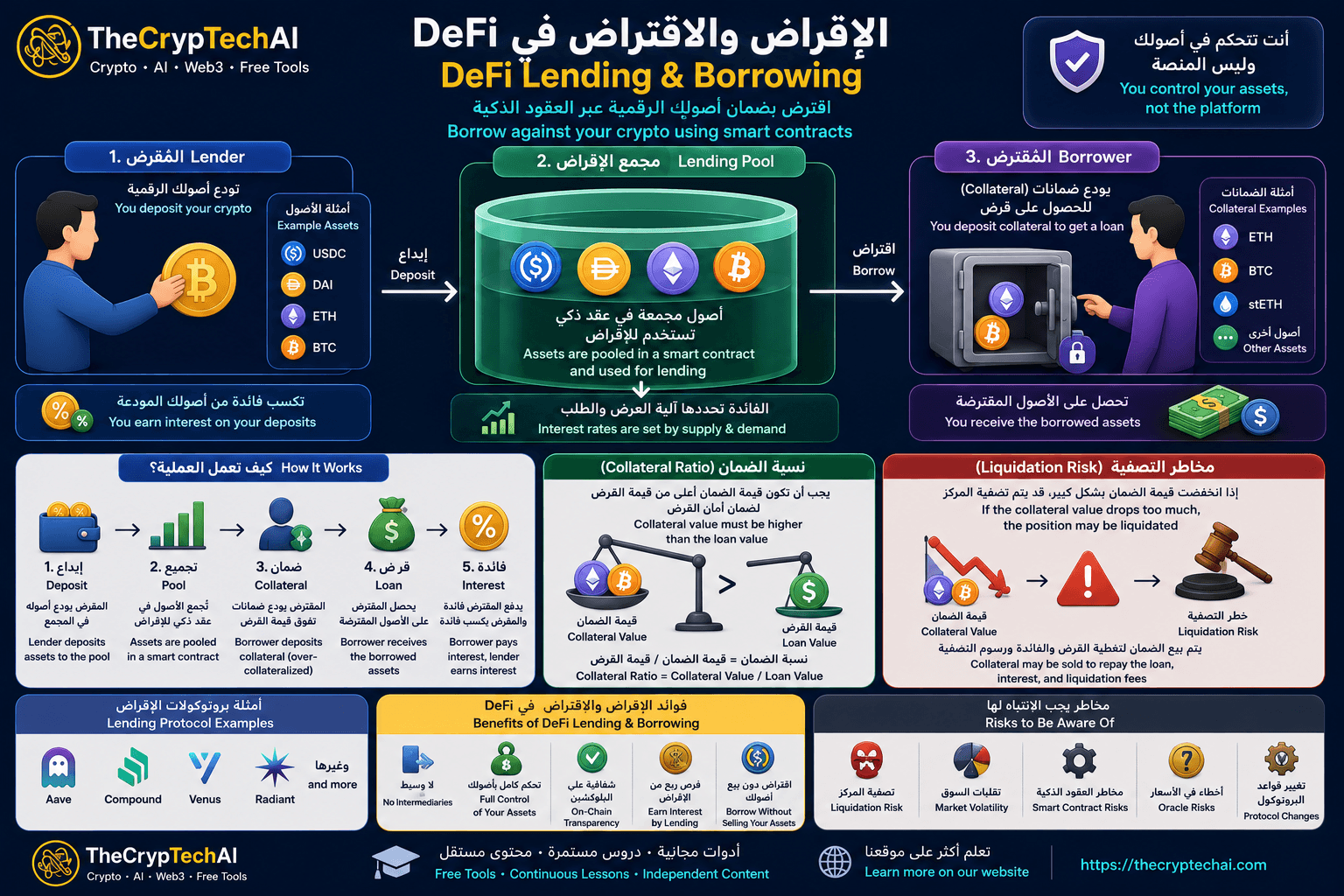
يُعد الإقراض والاقتراض في DeFi من أشهر استخدامات التمويل اللامركزي، حيث تسمح بعض البروتوكولات للمستخدمين بإيداع أصول رقمية للحصول على عائد محتمل، بينما يستطيع مستخدمون آخرون اقتراض أصول مقابل تقديم ضمانات، ويتم تنظيم العملية بواسطة العقود الذكية.
ما هو الإقراض في DeFi؟
في بعض بروتوكولات DeFi يستطيع المستخدم إيداع أصول رقمية داخل مجمع إقراض Lending Pool.
تُستخدم هذه الأصول لتوفير السيولة للمقترضين، وقد يحصل المُقرض مقابل ذلك على فائدة أو عائد يتغير وفق قواعد البروتوكول والعرض والطلب.
لكن العائد ليس ثابتًا أو مضمونًا، وقد تتغير أسعار الفائدة والمخاطر بمرور الوقت.
كيف يعمل الاقتراض في DeFi؟
في كثير من بروتوكولات الإقراض والاقتراض في DeFi يحتاج المقترض إلى تقديم أصل رقمي كضمان Collateral قبل الحصول على القرض.
على سبيل المثال، قد يودع المستخدم أصلًا مثل ETH كضمان ثم يقترض أصلًا آخر وفق الحدود والقواعد التي يحددها البروتوكول.
غالبًا تكون قيمة الضمان المطلوبة أكبر من قيمة المبلغ المقترض، ويُعرف هذا النموذج باسم Overcollateralization.
لماذا يحتاج المقترض إلى ضمان؟
في التمويل التقليدي قد يعتمد المُقرض على بيانات الهوية أو التاريخ الائتماني لتقييم المقترض، بينما تعتمد العديد من بروتوكولات DeFi على الضمانات الموجودة على البلوكتشين لإدارة مخاطر القرض.
إذا انخفضت قيمة الضمان بدرجة كبيرة، قد يصبح القرض معرضًا للتصفية.
ما هي نسبة الضمان؟
توضح نسبة الضمان Collateral Ratio العلاقة بين قيمة الأصول المقدمة كضمان وقيمة الدين.
إذا كانت قيمة الضمان أعلى بشكل مريح من قيمة القرض، تكون للمركز مساحة أكبر لتحمل تقلبات السوق. أما إذا انخفضت قيمة الضمان واقترب المركز من حدود البروتوكول، يرتفع خطر التصفية.
وتختلف طريقة حساب هذه الحدود والمقاييس من بروتوكول إلى آخر، لذلك يجب مراجعة قواعد المنصة المستخدمة.
ما هي التصفية Liquidation؟
التصفية Liquidation هي إحدى أهم المخاطر التي يجب فهمها قبل الاقتراض في DeFi.
إذا أصبحت قيمة الضمان غير كافية وفق شروط البروتوكول، يمكن أن تتم تصفية جزء من الضمان أو المركز للمساعدة في سداد الدين والمحافظة على سلامة نظام الإقراض.
وقد تتضمن العملية رسومًا أو حوافز للتصفية، لذلك يجب متابعة مركز الاقتراض وعدم الانتظار حتى يصل إلى الحدود الخطرة.
مثال مبسط
لنفترض أن مستخدمًا يريد اقتراض أصل رقمي دون بيع أصل آخر يمتلكه.
يمكنه، في بروتوكول يدعم ذلك، إيداع الأصل الذي يمتلكه كضمان ثم اقتراض أصل آخر ضمن الحدود المسموح بها.
إذا ارتفعت قيمة الضمان أو ظل المركز بعيدًا عن حد التصفية، يمكن أن يبقى القرض مفتوحًا وفق شروط البروتوكول.
أما إذا انخفضت قيمة الضمان بدرجة كبيرة، فقد يقترب المركز من التصفية.
كيف تتحدد أسعار الفائدة؟
في العديد من بروتوكولات DeFi تتغير أسعار الفائدة بناءً على عوامل مثل العرض والطلب ونسبة استخدام السيولة داخل مجمع الإقراض.
عندما يرتفع الطلب على الاقتراض مقارنة بالسيولة المتاحة، قد ترتفع تكلفة الاقتراض وفق نموذج البروتوكول.
لذلك يجب عدم افتراض أن سعر الفائدة الحالي سيظل ثابتًا طوال مدة القرض.
لماذا يقترض شخص بدل بيع أصوله؟
قد يرغب بعض المستخدمين في الحصول على سيولة دون بيع أصل رقمي يحتفظون به، فيستخدمونه كضمان للحصول على أصل آخر.
لكن ذلك يضيف مخاطر جديدة، خاصة مخاطر انخفاض قيمة الضمان والفائدة والتصفية وتقلب السوق.
ما مخاطر الإقراض والاقتراض في DeFi؟
من أهم المخاطر:
• انخفاض قيمة الضمان وخطر التصفية.
• تقلب أسعار الفائدة.
• مخاطر وثغرات العقود الذكية.
• مخاطر الأصول أو العملات المستخدمة كضمان.
• مشاكل السيولة في بعض البروتوكولات.
• مخاطر الـ Oracle المستخدم لتوفير بيانات الأسعار.
• تغييرات قواعد أو معايير البروتوكول.
كيف تقلل المخاطر؟
قبل استخدام أي بروتوكول للإقراض أو الاقتراض:
• افهم آلية التصفية وحدودها.
• لا تقترض أقصى مبلغ متاح لمجرد أن البروتوكول يسمح بذلك.
• اترك هامشًا مناسبًا لتحركات السوق.
• تابع قيمة الضمان ومركزك باستمرار.
• تحقق من العقود والموقع الرسمي للبروتوكول.
• افهم أسعار الفائدة المتغيرة قبل الاقتراض.
• لا تستخدم أموالًا لا تستطيع تحمل مخاطرها.
محفظتك هي بوابتك إلى DeFi
تحتاج بروتوكولات DeFi عادةً إلى محفظة Web3 متوافقة للتفاعل مع العقود الذكية. إذا كنت ما زلت تقارن بين أنواع المحافظ، يمكنك استخدام
Crypto Wallet Finder من TheCrypTechAI
لاستكشاف الخيارات المناسبة لاستخدامك.
مصدر إضافي
لرؤية مثال عملي على كيفية عمل الإقراض والاقتراض والضمانات والتصفية داخل أحد بروتوكولات DeFi المعروفة، يمكنك الاطلاع على
دليل Aave الرسمي للاقتراض
.
الخلاصة
يسمح الإقراض والاقتراض في DeFi للمستخدمين بإقراض الأصول أو اقتراضها عبر بروتوكولات تعتمد على العقود الذكية ومجمعات السيولة والضمانات.
لكن الاقتراض لا يمثل أموالًا مجانية؛ فالمقترض يتحمل تكلفة الفائدة ومخاطر تقلب الضمان والتصفية، بينما يتحمل المُقرض مخاطر البروتوكول والعقود الذكية والأصول المستخدمة.
في الدرس الأخير من هذا المسار سنتعرف على مخاطر DeFi وكيف تحمي أموالك | DeFi Risks & How to Protect Your Funds، وسنجمع أهم قواعد الحماية قبل استخدام أي بروتوكول تمويل لامركزي.
DeFi Lending and Borrowing is one of the most popular uses of decentralized finance. Some protocols allow users to deposit digital assets to potentially earn interest, while other users can borrow assets by providing collateral. Smart contracts manage much of this process.
What Is DeFi Lending?
In some DeFi protocols, users can deposit digital assets into a Lending Pool.
These assets provide liquidity that can be used by borrowers. In return, lenders may earn interest or yield according to the protocol's rules and market conditions.
However, returns are not fixed or guaranteed. Interest rates and risks can change over time.
How Does DeFi Borrowing Work?
In many DeFi Lending and Borrowing protocols, borrowers must provide a digital asset as Collateral before borrowing another asset.
For example, a user may deposit ETH as collateral and then borrow another supported asset within the limits established by the protocol.
The required collateral is often worth more than the borrowed amount. This model is commonly known as Overcollateralization.
Why Is Collateral Required?
Traditional lenders may use identity information and credit history to evaluate borrowers. Many DeFi protocols instead use on-chain collateral to help manage lending risk.
If the value of the collateral falls significantly, the borrowing position may become vulnerable to liquidation.
What Is the Collateral Ratio?
The Collateral Ratio describes the relationship between the value of the assets provided as collateral and the value of the debt.
When collateral value remains comfortably above the required threshold, the position has more room to absorb market volatility. If collateral value falls toward the protocol's limits, liquidation risk increases.
Protocols may calculate these limits differently, so users should always understand the rules of the specific platform they are using.
What Is Liquidation?
Liquidation is one of the most important risks to understand before borrowing through DeFi.
If the collateral becomes insufficient according to the protocol's rules, part of the collateral or borrowing position may be liquidated to help repay the debt and protect the lending system.
Liquidation may also involve additional fees or incentives, making it important to monitor borrowing positions before they approach dangerous thresholds.
A Simple Example
Imagine a user who wants liquidity without selling another digital asset they already own.
On a protocol that supports this activity, the user may deposit that asset as collateral and borrow another asset within the allowed limits.
If the collateral maintains sufficient value and the position remains safely above the liquidation threshold, the loan can remain open according to the protocol's conditions.
If collateral value falls significantly, however, the position may move closer to liquidation.
How Are Interest Rates Determined?
In many DeFi protocols, interest rates can change according to factors such as supply, borrowing demand, and utilization of the assets available in the lending pool.
When borrowing demand increases relative to available liquidity, borrowing costs may increase according to the protocol's interest-rate model.
Users should therefore not assume that the current interest rate will remain unchanged for the entire borrowing period.
Why Borrow Instead of Selling an Asset?
Some users may want access to liquidity without selling a digital asset they intend to keep. They can potentially use that asset as collateral to borrow another asset.
However, doing so introduces additional risks, including interest costs, collateral price volatility, and liquidation.
What Are the Risks?
Important risks associated with DeFi lending and borrowing include:
• Collateral price declines and liquidation risk.
• Variable interest rates.
• Smart contract vulnerabilities.
• Risks related to collateral or borrowed assets.
• Liquidity problems within a protocol.
• Oracle risks affecting price information.
• Changes to protocol rules or parameters.
How Can You Reduce the Risks?
Before using a lending or borrowing protocol:
• Understand its liquidation mechanism and thresholds.
• Avoid borrowing the maximum amount simply because it is available.
• Maintain a safety margin against market volatility.
• Monitor your collateral and borrowing position.
• Verify the protocol's official website and contracts.
• Understand variable interest rates before borrowing.
• Never put more funds at risk than you can afford to lose.
Your Wallet Is Your Gateway to DeFi
DeFi protocols generally require a compatible Web3 wallet to interact with smart contracts. If you are still comparing wallet types, you can explore different options with the
TheCrypTechAI Crypto Wallet Finder
.
Learn More
For a practical example of borrowing, collateral, and liquidation in a major DeFi protocol, visit the
official Aave borrowing guide
.
Key Takeaway
DeFi Lending and Borrowing allows users to lend or borrow digital assets through protocols that use smart contracts, lending pools, and collateral.
Borrowing is not free money. Borrowers face interest costs, collateral volatility, and liquidation risk, while lenders also face risks related to protocols, smart contracts, and the underlying assets.
In the final lesson of this learning path, we will explore DeFi Risks & How to Protect Your Funds and bring together the most important security practices to consider before using decentralized finance protocols.
اختبر فهمك
Check Your Understanding
سؤالان سريعان لتثبيت أهم ما تعلمته.
Two quick questions to reinforce the key ideas.