
مجمعات السيولة ومزودو السيولة | Liquidity Pools & Liquidity Providers
تعلّم ببساطة، خطوة بخطوة
Learn simply, step by step
معلومة واضحة، ثم خطوة جديدة.
Clear knowledge, one step at a time.
مجمعات السيولة ومزودو السيولة Liquidity Pools & Liquidity Providers
تُعد مجمعات السيولة من المكونات الأساسية في كثير من بروتوكولات التمويل اللامركزي DeFi، لأنها توفر الأصول التي يمكن للمتداولين استخدامها لإجراء عمليات المبادلة دون الحاجة إلى مطابقة كل مشترٍ مباشرة مع بائع آخر.
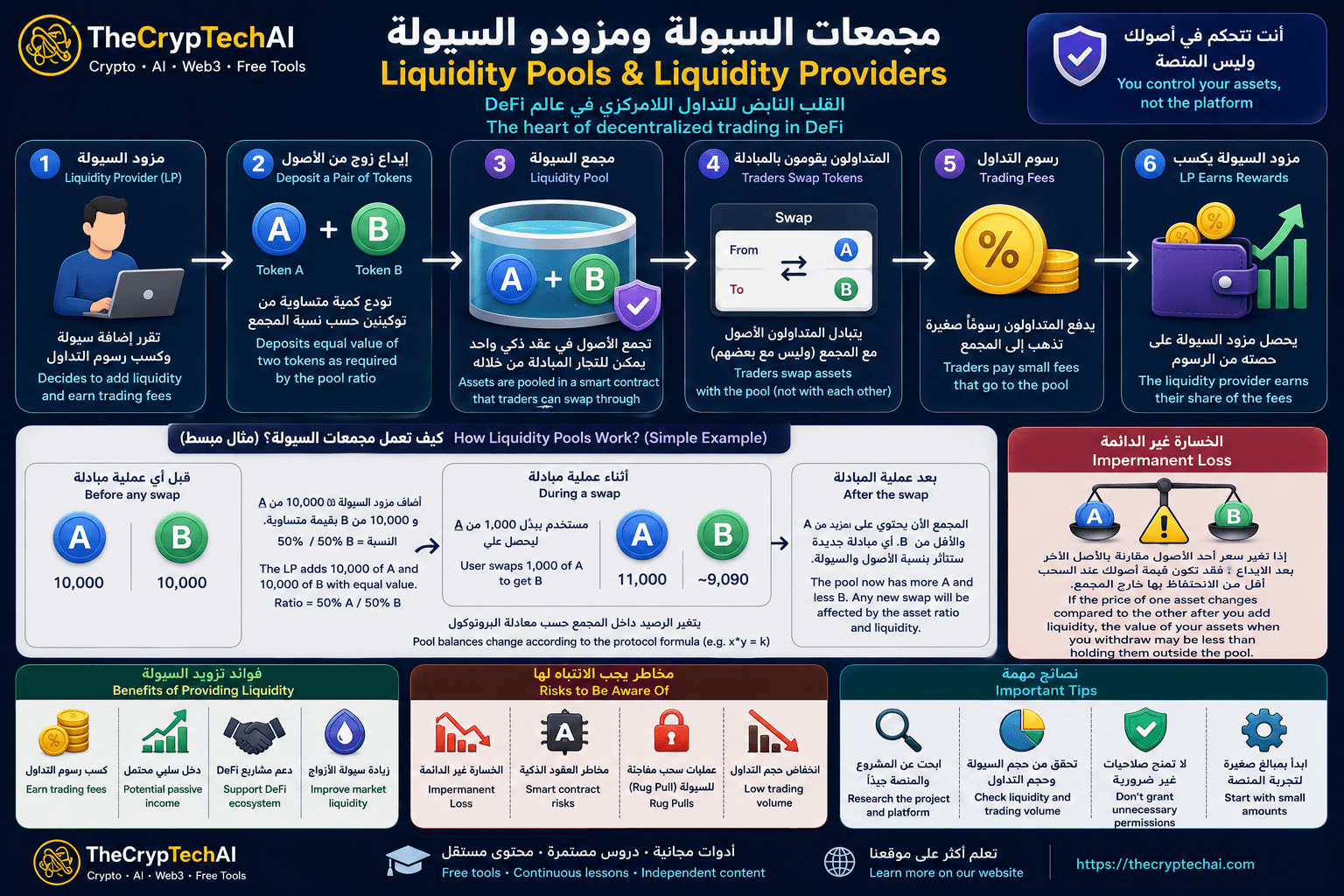
ما هي مجمعات السيولة؟
مجمع السيولة Liquidity Pool هو مجموعة من الأصول الرقمية الموجودة داخل عقد ذكي، وتُستخدم لتوفير السيولة اللازمة لعمليات التداول والمبادلة داخل بعض بروتوكولات DeFi.
على سبيل المثال، قد يحتوي أحد المجمعات على أصلين مثل Token A وToken B، ويستطيع المتداولون مبادلة أحدهما بالآخر باستخدام السيولة الموجودة داخل المجمع.
من هو مزود السيولة LP؟
مزود السيولة Liquidity Provider أو LP هو مستخدم يضيف أصولًا إلى مجمع السيولة وفق قواعد البروتوكول.
في المقابل، قد يحصل مزود السيولة على حصة من رسوم التداول الناتجة عن استخدام المتداولين لهذا المجمع.
لكن توفير السيولة ليس طريقة مضمونة لتحقيق الأرباح، لأن قيمة الأصول والعوائد والمخاطر تختلف حسب البروتوكول وحركة السوق ونوع المجمع.
كيف تعمل مجمعات السيولة؟
يمكن تبسيط العملية كالتالي:
1. إضافة السيولة: يضيف مزود السيولة الأصول المطلوبة إلى المجمع وفق شروط البروتوكول.
2. تخزين الأصول: توجد الأصول داخل عقد ذكي يدير المجمع.
3. عمليات Swap: يستخدم المتداولون السيولة الموجودة لإجراء عمليات المبادلة.
4. رسوم التداول: قد يفرض البروتوكول رسومًا على عمليات المبادلة.
5. حصة مزود السيولة: وفق تصميم البروتوكول والمجمع، قد يحصل مزود السيولة على حصة من الرسوم.
مثال مبسط
لنفترض وجود مجمع يحتوي على Token A وToken B.
عندما يريد مستخدم مبادلة Token A مقابل Token B، فإنه يتعامل مع المجمع من خلال العقد الذكي بدل البحث مباشرة عن مستخدم آخر يريد تنفيذ الصفقة المعاكسة.
بعد عملية المبادلة تتغير كميات الأصول داخل المجمع، وقد يتغير السعر المعروض وفق آلية التسعير والسيولة المستخدمة بواسطة البروتوكول.
كيف يربح مزود السيولة؟
أحد الحوافز الشائعة لتوفير السيولة هو الحصول على جزء من رسوم التداول.
لكن مقدار العائد يعتمد على عدة عوامل، مثل حجم التداول، وقيمة السيولة التي قدمها المستخدم، وحصته من المجمع، وهيكل الرسوم الخاص بالبروتوكول.
لذلك يجب عدم النظر إلى نسبة العائد المعروضة وحدها قبل تقييم المخاطر.
ما هي الخسارة غير الدائمة Impermanent Loss؟
من أهم المخاطر المرتبطة ببعض مجمعات السيولة ما يُعرف باسم الخسارة غير الدائمة Impermanent Loss.
يمكن أن تحدث عندما تتغير الأسعار النسبية للأصول الموجودة في المجمع بعد توفير السيولة، بحيث تصبح قيمة حصة مزود السيولة عند السحب أقل مما كان يمكن أن تكون عليه لو احتفظ بالأصول خارج المجمع.
وتعتمد النتيجة الفعلية على تصميم المجمع وتحركات الأسعار والرسوم وعوامل أخرى، لذلك لا تعني كلمة “غير دائمة” أن الخسارة ستختفي بالضرورة.
مخاطر أخرى لمزودي السيولة
إضافة إلى الخسارة غير الدائمة، توجد مخاطر أخرى يجب الانتباه إليها، منها:
• ثغرات أو أخطاء العقود الذكية.
• المشاريع أو التوكنات الاحتيالية.
• انخفاض حجم التداول والسيولة.
• تغير أسعار الأصول بصورة حادة.
• مخاطر البروتوكول أو الشبكة المستخدمة.
• مجمعات ذات عوائد مرتفعة لكنها تحمل مخاطر أكبر.
كيف تقلل المخاطر؟
قبل إضافة أموالك إلى أي مجمع سيولة:
• ابحث عن البروتوكول والمشروع جيدًا.
• تحقق من عنوان العقد والتوكنات.
• افهم مصدر العائد المعروض.
• راجع حجم السيولة وحجم التداول.
• تعرف على آلية سحب السيولة.
• لا تعتمد على نسبة APY مرتفعة وحدها.
• ابدأ بمبلغ تستطيع تحمل مخاطره.
افحص التوكن قبل توفير السيولة
إذا كان المجمع يحتوي على توكن غير معروف، يمكنك استخدام
Token Security Checker من TheCrypTechAI
كإحدى خطوات البحث الأولية قبل التفاعل معه.
لكن تذكر أن نتيجة أي أداة فحص لا تمثل ضمانًا كاملًا لأمان المشروع أو العقد الذكي.
مصدر إضافي
للتعمق في كيفية عمل مجمعات السيولة وآليات التداول داخل بروتوكولات AMM، يمكنك الاطلاع على
وثائق Uniswap الرسمية
.
الخلاصة
توفر مجمعات السيولة الأصول اللازمة لتنفيذ عمليات المبادلة في كثير من بروتوكولات DeFi، بينما يقوم مزودو السيولة LP بإضافة الأصول إلى هذه المجمعات وقد يحصلون مقابل ذلك على حصة من رسوم التداول.
لكن العائد ليس مضمونًا، ويجب فهم مخاطر مثل الخسارة غير الدائمة والعقود الذكية وتقلب أسعار الأصول قبل توفير السيولة.
في الدرس التالي سنتعرف على الإقراض والاقتراض في DeFi | DeFi Lending & Borrowing وكيف تسمح البروتوكولات للمستخدمين بإقراض الأصول أو الاقتراض بضمانات عبر العقود الذكية.
Liquidity Pools are an important component of many decentralized finance (DeFi) protocols because they provide assets that traders can use for swaps without directly matching every buyer with another seller.
What Are Liquidity Pools?
A Liquidity Pool is a collection of digital assets held within a smart contract and used to provide liquidity for trading and swapping activities in certain DeFi protocols.
For example, a pool may contain Token A and Token B. Traders can use the available liquidity to swap one asset for the other.
Who Is a Liquidity Provider?
A Liquidity Provider (LP) is a user who supplies assets to a liquidity pool according to the rules of the protocol.
In return, liquidity providers may receive a share of the trading fees generated when traders use that pool.
However, providing liquidity does not guarantee profit. Returns and risks depend on the protocol, market conditions, asset prices, and the type of liquidity pool.
How Do Liquidity Pools Work?
The process can be simplified into several steps:
1. Add liquidity: The liquidity provider deposits the required assets according to the protocol's rules.
2. Assets enter the pool: The assets are managed through a smart contract.
3. Traders perform swaps: Traders use the available pool liquidity to exchange assets.
4. Trading fees: The protocol may charge fees when swaps are executed.
5. LP fee share: Depending on the protocol and pool design, liquidity providers may receive a portion of those fees.
A Simple Example
Imagine a liquidity pool containing Token A and Token B.
When a trader wants to swap Token A for Token B, the trader interacts with the pool through a smart contract rather than searching directly for another user who wants the opposite trade.
After the swap, the quantities of assets in the pool change. The quoted price may also change according to the pricing mechanism and available liquidity used by the protocol.
How Do Liquidity Providers Earn?
One common incentive for providing liquidity is receiving a portion of trading fees.
The actual return can depend on factors such as trading volume, the amount of liquidity supplied, the provider's share of the pool, and the protocol's fee structure.
For this reason, a high advertised yield should never be evaluated without also considering the associated risks.
What Is Impermanent Loss?
One important risk associated with some Liquidity Pools is known as Impermanent Loss.
It can occur when the relative prices of assets in a pool change after liquidity has been provided. As a result, the value of the provider's position when withdrawing may be lower than the value they could have had by simply holding those assets outside the pool.
The actual outcome depends on the pool design, price movements, earned fees, and other factors. The word "impermanent" should not be interpreted as a guarantee that the loss will eventually disappear.
Other Risks for Liquidity Providers
Liquidity providers should also consider risks such as:
• Smart contract vulnerabilities.
• Fraudulent projects or tokens.
• Low trading volume or liquidity.
• Significant asset price movements.
• Protocol and blockchain network risks.
• High-yield pools that may involve significantly higher risk.
How Can You Reduce the Risks?
Before providing liquidity:
• Research the project and protocol.
• Verify token and contract addresses.
• Understand where the advertised yield comes from.
• Review liquidity and trading volume.
• Understand how liquidity can be withdrawn.
• Do not evaluate a pool based only on a high APY.
• Start with an amount you can afford to put at risk.
Check the Token Before Providing Liquidity
If a pool contains an unfamiliar token, you can use the
TheCrypTechAI Token Security Checker
as one part of your initial research.
Remember that no automated security checker can provide a complete guarantee that a token, smart contract, or project is safe.
Learn More
For more technical information about liquidity pools and AMM-based trading, visit the
official Uniswap documentation
.
Key Takeaway
Liquidity Pools provide assets that enable swaps in many DeFi protocols. Liquidity providers supply those assets and may receive a share of trading fees in return.
However, returns are not guaranteed. Risks such as impermanent loss, smart contract vulnerabilities, and asset price volatility should be understood before providing liquidity.
In the next lesson, we will explore DeFi Lending & Borrowing and learn how decentralized protocols allow users to lend or borrow digital assets through smart contracts and collateral.
اختبر فهمك
Check Your Understanding
سؤالان سريعان لتثبيت أهم ما تعلمته.
Two quick questions to reinforce the key ideas.