
ما هي نماذج الذكاء الاصطناعي؟ | What Are AI Models?
تعلّم ببساطة، خطوة بخطوة
Learn simply, step by step
معلومة واضحة، ثم خطوة جديدة.
Clear knowledge, one step at a time.
ما هي نماذج الذكاء الاصطناعي؟ What Are AI Models?
🎯 ماذا ستتعلم؟
في هذا الدرس ستتعرف على نماذج الذكاء الاصطناعي، وما المقصود بالنموذج، وكيف يستقبل أنواعًا مختلفة من المدخلات لإنتاج نتائج أو توقعات.
🤖 ما هو نموذج الذكاء الاصطناعي؟
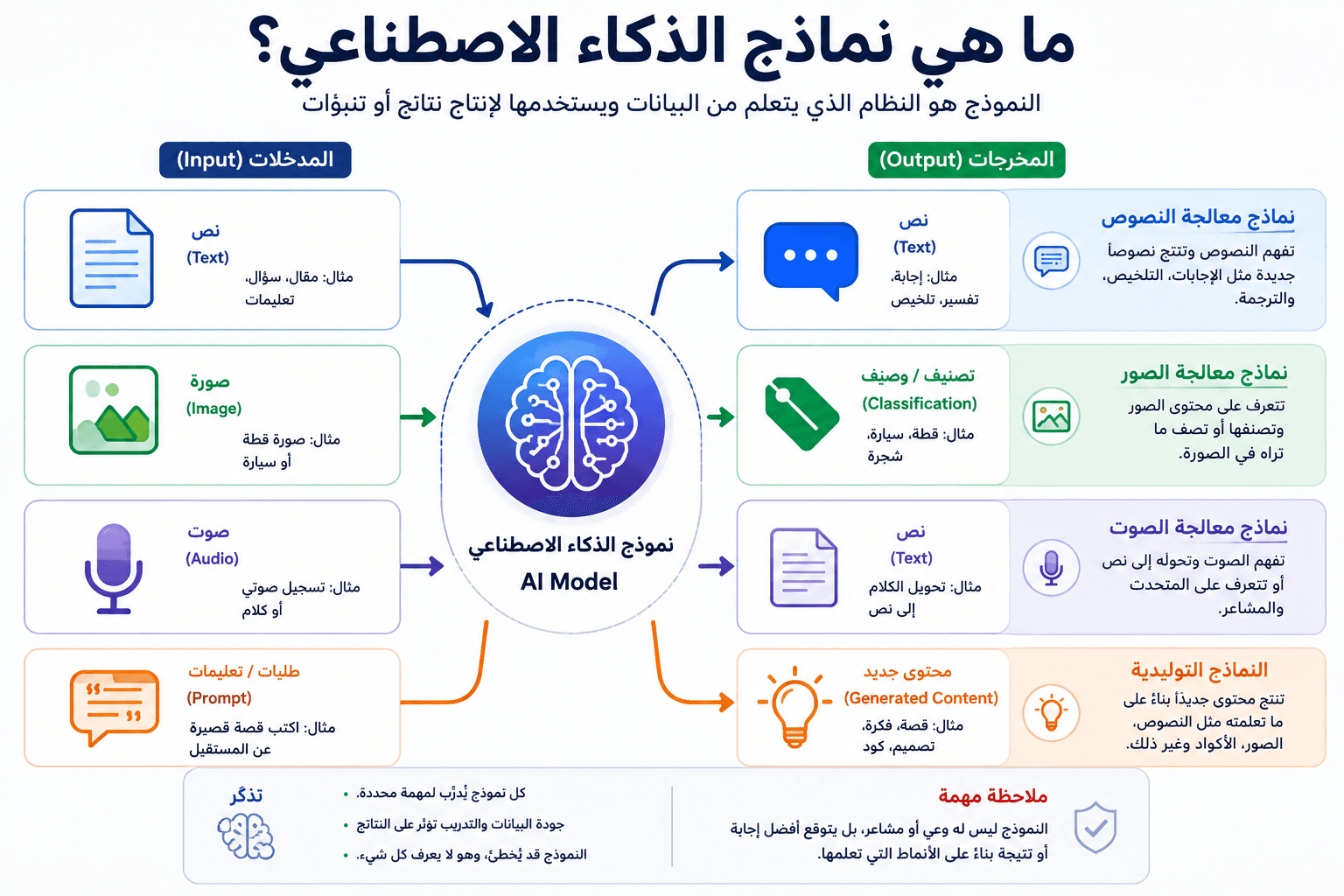
نموذج الذكاء الاصطناعي هو نظام تم تدريبه على البيانات ليتعلم أنماطًا وعلاقات تساعده على تنفيذ مهمة معينة.
بعد التدريب، يمكن إعطاء النموذج مدخلات جديدة ليقوم بمعالجتها وإنتاج نتيجة، مثل تصنيف صورة أو فهم نص أو تحويل الكلام إلى نص.
⚙️ التدريب والنموذج المدرّب
التدريب هو العملية التي يتعلم خلالها النموذج من البيانات، أما النموذج المدرّب فهو الناتج الذي يمكن استخدامه بعد انتهاء عملية التدريب.
وهذا يعني أننا لا نحتاج عادةً إلى إعادة تدريب النموذج من البداية في كل مرة نريد فيها معالجة مدخل جديد.
📝 نماذج النصوص
تتعامل بعض النماذج مع النصوص، ويمكن استخدامها في مهام مثل الإجابة عن الأسئلة والتلخيص والترجمة وتحليل المحتوى.
يتم تقديم نص أو تعليمات كمدخل، ثم يعالج النموذج هذا المدخل لإنتاج النتيجة المناسبة للمهمة.
🖼️ نماذج الصور
تستطيع نماذج مخصصة للصور تحليل المحتوى البصري وتنفيذ مهام مثل التعرف على الأشياء أو تصنيف الصور أو وصف ما يظهر فيها.
على سبيل المثال، يمكن إعطاء النموذج صورة ليحاول تحديد ما إذا كانت تحتوي على قطة أو سيارة أو عنصر آخر تعلم التعرف عليه.
🎙️ نماذج الصوت
تتعامل نماذج الصوت مع التسجيلات والكلام وأنواع أخرى من البيانات الصوتية، ويمكن استخدامها في مهام مثل تحويل الكلام إلى نص أو التعرف على بعض الأنماط الصوتية.
✨ ماذا عن النماذج التوليدية؟
هناك أيضًا نماذج تستطيع إنشاء محتوى جديد استجابةً لتعليمات المستخدم، مثل النصوص والصور والأفكار والأكواد.
يطلق على هذا المجال اسم الذكاء الاصطناعي التوليدي Generative AI، وسنتعرف عليه بالتفصيل في الدرس القادم.
🔍 لماذا تختلف النماذج عن بعضها؟
تختلف نماذج الذكاء الاصطناعي حسب طريقة تصميمها والبيانات المستخدمة في تدريبها والمهام التي تم تطويرها لتنفيذها.
لذلك قد يكون نموذج جيدًا في مهمة معينة بينما يكون نموذج آخر أكثر ملاءمة لمهمة مختلفة.
⚠️ هل النموذج يعرف كل شيء؟
لا. يستطيع النموذج إنتاج نتائج اعتمادًا على الأنماط التي تعلمها، لكنه قد يخطئ أو يقدم معلومات غير دقيقة.
كما أن استخدام كلمات مثل «يتعلم» أو «يفهم» لتبسيط الشرح لا يعني أن النموذج يمتلك وعيًا أو مشاعر مثل الإنسان.
🧠 تذكّر
- النموذج يتعلم أنماطًا من البيانات أثناء التدريب.
- يمكن للنماذج التعامل مع النصوص والصور والصوت وأنواع أخرى من البيانات.
- تختلف النماذج حسب المهمة وطريقة التدريب.
- النماذج التوليدية تستطيع إنشاء محتوى جديد.
- نتائج AI ليست صحيحة دائمًا ويجب التحقق من المعلومات المهمة.
📚 للمزيد، يمكنك قراءة
شرح IBM للذكاء الاصطناعي
.
📘 راجع الدرس السابق:
كيف يتعلم الذكاء الاصطناعي؟
🎯 What Will You Learn?
In this lesson, you will learn about AI Models, what an AI model is, and how different models can process inputs to produce results or predictions.
🤖 What Is an AI Model?
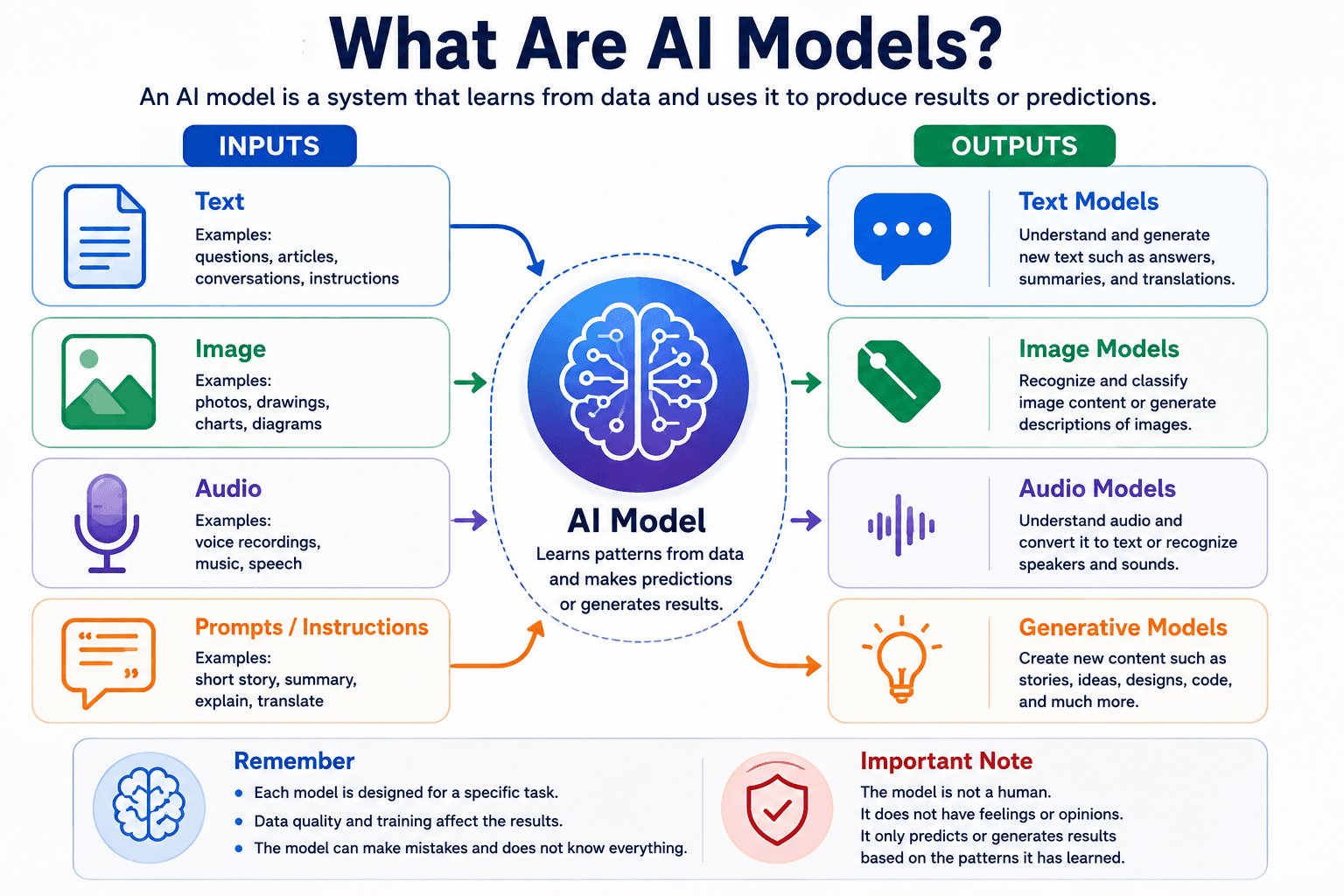
An AI model is a system that has been trained on data to learn patterns and relationships that help it perform a specific task.
After training, the model can receive new inputs and process them to produce a result, such as classifying an image, working with text, or converting speech into text.
⚙️ Training and the Trained Model
Training is the process in which a model learns patterns from data. A trained model is the result that can be used after the training process is complete.
This means the model does not usually need to be trained from the beginning every time it receives a new input.
📝 Text Models
Some models work with text and can be used for tasks such as answering questions, summarizing information, translating languages, and analyzing content.
Text or instructions can be provided as input, and the model processes them to produce a result related to the requested task.
🖼️ Image Models
Models designed for images can analyze visual content and perform tasks such as recognizing objects, classifying images, or describing what appears in an image.
For example, a model may receive an image and try to determine whether it contains a cat, a car, or another object it has learned to recognize.
🎙️ Audio Models
Audio models work with speech, recordings, and other types of audio data. They can be used for tasks such as converting speech into text or recognizing certain patterns in sound.
✨ What About Generative Models?
Some models can create new content in response to user instructions, including text, images, ideas, and code.
This area is known as Generative AI, and we will explore it in more detail in the next lesson.
🔍 Why Are AI Models Different?
Different AI Models can have different capabilities depending on their design, training data, and the tasks they were developed to perform.
A model may perform well at one task, while another model may be more suitable for a different task.
⚠️ Does an AI Model Know Everything?
No. A model produces results based on patterns learned during training, and it can sometimes make mistakes or provide inaccurate information.
Words such as “learn” and “understand” are often used to explain AI simply, but this does not mean that a model has human consciousness, feelings, or opinions.
🧠 Remember
- An AI model learns patterns from data during training.
- Models can work with text, images, audio, and other types of data.
- Different models can be designed for different tasks.
- Generative models can create new content.
- AI results are not always correct, so important information should be verified.
📚 For more information, see
IBM's introduction to Artificial Intelligence
.
📘 Review the previous lesson:
How Does AI Learn?
اختبر فهمك
Check Your Understanding
سؤالان سريعان لتثبيت أهم ما تعلمته.
Two quick questions to reinforce the key ideas.